1964 Tokyo Highlights
- Hungary wins 42 Gold, 7 Silver, and 7 bronze!
- Iolanda Balas (Balázs Jolán), perhaps the greatest high jumper of all time, wins gold again competing for Rumania
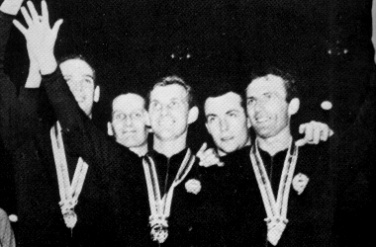
- Men’s Fencing Team Hungary continue domination in their sport, taking 10th Gold!
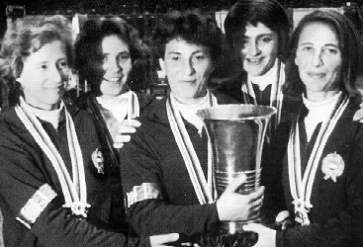
- Women’s Fencing Team Hungary also take Gold
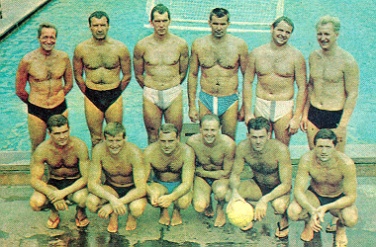
- Men’s Waterpolo team Hungary also continue to dominate, winning 5th Gold!
- Fencer Kulcsar Gyozo wins his 1st of 4 Golds!
- Deaf Fencer Rejto Ildiko wins 2 Golds!
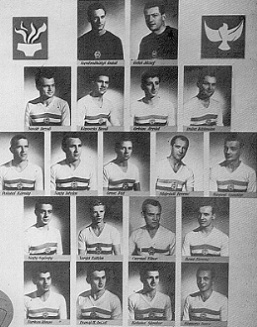
- Men’s Soccer Team Hungary wins 2nd Gold!
- Wrestler Imre Polyak, finally wins gold after Record three consecutive Silvers!
- Water polo player Dezso Gyarmati wins fifth medal in a row
Hungarian Medals!
Medal
Name
Event

Iolanda Balas

High Jump
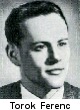
Török Ferenc dr
Modern Pentathlon / öttusa egyéni
Hammerl László dr.
Shooting / sportlövészet kisöbű sportpuska fekvő
Kozma István
Wrestling / birkózás kötöttfogás 97 kg felett
Polyák Imre
Wrestling / birkózás kötöttfogás 63 kg
Rejtő Ildikó
Individual Fencing / vívás tőr egyéni
Pézsa Tibor
Individual Fencing / vívás kard egyéni
Bárány Árpád
Men’s Team Fencing / vívás tőr csapat
Gábor Tamás
Men’s Team Fencing / vívás tőr csapat
Kausz István dr
Men’s Team Fencing / vívás tőr csapat
Kulcsár Gyöző
Men’s Team Fencing / vívás tőr csapat
Nemere Zoltán
Men’s Team Fencing / vívás tőr csapat
Dömölky Lídia
Women’s Team Fencing / vívás tőr csapat
Ágoston Judit
Women’s Team Fencing / vívás tőr csapat
Juhász Katalin
Women’s Team Fencing / vívás tőr csapat
Marosi Paula
Women’s Team Fencing / vívás tőr csapat
Rejtő Ildikó
Women’s Team Fencing / vívás tőr csapat
Ambrus Miklós
Team Waterpolo / vizilabda csapat
Bodnár András dr.
Team Waterpolo / vizilabda csapat
Boros Ottó
Team Waterpolo / vizilabda csapat
Dömötör Zoltán
Team Waterpolo / vizilabda csapat
Felkai László
Team Waterpolo / vizilabda csapat
Gyarmati Dezső
Team Waterpolo / vizilabda csapat
Kanizsa Tivadar
Team Waterpolo / vizilabda csapat
Kárpáti György dr
Team Waterpolo / vizilabda csapat
Konrád II. János
Team Waterpolo / vizilabda csapat
Mayer Mihály
Team Waterpolo / vizilabda csapat
Pócsik Dénes
Team Waterpolo / vizilabda csapat
Rusorán Péter
Team Waterpolo / vizilabda csapat
Bene Ferenc
Soccer / Labdarugás
Csernai Tibor
Soccer / Labdarugás
Farkas János
Soccer / Labdarugás
Gelei József
Soccer / Labdarugás
Ihász Kálmán
Soccer / Labdarugás
Katona Sándor
Soccer / Labdarugás
Komora Imre
Soccer / Labdarugás
Nógrádi Ferenc
Soccer / Labdarugás
Novák Dezső
Soccer / Labdarugás
Orbán Árpád
Soccer / Labdarugás
Palotai Károly
Soccer / Labdarugás
Szentmihályi Antal
Soccer / Labdarugás
Szepesi Gusztáv
Soccer / Labdarugás
Varga Zoltán
Soccer / Labdarugás

Antal Márta
Javelin / gerelyhajítás
Kulcsár Gergely
Javelin / gerelyhajítás
Földi Imre
Weightlifting / súlyemelés légsúly 56 kg
Tóth Géza
Weightlifting / súlyemelés légsúly 82.5 kg
Horváth Zoltán
Fencing / vívás kard egyéni
Hesz (Hess) Mihály
Kayak Canoe / kajak-kenu K-1 1,000 m
Makray Katalin
Gymnastics Uneven Bars / felemás korlát
Zsivótzky Gyula
Hammerthrow / kalapácsvetés

Ducza Anikó
Gymnastics Floor / műszabadgyakorlat
Hammerl László dr.
Shooting overall / sportlövészet kisöbű sportpuska összetett
Nagy Imre
Modern Pentathlon (team) / öttusa csapat
Török Ferenc dr
Modern Pentathlon (team) / öttusa csapat
Török Ottó dr
Modern Pentathlon (team) / öttusa csapat
Nagy Imre
Modern Pentathlon (team) / öttusa csapat
Varjú Vilmos
Shot Put / súlylökés
Veres Győző
Weightlifting / súlyemelés légsúly 82.5 kg
Related
Featured Olympians
Rejto Ildiko:(b. 5/11/1937 Budapest)
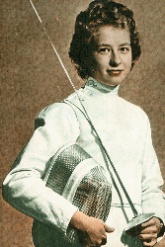
A Triumphant “Handicapped” Icon,
winner of 7 Olympic Medals, and still a Champion in 1999!
Among followers in the small world of fencing she is an
icon and Hungary’s third “handicapped”
Olympic Gold Medalist, following in the footsteps of the 1936 Waterpolo Gold Medalist Oliver Halassy who was
missing a leg and 1948 shooting Gold Medalist Karoly
Takacs who was missing his former shooting right hand.
Born deaf, Ujlaky-Rejto Ildiko became the best female fencer in the world, peaking in the late 1950s and early 1960s. She began fencing at the age of 15 and coaches communicated with her by instructions written on a piece of paper between her fencing sessions. Ildiko won the junior world foil championship in 1956-57, was the Hungarian foil champion in 1958, and was the World foil champion in 1963.
Rejto participated in FIVE Olympics – 1960, 1964, 1968, 1972, and 1976 – and won 7 medals:
- 1960 – team silver
- 1964 – individual and team gold
- 1968 – team silver; individual bronze
- 1972 – team silver
- 1976 – team bronze
She has continued to compete and in 1999, Ildiko won the women’s foil (over 60 years old) at the World Veterans Championships! Rejto’s name is sometimes mistakenly spelled as Rojto.
Ildiko Rejto is not the only “handicapped” Hungarian Olympic Medalist. Shooter Karoly Takacs, the “Right-Handed Shooter Who Won With His Left Hand,”… became the first repeat winner of the rapid-fire pistol event, taking Gold Medals in 1948 and 1952. A Sergeant in the Hungarian Army, Takács lost his right hand when a grenade malfunctioned. He was unable to compete in 1940 and 1944 as the war interrupted the Olympic Games and first competed at the age of 38. Amputee Oliver Halassy won two Gold Medals in Waterpolo in 1932 and 1936 and a Silver in 1928.
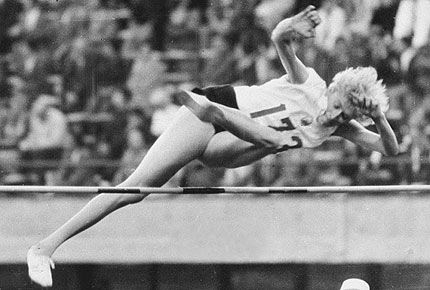
Iolanda Balas (Balazs):(b. 12/12/1936 Transylvania)
She dominated like no other…
Iolanda Balas (Balázs Jolán) completely dominated women’s high
jumping between 1957 and 1967. Balas, a Rumanian citizen of Hungarian origin born in Transylvania in 1936 (the former Hungarian region transferred to Rumania after World War I at the Treaty of Trianon), was married to her
coach and fellow high jumper Janos Sőtér(Ion Soeter) who died in 1987. Iolanda Balas occupies a special niche
in athletics history, a class apart. For a whole decade she went
unbeaten winning an incredible 140 consecutive
competitions and breaking the world record 14 times, mostly her own.
Her 1961 record of 1.91 metres remained unbeaten for ten years. She captured Olympic titles in 1960 and 1964 by huge margins, and such was her supremacy that at the time she cleared 1.91m, no other woman had gone higher than 1.78m. Some of her luckless contemporaries complained that they had no chance against her because she was so very tall (1.85m, or nearly 6ft 1in) with particularly long legs even for that height. But that physical advantage was largely cancelled out by her inability to master the more efficient straddle and western roll techniques of the pre-Fosbury Flop era. She explained: “My style is quite obsolete but it suits my body structure.” She is now a leading international official.
Read more at the International Association of Athletics Federations or at the International Olympic Committee’s Olympic Heroes
One thousand years of nation building successfully delineated groups in Central and Eastern Europe on culture, religion, geography, and other attributes, creating many historic nation-states. While some Western European nations would continue power struggles and princely battles and civil wars, Hungary, founded in 896, was a peaceful multi-ethnic state for a 1000 years and her borders were unchanged…. Until 1920 where new states were drawn by Western powers aiming to expand their own hegemony rather than respect the right to self-determination.
These “Hungarian Olympic Triumph” pages contain many examples of Hungarian Olympic Champions that were born within the boundaries of historic Hungary. But many of these cities, towns, and villages are no longer within Hungary. Historic communities declined. Forced removals such as the Benes Decrees and other pograms, the effects of WWI, and Trianon in 1920 ethnic cleansing, and continued pressure and discriminative policies such as the 2009 Slovak Language Law, continue to take their toll. Ironically, Ferenc Kemeny, one of the founders of the Olympic Movement and the International Olympic Committee’s (IOC) first Secretary, was born in Nagybecskerek, Hungary in what is now known as Zrenjanin in the Vojvodina part of Serbia after the Treaty of Trianon.