
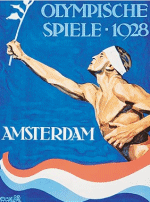
1928 Amsterdam Highlights
- Hungary wins 10 gold medals!
- Fencer Tersztyansky Odon wins Two Golds!
- Teammate Attila Petschauer takes Gold and Silver!
- Team Hungary begin their international domination on Water Polo taking silver
- Wrestler Lajos Keresztes takes gold and second Olympic Medal
- The 1928 Hungarian Men’s Fencing continued Hungary’s historic streak of a Gold through 14 CONSECUTIVE Olympics!
Medal
Name
Event

Tersztyánszky Ödön
Individual Fencing / vívás kard egyéni
Garay János
Team Fencing / vívás kard csapat
Glykais Gyula
Team Fencing / vívás kard csapat
Gombos Sándor dr.
Team Fencing / vívás kard csapat
Petschauer Attila
Team Fencing / vívás kard csapat
Rády József
Team Fencing / vívás kard csapat
Tersztyánszky Ödön
Team Fencing / vívás kard csapat
Kocsis Antal
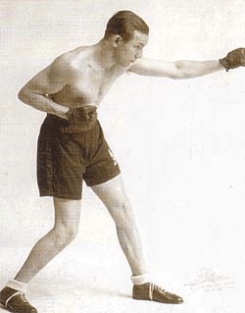
Boxing flyweight / ökölvívás légsúly
Keresztes Lajos
Wrestling / birkózás kötöttfogás 67.5 kg
Mező Ferenc dr. (Grűnfeld Ferenc dr.)
Arts, Epic Novel / művészet irodalom, epika

Szepes Béla (Strauch)
Javelin / gerelyhajítás
Bárány István dr.
Swimming freestyle / úszás 100 m gyors
Petschauer Attila
Individual Fencing / vívás kard egyéni
Barta István (Berger István)
Team Waterpolo / vizilabda csapat
Halassy Olivér (Haltmayer Olivér)
Team Waterpolo / vizilabda csapat
Homonnai Márton (Hlavacsek Márton)
Team Waterpolo / vizilabda csapat
Ivády Sándor dr.
Team Waterpolo / vizilabda csapat
Keserű Alajos
Team Waterpolo / vizilabda csapat
Keserű Ferenc dr.
Team Waterpolo / vizilabda csapat
Vértesy József (Vrábel József)
Team Waterpolo / vizilabda csapat
Papp László dr.
Wrestling / birkózás kötöttfogás 75 kg
Keresztes Lajos
Wrestling / birkózás kötöttfogás 67.5 kg

Ozoray Schenker Zoltán
Team Fencing / vívás tőr csapat
Tersztyánszky Ödön
Team Fencing / vívás tőr csapat
Lichteneckert István dr.
Team Fencing / vívás tőr csapat
Mészáros Ervin
Team Fencing / vívás tőr csapat
Garay János
Individual Fencing / vívás kard egyéni
Bartha Károly
Swimming backstroke / úszás 100m hát
Badó Rajmund (Badovecz Rajmund)
Wrestling / birkózás kötöttfogás 82.5 kg
See all 1928 medalists (in Hungarian)

Related
Featured 1928 Olympians
Attila Petschauer, Fencer:
(b. December 14, 1904, Budapest – January 20, 1943, Ukraine)
Lifetime: 2 gold, 1 silver, 1 bronze
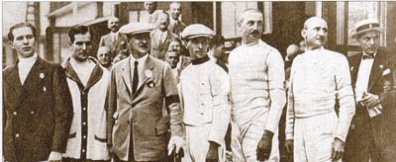
From Wikipedia: Petschauer was a member of the Hungarian fencing team in the 1928 and 1932 Olympics. Petschauer was regarded throughout the late 1920s and early 1930s as one of the world’s top fencers. A fencing prodigy prior to reaching his teens, Petschauer was dubbed “the new D’Artagnan” by his mentor.
In 1923, barely 19 years old, he earned the Individual Sabre bronze medal at the European Championships. In years that followed, he won the “Heroes Memorial Tournament” and earned Individual Euro silver medals in 1925 and 1929, and bronze medals in 1927 and 1930. At the European Championships of 1930 and 1931, Petschauer’s Hungary Sabre team won gold medals.
In Amsterdam in 1928 he was part of the gold medal-winning Hungarian team in sabre, winning all 20 of his competition matches. In the individual sabre competition, Petschauer won the silver medal. In the final round, he tied for first with fellow Hungarian Odon Tersztyansky (they both won 9 of 11 bouts in the finals), but lost the fence-off for the gold, 5–2.
In the 1932 Summer Olympics in Los Angeles, Petschauer was again part of the champion Hungarian sabre team. The Hungarians easily won the gold medal; in the finals, they defeated the United States, Italy, and Poland by a combined 31–6. But though he reached the finals he finished 5th in the individual event. He actually tied 3 other fencers with 5 victories, but fellow Hungarian Endre Kabos was awarded the bronze because he received fewer touches in the finals. This was the only time in his Olympic career that Petschauer did not medal in an event he had entered.
Although allied with Germany as a means to regain Hungarian territories lost at the Treaty of Trianon after World War I, Hungarian resistence to Nazi brutality resulted in the German occupation of Hungary toward the end of World War II in late 1944 resulted in the deportation of many Jews to concentration camps. The uneasy alliance with Nazi Germany, however, sadly resulted in the enaction of anti-Jewish laws. But Petschauer’s reputation as a celebrated sportsman accorded him a special “document of exemption.” Nonetheless, during a routine check of identification by the Hungarian police while he was out walking, an unrecognized Petschauer found he had left some of his “papers” at home – an unacceptable explanation to his Hungarian inquisitor.
Shortly thereafter, he was deported to a labor camp in the Ukrainian town of Davidovka in 1943. Petschauer’s death was brutal. Olympic champion wrestler Karoly Karpati was a fellow inmate, and witnessed Petschauer’s death. He recalled: “The guards shouted: ‘You, Olympic fencing medal winner . . . let’s see how you can climb trees.’ It was midwinter and bitter cold, but they ordered him to undress, then climb a tree. The amused guards ordered him to crow like a rooster, and sprayed him with water. Frozen from the water, he died shortly after.”
Petschauer’s life and death were dramatised in the 1999 film Sunshine, starring Ralph Fiennes. Though the film was fiction, it incorporated real stories into the plot, and one of the three lead roles was largely based on Petschauer. Istvan Deak, responding to other critiques of the film, wrote:
“Despite gloomy predictions, the film Sunshine has been remarkably successful in the United States. My article inspired many letters, often by people who recognized in the film their family history, or who had been there. Inevitably, some writers argue that both the film and my essay are too harsh on Hungary. Among other things, they disregard the extraordinary number of Hungarians in the film, whether army generals or domestic servants, who did their best to help the Jews.
By contrast, some letter writers feel that both the film and my essay are too “soft” on the Hungarians. Referring to the writings of a Hungarian historian, an American professor argues in his letter that Jewish-Gentile relations have always been far worse than I claim, even in the best of times. That is, before World War I, Jews and Gentiles lived separate but equal lives. The implication is that life for Hungarian Jews must be equated with the life of blacks in the United States in the same period. Nothing could be further from the truth. In Francis Joseph’s Austria-Hungary, even in anti-Semitic and counter-revolutionary interwar Hungary, at least until 1938, Jews could succeed in nearly every profession; they attended the same schools, ate in the same restaurants, lived in the same apartment buildings, and frequented the same resorts as the Gentile Hungarians. Showing how this led to a false sense of security is one of the many strengths of István Szabó’s film. [read full article]
The Attila Petschauer Event was begun in 1994 as a memorial to Petschauer by his descendant, Dr. Richard Markowitz. It is known across the United States as one of the top sabre events.