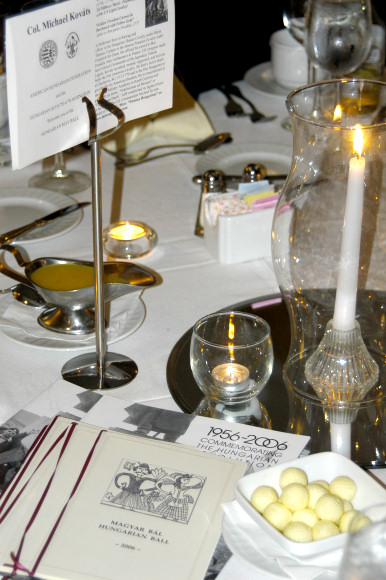
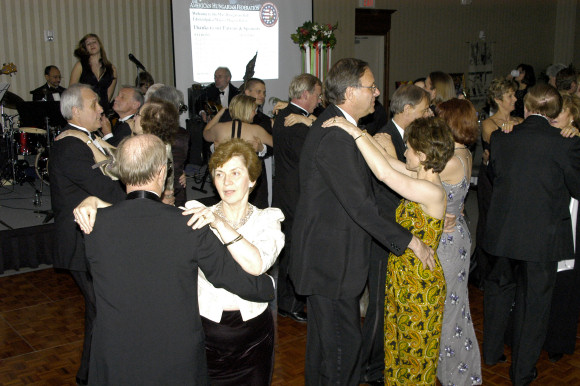
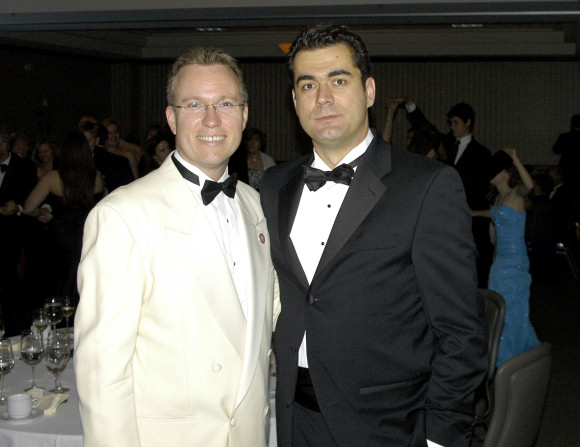
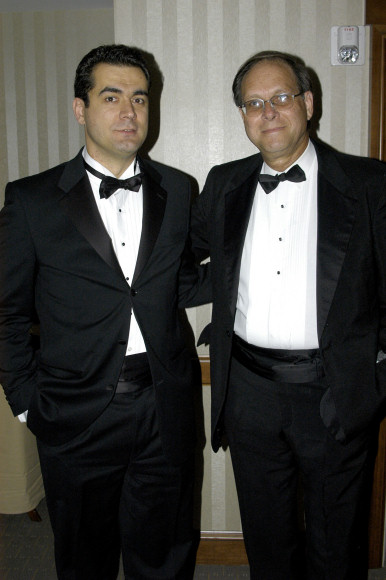
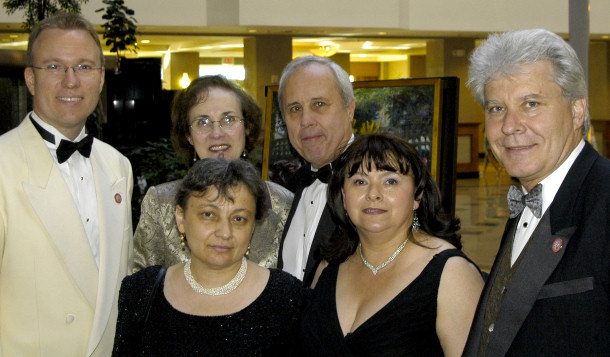
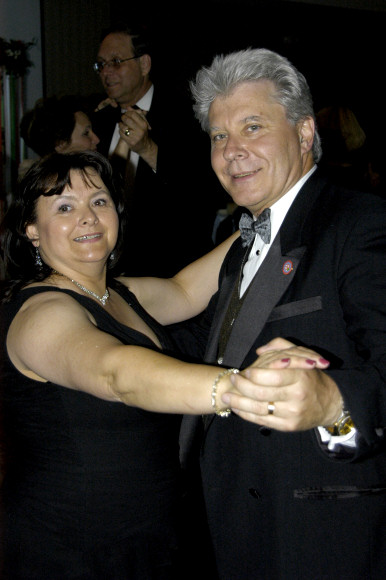
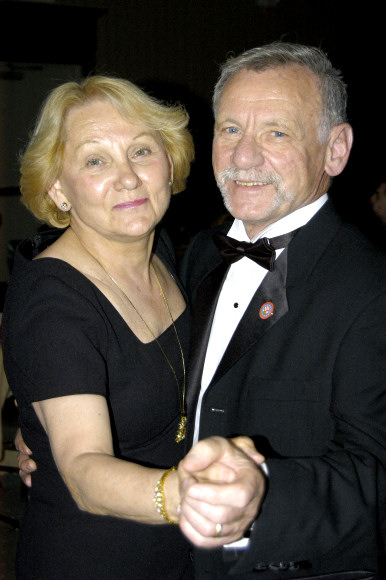
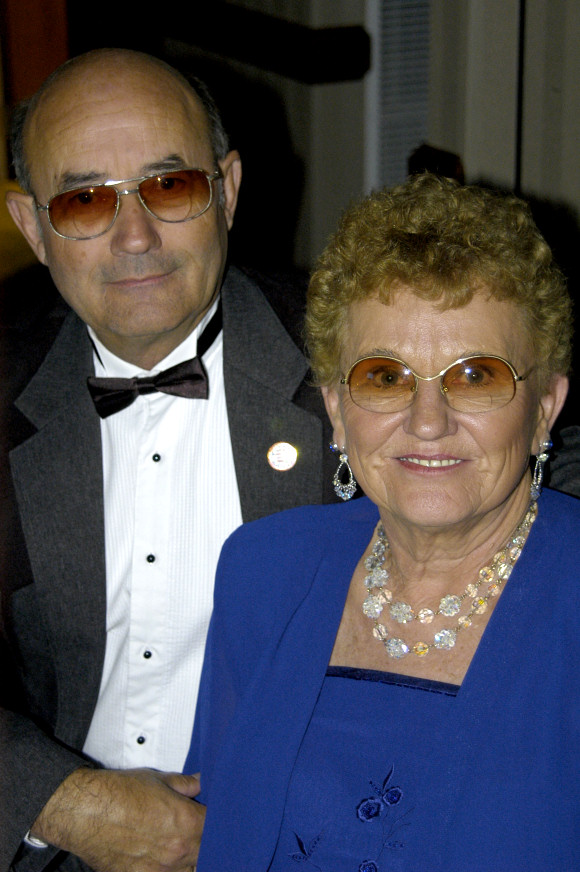
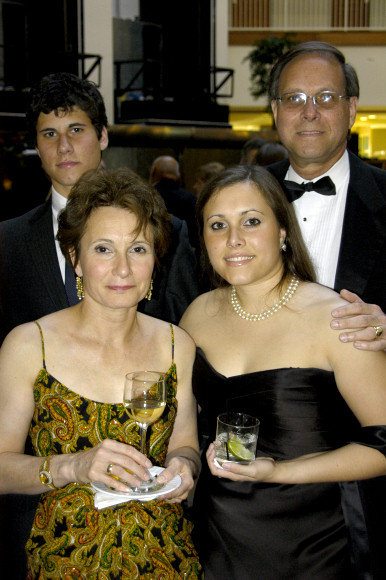
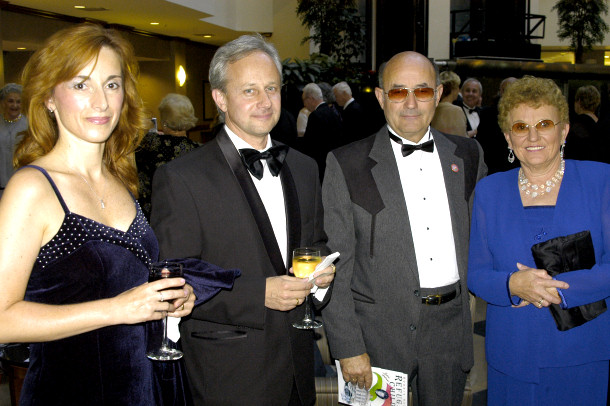
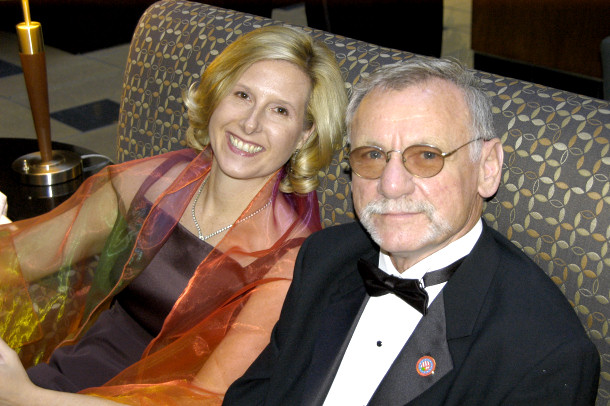
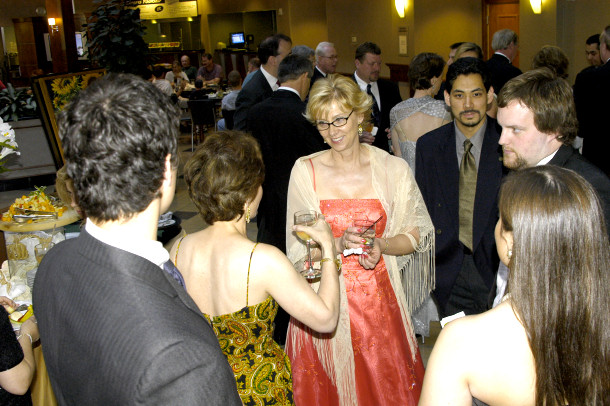
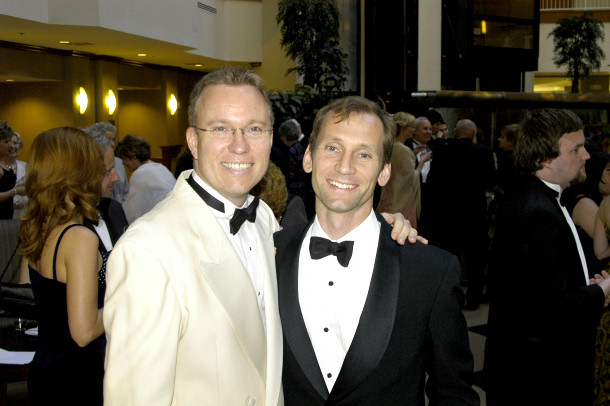
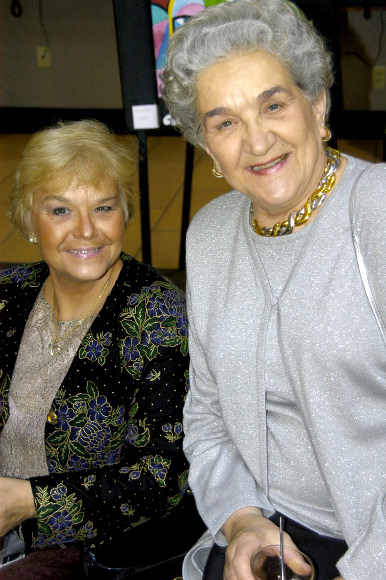
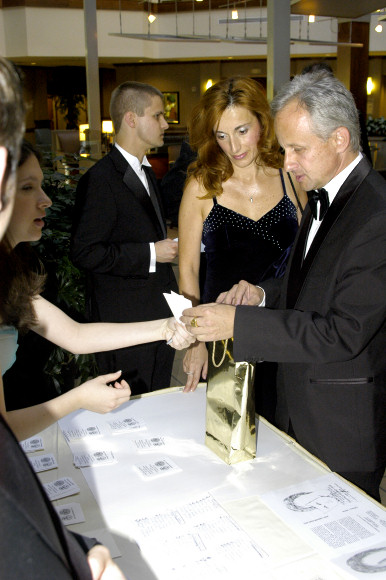
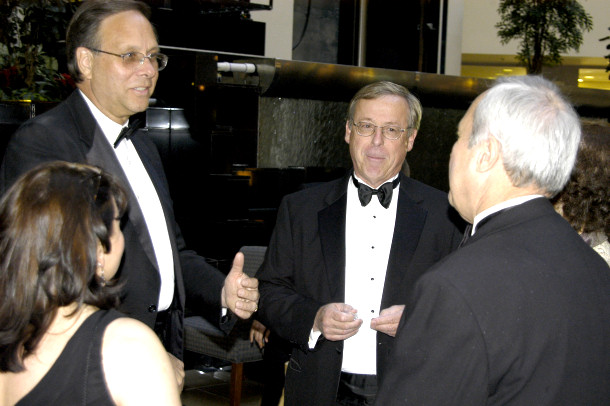
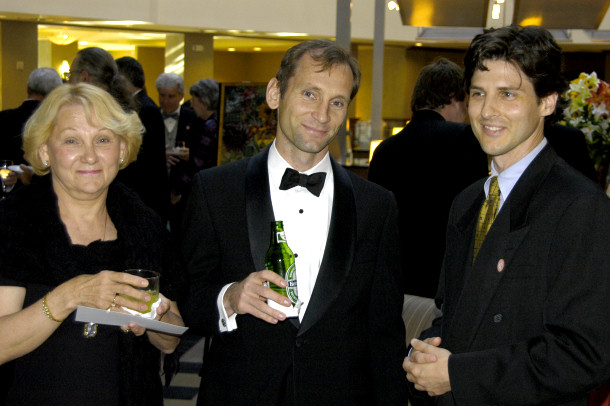
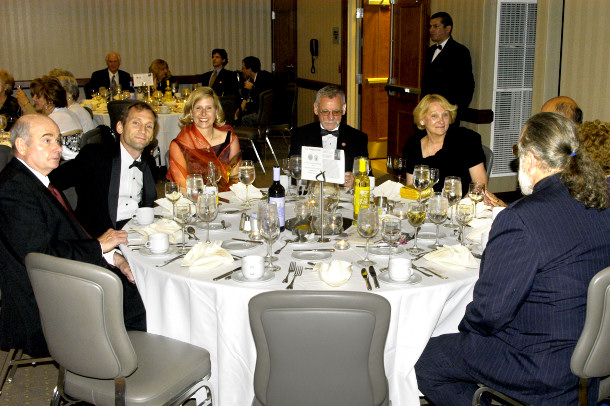
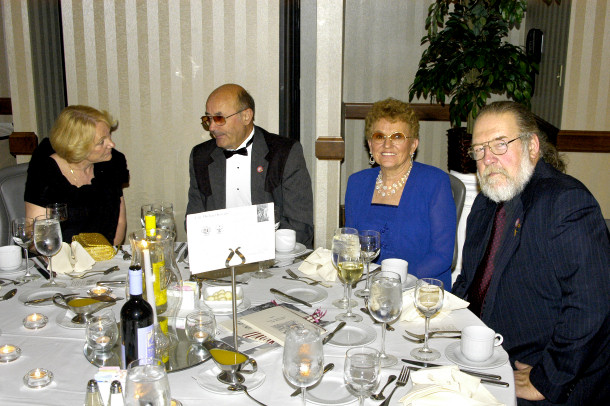
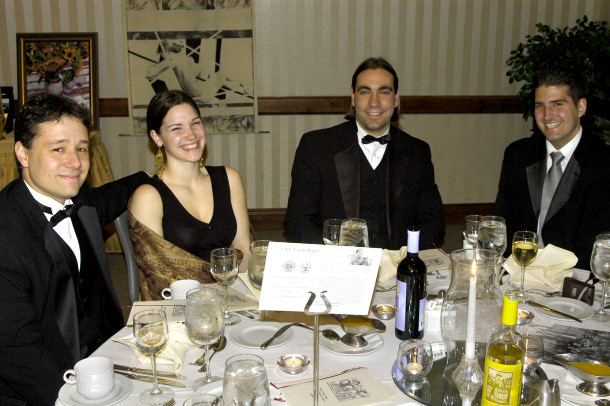
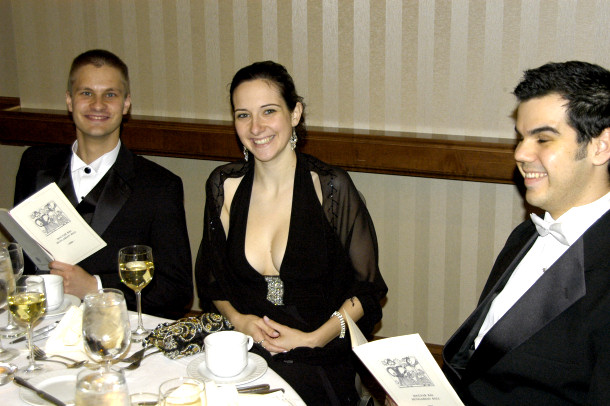
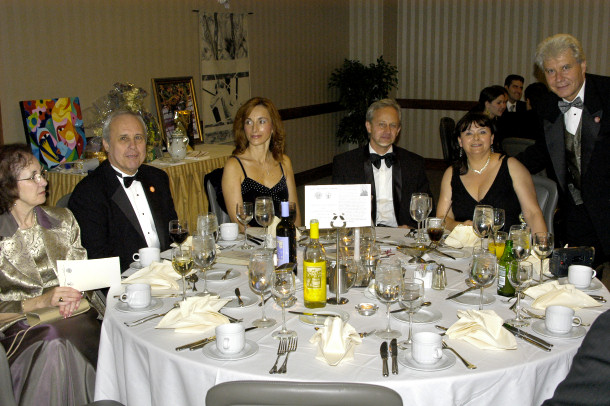
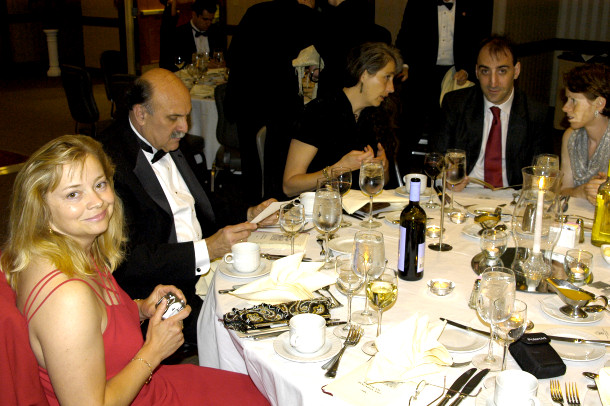
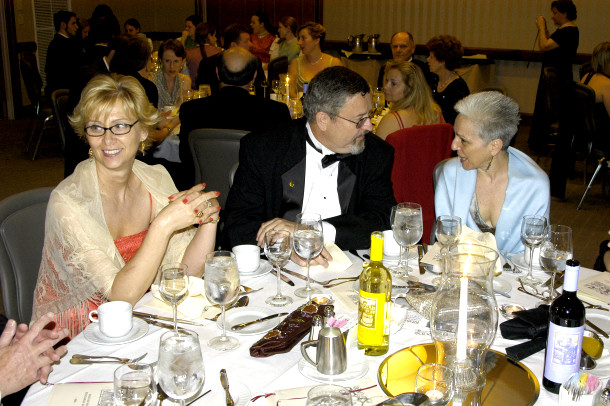
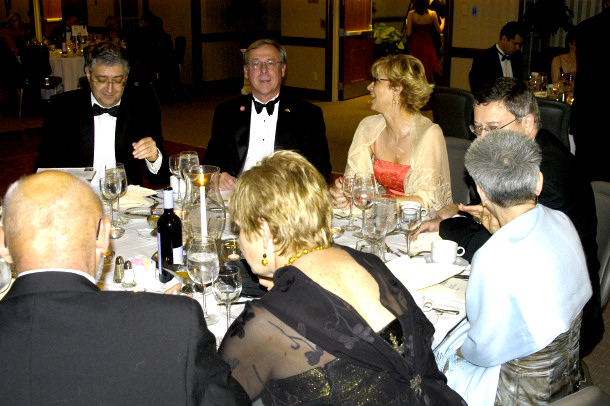
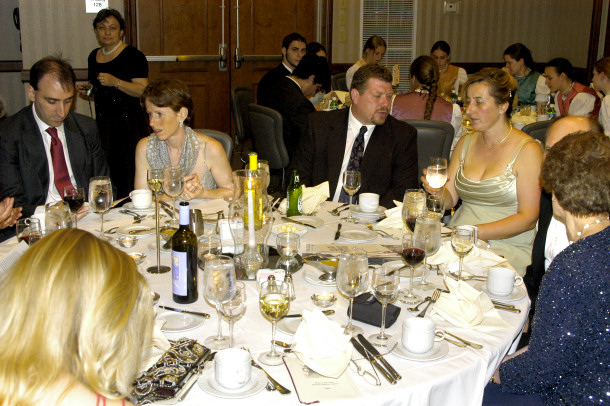
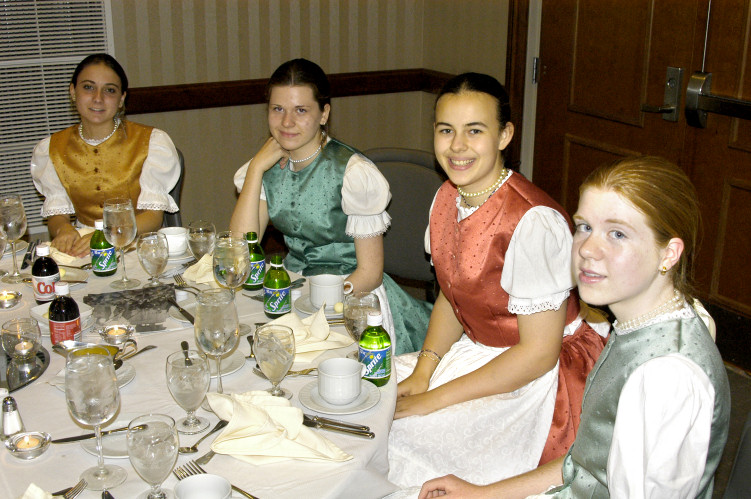
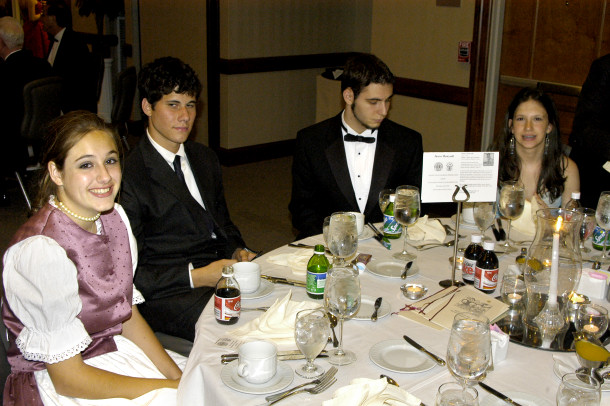
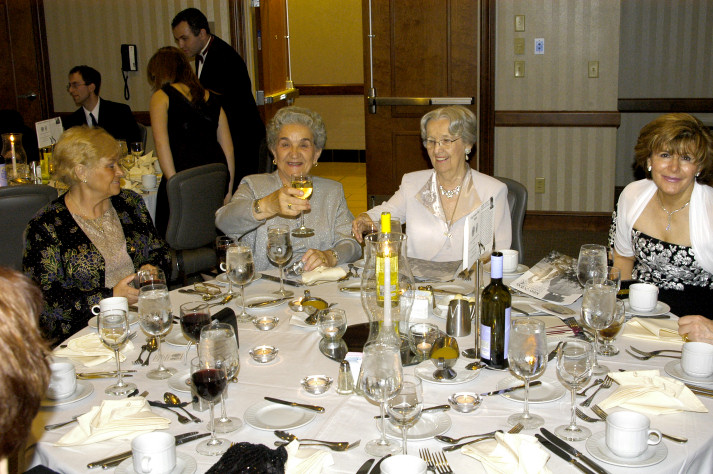
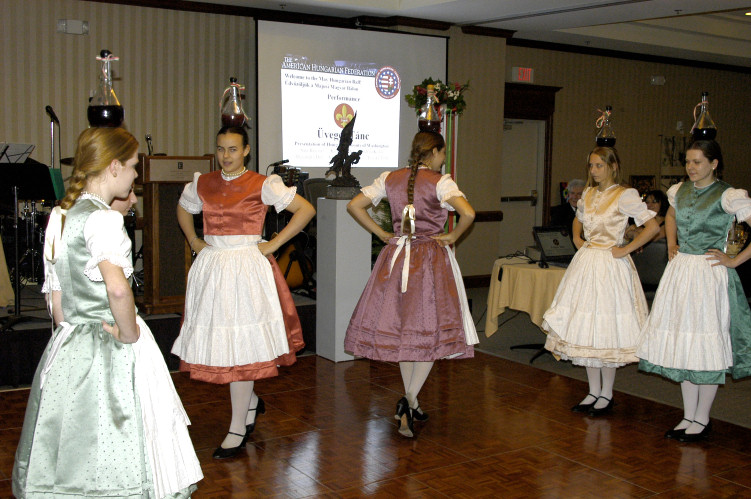
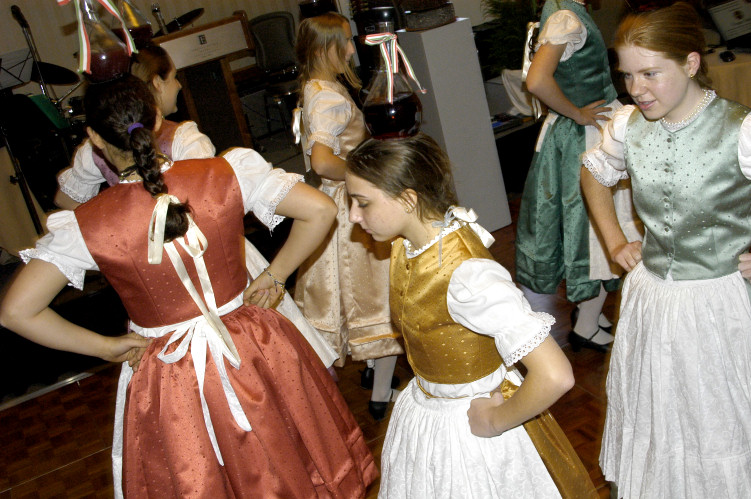
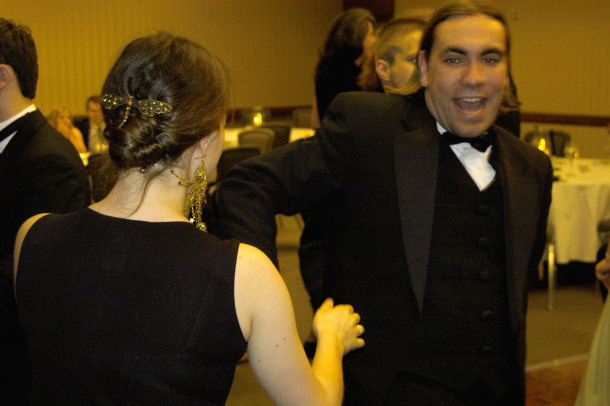
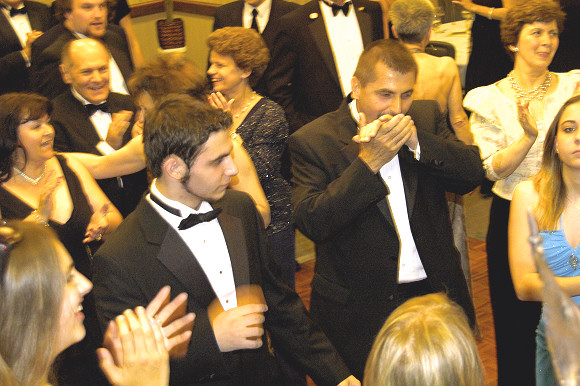
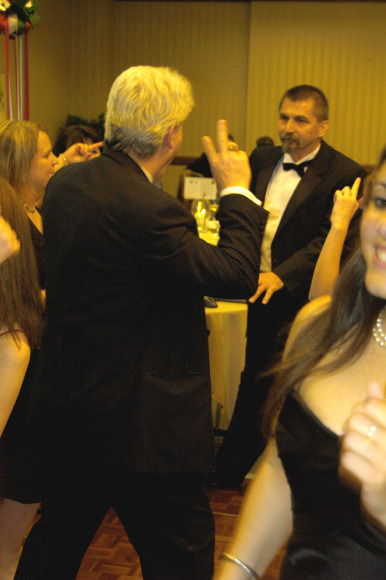
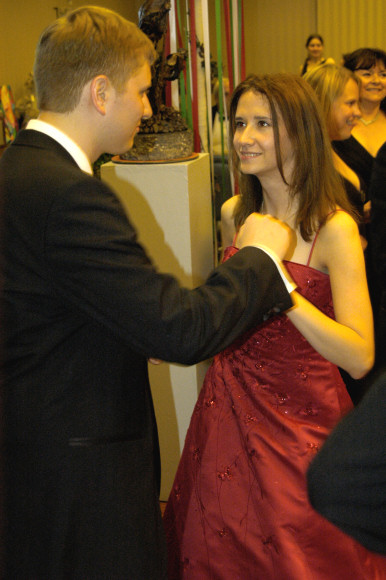
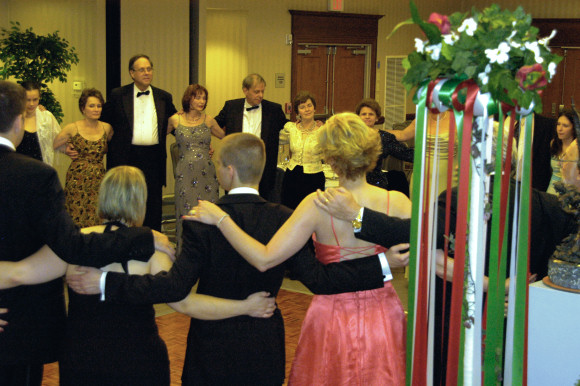
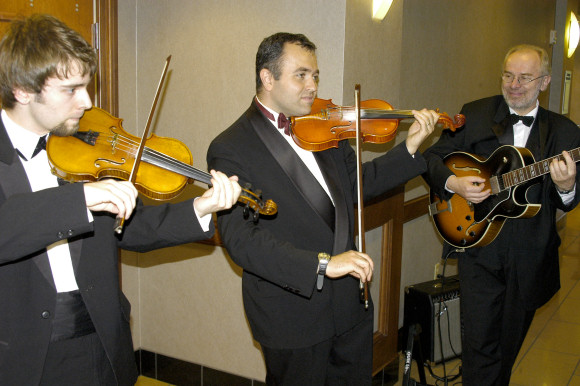
5/20/2006 – The Washington May Hungarian Ball – A very special benefit evening! The phenomenal New York Continental Band and a performance by local scouts made for a very special evening. In what hopes to be an annual revival of the famed Hungarian Ball inWashington, the gala, black-tie affair raised funds to support the Hungarian Scouts of Washington, D.C., and a series of events commemorating the 50th anniversary of the1956 Hungarian Revolution and the Hungarian historical communities living in the countries neighboring Hungary.
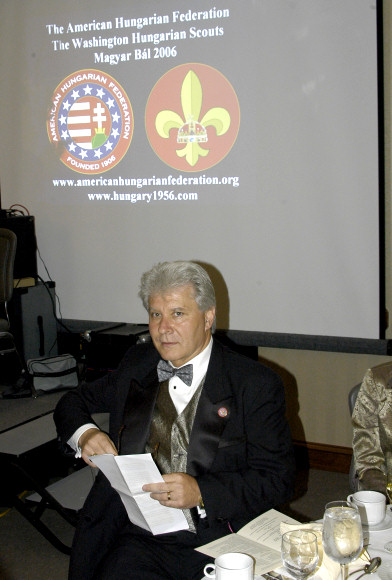
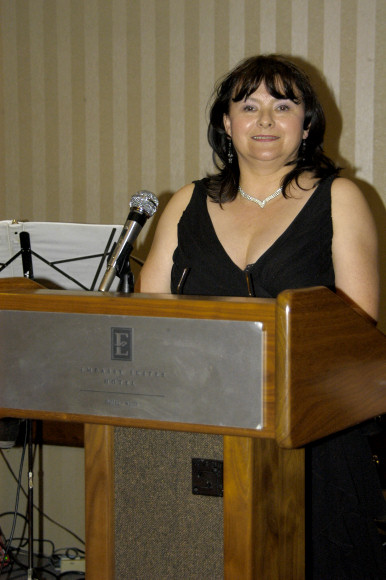
AHF’s National Secretary and Ball Committee Chair, Erika Fedor, welcomed guests and thanked the committee for the hard work in outting such a beautiful program together. Istvan Fedor, AHF President, gave his opening remarks and called attention to the need for unity and national representation and AHF’s proud history as the nation’s oldestHungarian-American umbrella organization. Karoly Dan, Cultural Attache at the Hungarian Embassy in Washington, DC, addressed the audience and read a letter from Hungarian Ambassador Simonyi.
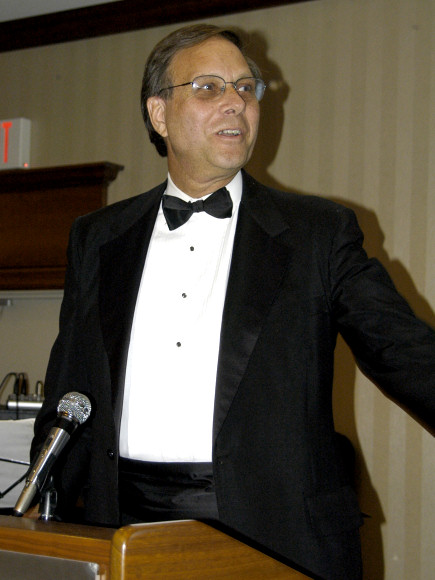
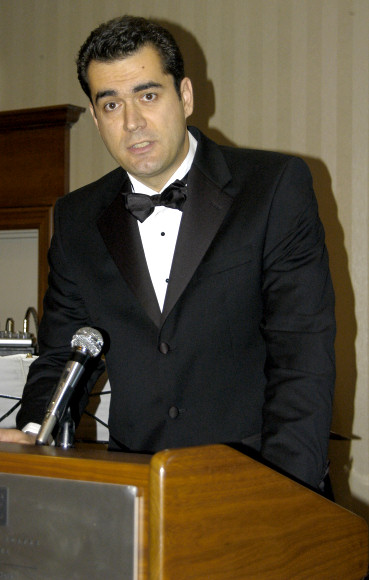

AHF Assoc. President Frank Koszorus delivered a keynote address focused on the implications of the 1956 Hungarian Revolution and asked the community to join AHF to take concrete steps in righting some of the wrongs resulting from repurcussions against Hungarians in Rumania and elsewhere in the CarpathianBasin as a result of the fear that democratic revolt would spread. He specifically called attention to: “the Rumanian government’s virtual liquidation of the Hungarian-language Bolyai University in Rumania.Nobel Laureates and Wolf Prize Laureates recently called upon Rumania to take “immediate steps” to “re-establish the public Bolyai University in Cluj-Napoca/Kolozsvar.” What a fitting commemoration of 1956 righting such wrongs extending back decades would be.It would also be a fitting tribute to the memory of thousands of unsung heroes who did not compromise but sacrificed their lives for the cause of liberty fifty years ago. Romania has rejected this request. Our Federation is committed to see the end of discrimination in Romania and the respect for human and minority rights, including autonomy. ” Koszorus remarked.

AHF Executive Committee Chair and member of AHF’s 1956 Committee, Bryan Dawson-Szilagyi, gave a presentation on upcoming AHF events across the country related to the commemoration of the 50th Anniversary of the 1956 Hungarian Revolution. He called for volunteers to help ensure a fitting 50th Jubilee. Events include:
- May 29th, Memorial Day commemoration honoring Hungarian American heroes at Arlintgon National Cemetery
- October 15th Carnegie Hall and St. Patrick’s Requiem Mass in New York City
- October 20th Gala in honor of 1956 Freedom Fighters at Washington, D.C.’s prestigious Cosmos Club.
 A 1956 Film Festival
- 1956 Memorials in Naples, FL; Lorain, and Cleveland, OH, Colorado, and elsewhere
- 1956 Resolution effort in all US States
- AHF’s 1956 Portal providing free Web pages to all AHF member organizations to help consolidate information into one resource.
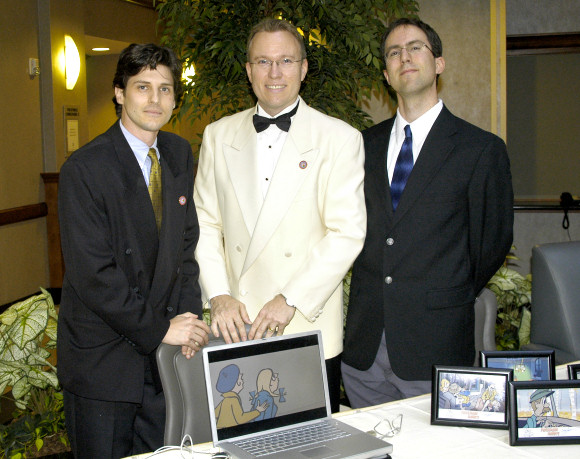
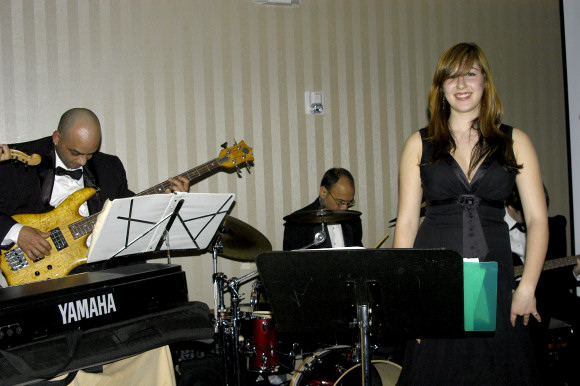
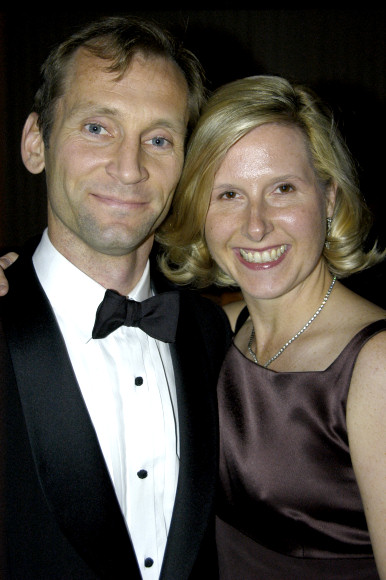
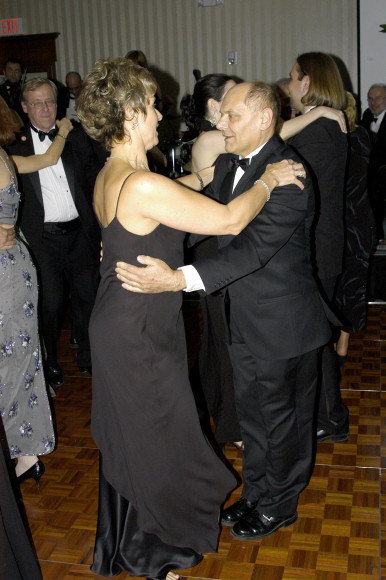
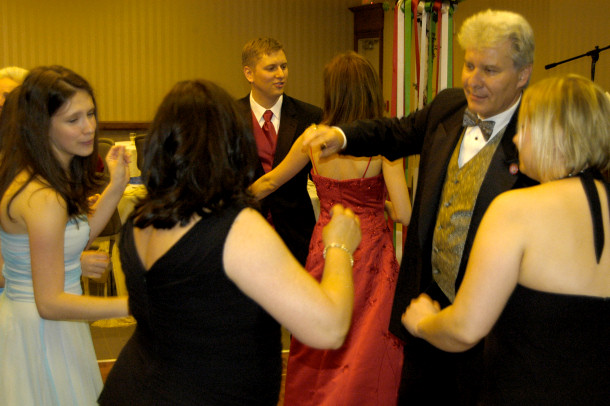
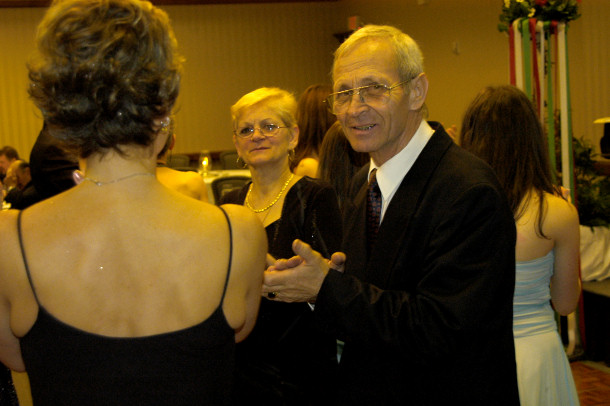
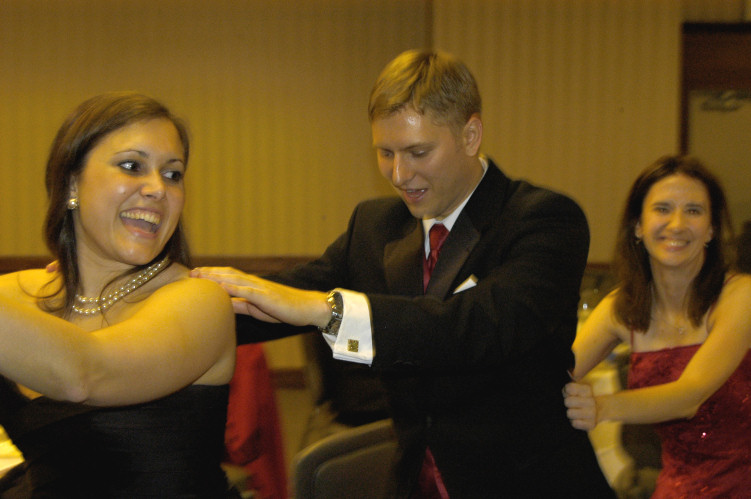
The night included a raffle of numerous unique and valuable items (donors can be seen in the right column) and ended with dancing the night away. This is the first of many Hungarian Balls to come – If you would like to serve on the AHF Ball Committee, please let us know! Contact Erika Fedor at efedor55@cs.com
Additional Photos (click for larger image)
Photos by Bryan Dawson-Szilagyi






Previous Hungarian Charity Balls:
- [2013 Hungarian Ball]
- [2012 Hungarian Ball]
- [2011 Hungarian Ball]
- [2010 Hungarian Ball]
- [2009 Hungarian Ball]
- [2008 Hungarian Ball]
- [2007 Hungarian Ball]
- [2006 Hungarian Ball]
Related
BÁLBIZOTTSÁG / BALL COMMITTEE
Erika Fedor
- Irén Hogye
- Frank Koszorús Jr.
- Marianne Koszorús
- Judit Kölus
- Zsuzsa Takács
Tiszteletbeli Védnökök / Honorary Committee
- Mr. Jules Balogh
- Rev. Imre Bertalan
- The Hon. Tom Lantos
- The Hon. Daniel W. Lipinski
- The Hon. Thaddeus G. McCotter
- Leslie Megyeri, Esq.
- The Hon. Anikó Gaál Schott
- His Excellency the Ambassador of Hungary,
Dr. András Simonyi - Mr. Steven J. Varga
- The Hon. Frank R. Wolf
AHF would like to express its sincere gratitude to the following Patrons, Sponsors, Donors, and Raffle Sponsors whose support helped make the event possible:
PATRONS:
Mr.& Mrs. Stefan & Erika Fedor
Mr.& Mrs. Paul Harsányi
Mr.& Mrs. Tamás Hilberth, Esq.
Mr.& Mrs. László Hogye
Mr.& Mrs. Charles Kolozsváry
Mr.& Mrs. Ákos Nagy
Mr. John Stetz
SPONSORS:
Mr. Jules Balogh
Mr. & Mrs. Attila Kocsis
Mr. & Mrs. Zoltán Körössy
Mr. & Mrs. Imre Lendvai Lintner
Mr. & Mrs. Leslie Megyeri, Esq.
Mr.& Mrs. Maximilian Teleki
Dr. & Mrs. Eugene Volker
DONORS:
Hon. Anikó Gaál Schott
Mr. László Papp
Mr. & Mrs. Steven Kárpáthy
Mr. & Mrs. Sándor Murray
RAFFLE SPONSORS:
Bobbie Kalman / Crabtree Publishing
Balazs Szabo
Craftsman Wine
Hungarian Reformed Federation
Steven Ficher and “Freedom Dance: The Movie”
Duna Television
Rev. Csaba Osváth
Gyuri Hollósy
Embassy Suites Hotel
Erika and Istvan Fedor
Arpad Gergely
Hugo Tischler
William S. Shepard
Previous Hungarian Balls Supported:
2. The Hungarian American Education and Cultural Preservation Fund (Amerikai Magyar Oktatási és Kultúrális Alap (AMOKA) to support a wide variety of programs from scholarships and internships that develop our future leaders to assisting local communities at home and abroad to preserve Hungarian schools and cultural institutions, language, history and traditions. In 2012, the Hungarian Scholarship Fund (HSF) / Magyar Ösztöndíjalap surpassed $400,000.00. Founded by AHF Board Member, Prof. Bela Bognar, the HSF supports students who are economically disadvantaged and live in Hungary and in the lands lost at the Treaty of Trianon which cost Hungary 2/3 of her territory, 1/3 of her ethnic-Hungarian population and vast natural resources. [read more and HELP!]
- Tőketerebes (Trebišov)
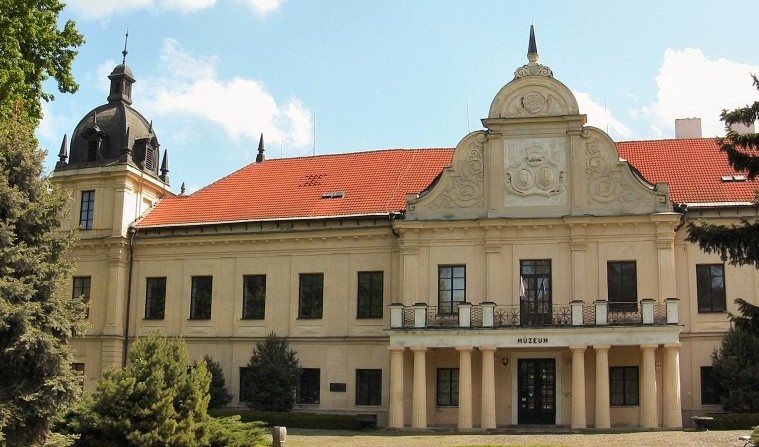
 In 2013, the ball contributed funds toward the purchase of diagnostic equipment to support the Lung Ward of Trebišov Hospital (Tőketerebes Állami Kórház Tüdőosztály) in Eastern Slovakia (in former Upper Hungary). The Lung Ward treats numerous patients who contracted lung cancer or other lung-related diseases, following the Chernobyl disaster. Tőketerebes (Trebišov in Slovak) was home to the Andrássy family’s residence. Built in 1786 by Count Csáky I., it was inherited by the Andrassy family who remodeled it in the neo-rennaissance style. Count Gyula Andrassy, the Kingdom of Hungary’s last foreign minister, was born and raised here. Although in 1910 there were 2323 Hungarians and 2181 Slovaks living here (out of a population of 4708), by 2001, the ethnic makeup had changed significantly and reflects the decline of Hungarian populations in Slovakia and elsewhere in the Carpathian Basin due to many factors including widespread anti-Hungarian practices. Out of a population of 22,000 it had become 87% Slovak, 8.9% Roma, and only 1.7% Hungarian.
4. The Claude Alexander Volunteer Program supporting Walter Reed Hospital was founded by Mike Healy in 2005 to help wounded U.S. Army soldiers being treated at Walter Reed Army Medical Center in Washington, DC. The program provides outpatients and their families with access to free off-post recreational events.
5. The Budapest-based Juvenile Cancer Foundation. There are approximately 300 children who are diagnosed with cancer in Hungary every year. The key objective of the Foundation is to build a reference 300-bed hospital and treatment center for children with cancer which would offer medical services ranging from diagnosis to sustainable treatment on the level of developed nations by highly qualified medical doctors, nurses and social workers to ensure the recovery of children.
6. The Hungarian Elementary School in Vaján, Slovakia. The school is located in a little ethnic Hungarian village of under 800 people, Vaján (or Vojany in Slovak after annexation following the Treaty of Trianon) in the Kassa District (Kosice) of Slovakia. [read more]
7. “Classrooms of the Future” – This program builds Educational Bridges between the US and Hungary and Promotes Science Education. Securing the support of Dr. Janos Horvath, Hungarian Member of Parliament, AHF worked with McIntosh Junior High School in Sarasota, Florida. The objective is to have students in Zalaber Elementary School in Hungary work directly on scientific programs with their US counterparts via laptop teleconferencing.

8. The Smithsonian Folklife Festival: Hungarian Heritage – Roots to Revival
2013 also supported a unique opportunity for our community, the Smithsonian Folklife Festival. The Festival’s theme was “Hungarian Heritage – Roots to Revival” and featured a wide spectrum of activities from Hungarian folk crafts to dance and music from various Hungarian communities, including Transylvania. [read more]
100 ÉVES A NEMZETKÖZI CSERKÉSZMOZGALOM
– MIT JELENT EZ SZÁMUNKRA? – Száz évvel ezelott egy afrikai szolgálatból
hazatéro angol katonatiszt elindította azt a nevelo mozgalmat,
amely mára a világ legnagyobb ifjúsági szerveztévé
fejlodött. Lord Baden Powell az ifjúság kalandvágyára
és romantikus hajlamára alapozta jellemnevelo rendszerét,
amellyel talpraesett, testben és lélekben egészséges, jellemes fiatalokat nevel. Az új mozgalom futótuzként terjedt szét a
világon. Magyarország az elsok között volt, ahol
nevelok és vezeto államférfiak – élvonalban
olyan kimagasló személyekkel, mint gr.Teleki Pál és Sík Sándor
– felismerték a cserkészet értékét.
Felismerték, hogy egy cserkészszellemu fiatalság
megalapozhat egy életképes, szilárd erkölcsi alapokon nyugvó,
sikeres társadalmat. Ezáltal a meglátás által
vezérelve, kidolgozták a magyar cserkészet rendszerét,
kiegészítve a Baden Powell-i alapokat egy jellegzetesen
magyar színezettel.
Sík Sándor fogalmazta meg legtömörebben, hogy a magyar cserkészet célja “emberebb emberek, magyarabb magyarok” nevelése. Hála a magyar vezetoség kiváló muködésének, a két világháború között a magyar cserkészet – a trianoni csonkítás ellenére – világviszonylatban kimagasló és elismert szervezetté vált. Teleki Pált beválasztották a világcserkészet legfelsobb vezetoségébe, a cserkész világtalálkozókon, versenyeken a magyar kontingens az elsok között végzett, és mindennek koronájaként Magyarországnak jutott az 1933-as nagysikeru gödöllöi jemboree megrendezése. Szinte látnoki ihlet által vezérelve, az akkori magyar vezetoség olyan foglalkozási és nevelési anyagot, u.n. “próbarendszert,” dolgozott ki, amely erkölcsi és gyakorlati tartalmán kívül kihangsúlyozta a magyar hagyományokat és kulturális értékeket. Ez, és a magyar cserkészet elsorangú vezetoképzo rendszere, tették lehetové, hogy amikor a kommunista rendszer betiltotta muködését, a magyar cserkészet zökkenomentesen folytatódhasson külföldön. Az ötvenes évek közepére már magyar cserkészcsapatok muködtek nemcsak Nyugat-Európában, hanem Észak- és Dél-Amerikában, valamint Ausztráliában is.
A Baden-Powell-i cserkészet és annak jellegzetesen magyar változata olyan szerencsés induló alapot nyújtott, amelynek segítségével a Külföldi Magyar Cserkészszövetség immár 62 éve tesz eleget jellemnevelo és magyarságorzo küldetésének. De nyújtott olyan alapot is, amelynek segítségével a kommunista rendszer bukását követoen azonnal megalakultak a magyar cserkészszövetségek mind az anyaországban, mind a környezo országok magyarlakta területein.
Ma már a Külföldi Magyar Cserkészszövetségen kívül a Kárpát-medence minden országában muködnek magyar cserkészszövetségek, összesen hét szövetség, amelyek közös rendezvényekkel, programokkal és egymást támogatva munkálkodnak az összmagyar fiatalság nevelésén és nemzeti öntudatának megorzésén. És így, egy angol katonatiszt által száz éve elindított gondolat adta meg azt a keretet, amelyen belül a négy évtizedes kommunista uralom alatt külföldön ápolhattuk külföldi fiataljaink magyar nyelvtudását és nemzeti érzését, hogy aztán a szovjet birodalom bukása után, országhatárokat áthidalva, összekösse a Kárpát-medencében és a világ minden táján élo magyar ifjúságot. – Dömötör Gábor