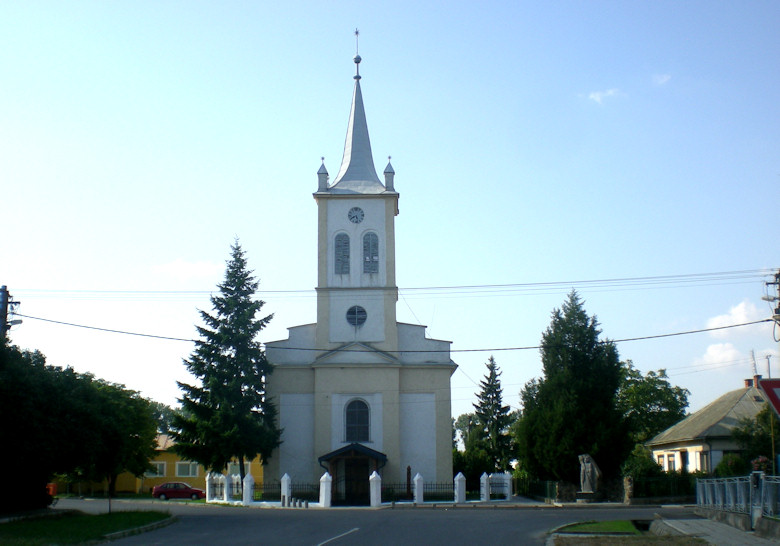
8/21/2010 – AHF supports Hungarian School in tiny Hungarian Village in Slovakia. The school is located in a little ethnic Hungarian village of under 800 people, Vaján (or Vojany in Slovak after annexation following the Treaty of Trianon) in the Kassa District (Kosice) of Slovakia.
Anti-Hungarian practices in Slovak state school registration and the Slovak Language Law forbidding the use of Hungarian in official business make it difficult for these historic communities to preserve their over 1000-year-old heritage. The smallest communities are the hardest hit and Church programs are the only option.
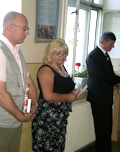
Erika Fedor, Chair of the AHF Social Committee, born in Felividék (Slovakia), visited the Reformed Church’s Hungarian Language Elementary School of Vaján (Magyar Tanitási Nyelvü Református Egyházi Alapiskola Vaján) and personally delivered a check to Rev. Dr. Dr. Hudak Balint, principal of the school and pastor at the church. Erika visited with the children and teachers.
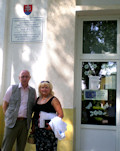
Following the visit to Vaján, Mrs. Fedor met with former Ambassador Géza Jeszensky to deliver a donation in favor of the Rákóczi Szövetség (Rakoczi Foundation) which was founded in 1989 after the collapse of Communism. The Foundation supports ethnic Hungarian communities in the Carpathian Basin. AHF’s donation was targeted at providing scholarships and other support to students and families in Slovakia.
About Vaján
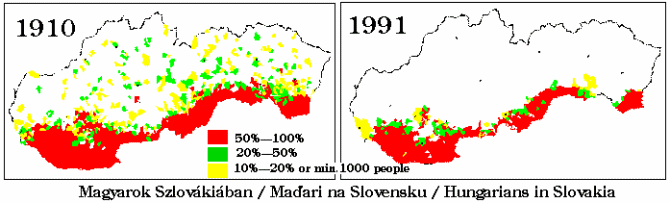
The graphic shows ethnic distribution in Slovakia and population decline from 1910 – 1991. But many areas remain very Hungarian as in the Kassa area. In Vaján in 2001, out of 797 residents, 560 were Hungarian, 172 Slovak, and 36 Gypsy. [Vaján (szlovákul Vojany) község Szlovákiában a Kassai kerület Nagymihályi járásában. 2001-ben 797 lakosából 560 magyar, 172 szlovák és 36 cigány volt.]
We need your support!
PLEASE CONSIDER A DONATION!
[<< Back to News from Slovakia]
[<< Back to News from Slovakia]
Related
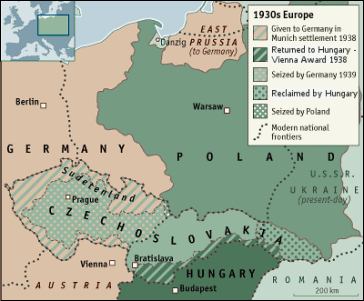
Why so many Hungarians across the Border?It is the result of World War I and French and Western desires for hegemony in Europe. Developing Central European power and a large Hungary did not further these goals. The Treaty of Trianon, cost hungary 2/3 of her territory, 1/2 of her population (1/3 of which were ethnic Hungarian) and 90% of her natural resources, railroads and infrastructure. At the time President Wilson said: “The proposal to dismember Hungary is absurd” and later Sir Winston Churchill said: “Ancient poets and theologians could not imagine such suffering, which Trianon brought to the innocent.” We are sad to report that they were right.
Links
- The Slovak Language Law
- The Treaty of Trianon – A Nation Dismembered
- AHF calls upon Vice President Biden to discuss Slovakia’s language law with Hungarian Prime Minister Bajnai
- AHF Submits Letter Regarding Intolerance in Slovakia
- Use of Hungarian ILLEGAL in Slovakia – Hungarian FM expresses regret
- The American Hungarian Federation’s call for greater cooperation among Hungarian American organizations in raising the ill-advised and discriminatory Slovak language law published in Heti Valasz
- “Halál a magyarokra!” / “Hunok a gázkamrába! Magyarok a Dunába!“
- 168 Óra Online írása: A ‘Halál a magyarokra’ Amerikában is kiverte a biztosítékot
- Amerikai magyar szervezet küldött levelet Kubišnak
- Slovaks Confirm Benes Decrees: Called “Cancer of the Slovak Nation.” AHF issues statement.
- The Benes Decrees – a shameful act of ethnic cleansing
- The Treaty of Trianon – A Nation Dismembered
- Vojvodina – More ethnic cleansing in historic Vajdasag
- News from Rumania – Home to the largest Hungarian “minority”
- Hungarian National Flags fly again in Hungarian churches in today’s Slovakia
- AHF Supporting Dual Citizenship
- www.vilagmagyarsag.com – includes English and Hungarian resources and petition
The Benes decrees sent millions of people, who had lived in the region for many centuries, off in sealed wagons, away from their homes, their families – not to mention the odd ones who died on the trip.