
3/09/2013 – AHF commemorates Hungarian National Day and the 1848 War of Independence. The annual commemoration emphasized the relevance of Kossuth and the historic fight for democracy to today, Hungary’s revered history of standing up for freedom and liberty against great odds, and the serious human and minority rights challenges facing ethnic-Hungarian communities throughout the Carpathian basin.
Related

[watch the video on AHF’s YouTube Channel]
AHF presents a gift to to the American People: The Kossuth Bust in the US Capitol [read more]
- Download AHF Articles
- AHF 2012 Commemoration
- AHF 2011 Commemoration
- AHF 2010 Commemoration
- AHF 2009 Commemoration
- AHF 2007 Commemoration
- AHF 2006 Commemoration
- AHF 2004 Commemoration
- Famous Quotations
- About Louis Kossuth
 Hear Louis Kossuth Speak! Audio Recording and text of 1890 Louis Kossuth
speech
- Audio and text of the Kossuth Anthem, “Kossuth Lajos azt Uzente”
- Links
Today, there are many reminders of Kossuth’s impact on America and the world. In North America, there is a Kossuth County in the state of Iowa, a town with his name in Indiana, Ohio and Mississippi, a settlement with a Kossuth Post Office is in Pennsylvania. In addition, there are Kossuth statues and plaques in New York, Cleveland, Akron, New Orleans, Washington, and Ontario, Canada. The Hungarian Reformed Federation‘s building on Dupont Circle, in Washington, DC is called Kossuth House with a memorial plaque commemorating his speech on democracy. See the picture gallery and memorials on Louis Kossuth in North America.
The 1848 Hungarian Revolution, under its leader Louis Kossuth sought to throw off the Austrian Yoke. It failed after Russian intervention, but its impact on the United States and Central and Eastern Europe is felt even today. The annual commemoration of 1848, organized by the Washington, D.C. Chapter of the American Hungarian Federation was held this year on March 9th at the American University Wesley Theological Seminary Chapel.
Each year, speakers focus on the significance of the 1848 revolution and how its ideals and goals relate to today’s Hungary, including the political and human rights situation in Central and Eastern Europe and relations with the United States. Zoltán Bagdy, AHF Co-President and Chair of its Cultural Affairs Committee, welcomed guests and served as Master of Ceremonies. Bryan Dawson, AHF Executive Chairman, and his daughter, Xitlalli sang the national anthems of the United States and Hungary. The Rev. Miklós Peleskey delivered the benediction followed by welcoming remarks by András Szörényi, Poltical Officer from the Hungarian Embassy.
In his Welcome Address, Mr. Szörényi reflected on the transformational events of 1848 and its impact on the United States and positive relations between the two countries. He recalled Louis Kossuth‘s impact on Abraham Lincoln and the famed Gettysburg Address when Kossuth, in 1852, a decade prior to Lincoln’s speech, spoke these words before the Ohio State Legislature: “All for the people and all by the people. Nothing about the people without the people. That is Democracy, and that is the ruling tendency of the spirit of our age.”
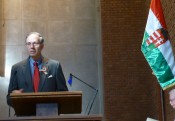
AHF President Frank Koszorus, Jr., delivered his annual “Reflections” address entitled, “Is Kossuth Relevant Today?” He described the impact of Kossuth and the ideals of the 1848 Revolution on the affect on the relationship between Hungary and the United States, the need to protect Hungary’s international reputation, the extreme negative affects on that reputation when poltical motivations outweigh honest debate, and the currrent situation of discrimination and persecution facing ethnic-Hungarian communities. He commented:
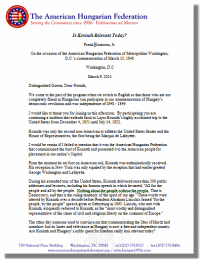

“We still have unresolved issues to address, as liberal democracy has yet to grow strong roots everywhere in Central and Eastern Europe. Indeed, intolerance toward religious and national minorities shamefully and surprisingly still flourishes in some places.
One need only consider the Szekely flag dispute, the denial of the Hungarians’ request for autonomy, or the alarming proposals to redistrict – that is eliminate the Hungarian administrative units – of the Szekely region in Romania; or the violence against Hungarians for speaking in their mother tongue in Serbia; or the discriminatory language and citizenship laws in Slovakia; or rising anti-Semitism; and I could go on.
And this is where Kossuth’s championing liberty and democracy comes into play. We can, we must follow his example; we can, we must educate the public in our communities about these critically important matters. We can, we must educate to dispel faulty information about Hungary and Hungarian history; we can, we must vigorously support policies that will promote liberal democracy, civil societies and minority rights. Kossuth and Hungary of 1848-49 are indeed relevant today!” [download Frank’s speech]
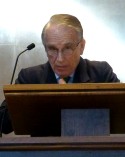

Gyula Varallyay, board member of the Hungarian American Coalition, delivered the 2013 Keynote Address. Dr. Varallyay reflected on the impact of 1848 in a fascinating historical context, commenting on how the ideals of Louis Kossuth and 1848 would be reflected laws and in future Hungarian struggles for freedom, even today. During the 1956 Hungarian Revolution, for example, the Kossuth Coat of Arms quickly became the symbol of that historic fight. But importantly, as with the 12 points in 1848, Hungarian student revolutionaries in 1956 unveiled their own, very similar series of demands known as the 16 points, which, among other things, called for March 15th to be a National Holiday and demanded that “the statue of Stalin, symbol of Stalinist tyranny and political oppression, be removed as quickly as possible and be replaced by a monument in memory of the martyred freedom fighters of 1848-49.” He went on reflect on the lessons we should learn from 1848:
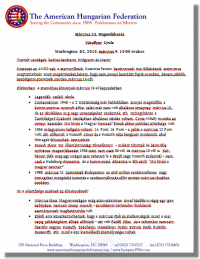

Tiszteljük a reformkor szellemi nagyjait, költőket, írókat, politikusokat és gondolkodókat egyaránt: ugyanis 1848 márciusra a jövőről alkotott elképzeléseik kiristályosodtak, eltökélt szándékuk lett Magyarország függetlenségének kivívása, az ország modernizációja, és – a bécsi Udvar ellenére -, a nyugati szabadság eszméinek maradéktalan meghonosítása; 2. Olvassuk történelmünk egyik legtehetségesebb szellemi elítjének munkáit, tanuljunk eszmeiségükből – melynek megvalósítása akkor az országot paritásba hozta volna minden nyugati országgal; 3. Semmit se felejtsünk, és mindenből tanuljunk: legyünk készek arra is, hogy levonjuk a tanulságot azokból a hibákból, amelyeket politikusaink és gondolkodóink elkövettek 1848-1849-ben, akár a bécsi udvarral, a nemzeti kisebbségekkel vagy akár a magyar néppel szemben, mert túlbecsülték saját erejüket vagy alábescülték ellenfeleik – ellenségeik – elszántságát és lehetőségeit; és 4. Tartsuk fenn példaképnek 1848 március idusának önzetlen szereplőit, akik abban a történelmi pillanataban készek voltak minden áldozatot meghozni, és személyes valamint csoport érdekek fölé helyezni a nemzeti érdekeket: Amit a magyarság zöme akkor kívánt!
[download Gyula’s speech (English and Hungarian)].
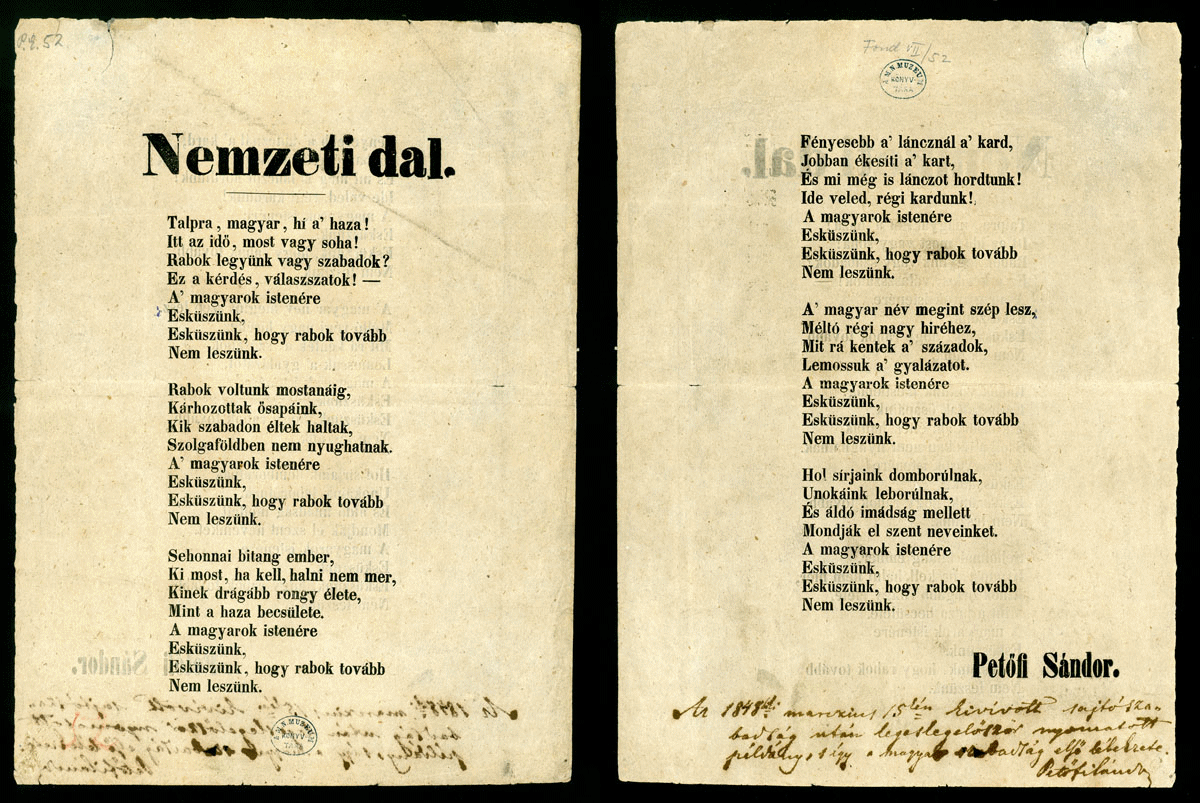


Members of the the The 4th Bátori József Hungarian Scouts Troop of Washington, DC were again a special part of the program including Hargitai Anna who recited Petőfi Sándor’s Nemzeti Dal (her brother, Adam, delivered it in 2012). Isabelle Boone preformed a piano solo of Béla Bartók folksong arrangements, “Népdal feldolgozások” and her brothers, Alexander and William, recited Petőfi Sándor’s “Csatadal” and Weöres Sándor’s “Megy az úton a katona” respectively.


The audience sang patriotic Kosuth Dalok (Kossuth Songs). The Rev. Judit Mayer of the Hungarian Reformed Church of Washington, D.C., provided closing remarks and prayer – Bryan Dawson.
Join and Support us online!
