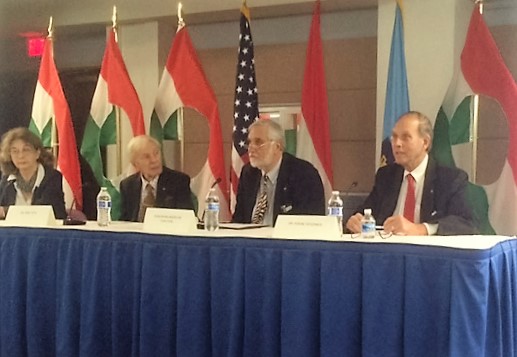
10/13/2016 – AHF Chairman addresses National Defense University on the 60th anniversary of the 1956 Hungarian Revolution. “I remember that as I matured, the often articulated view that ‘well, we couldn’t go to war over Hungary’ somehow didn’t quite sound right to me.” The presentation appears in full below.
Related
[Click to view] the 1956-2013 video
10/24/2013 – AHF Executive Chairman delivers multimedia presentation entitled “Reflections on the 1956 Hungarian Revolution” for the Shepherd Center World Affairs Series coordinated by A. Ross Johnson, Wilson Center Senior Scholar, Hoover Institution Research Fellow, and former Director of Radio Free Europe. Bryan Dawson, whose mother was wounded in the Freedom Fight, discussed the roots of the conflict and Polish-Hungarian sympathies, Hungary’s history and national character that contributed to the uprising, and the Revolution’s impacts internationally. [read more]
The resolution’s title: “Commemorating the 50th anniversary of the Hungarian Revolution and recognizing the sacrifices of Hungarian Freedom Fighters, the contributions of Hungarian Americans, and the friendship between the people and governments of the United States and Hungary.” Full text of the Texas resolution can be found on the Texas House Website.
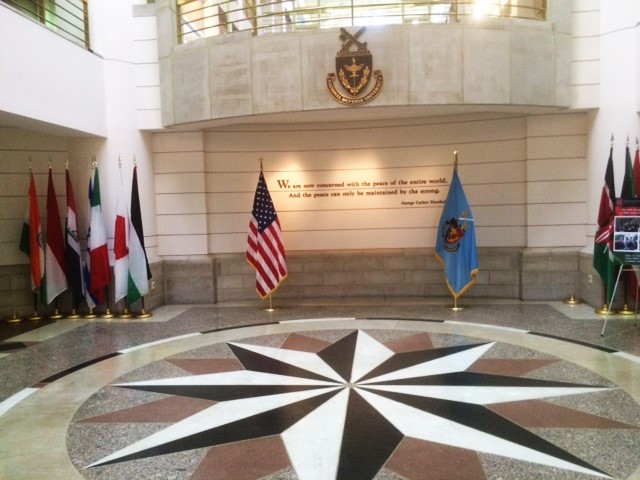
On October 12, National Defense University hosted a conference titled “1956: The Freedom Fight that Changed the Cold War: Geopolitics and Defense Policy.” Hungarian Ambassador Dr. Reka Szemerkenyi and Senior Vice President of the NDU Ambassador Donald Yamamota opened the seminar. The keynote speaker was Hungary’s Defense Minister Dr. Istvan Simicsko. A number of scholars, authors and government officials served on the various panels, including James J. Townsend, Deputy Assistant Secretary of Defense for European and NATO Policy, Imre Toth, member of the Revolutionary Government of Hungary in 1956, Dr. Tamas Magyarics from the Minister of Foreign Affairs and Trade and General Peter B. Zwack from the NDU.
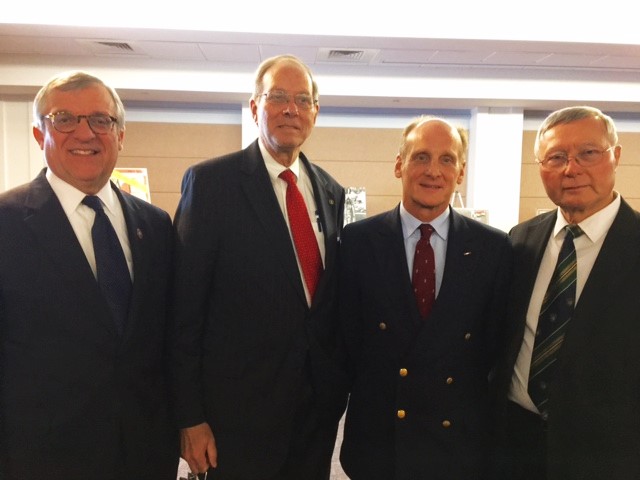
Frank Koszorus, Jr., Chairman of the American Hungarian Federation’s Board of Directors, spoke on a panel titled “The Memory of 1956 Revolution and Freedom Fight.” He focused on the Eisenhower administration’s “hands off policy” and how vigorous and imaginative diplomatic initiatives would have been far short of “starting World War III” yet would have gone beyond giving the appearance of acquiescence and possibly could have changed the course of the Cold War. Koszorus also touched upon an often forgotten consequence of the Soviet invasion of Hungary in 1956 – a more aggressive anti-Hungarian minority policy in Romania.
LOOKING BACK AT THE HUNGARIAN REVOLUTION OF 1956: PERCEPTIONS, IMPRESSIONS AND REALITY
Frank Koszorus, Jr.
“1956: The Freedom Fight that Changed the Cold War – Geopolitics and Defense Policy” – The Memory of the 1956 Revolution and Freedom Fight
October 12, 2016
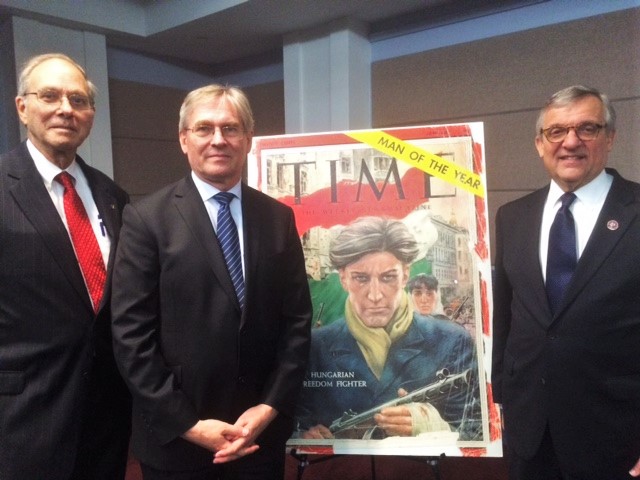
Memories of a Young Boy.
As a 9 year old during the Hungarian Revolution of 1956, I vividly remember being glued to the television set with my parents, mesmerized by the frightening images unfolding of freedom fighters battling Soviet tanks with only small arms and Molotov cocktails.
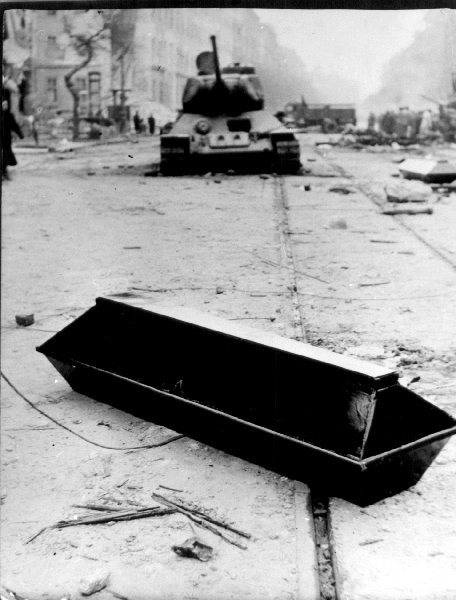
I remember the anguish of my parents as Soviet troops systematically and brutally crushed a small nation which dared to take up arms to realize its desperate but unequivocal and unquenchable desire to be free and independent.
I remember my father’s utter frustration with President Eisenhower’s reluctance to fully address this crisis, not knowing at the time that in the early 1950’s my father had been entrusted to establish an organization to conduct paramilitary activities favoring freedom within Hungary, an initiative that ended before 1956 and presaged the demise of “rollback” which, as it turned out, was more rhetoric than operational policy.
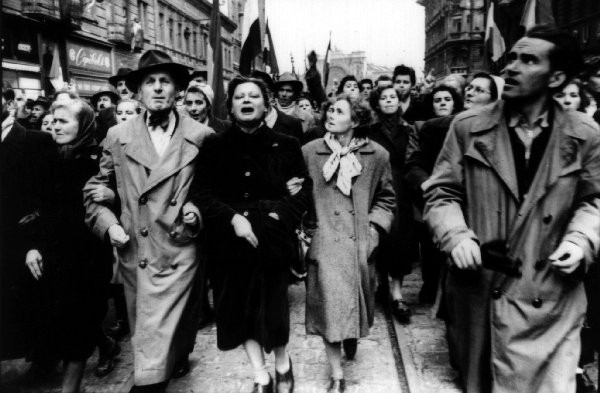
I remember the rallies, one in particular where movie star Ilona Massey addressed the gathering wearing a bright, shining blue dress with her blonde hair flowing in the wind and tears unstoppably streaking down her cheeks, as she pleaded that something, anything, must be done to stop the carnage.
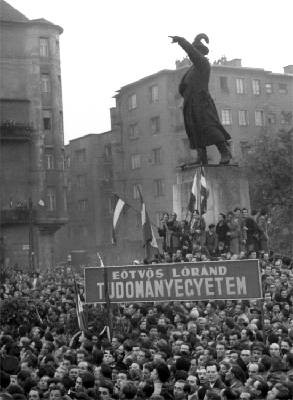
I remember how with childish naivete my playmates and I developed future plans to parachute into Hungary to help ward off the enemy. Finally, I remember that as I matured, the often articulated view that “well, we couldn’t go to war over Hungary” somehow didn’t quite sound right to me.

Maturing and Learning.
It was only later when I majored in history and international relations in college that I started delving into the history of the Revolution and discovered that perhaps there could have been another outcome to the tragedy of 1956.
I discovered that Moscow was divided as to how to react to the Hungarian events and that only after it was obvious that the West, including the United States, would do nothing to help the Hungarians that Khrushchev decided to intervene militarily.
As noted by Martin Ben Swartz, “[f]rom the start. . .the [Eisenhower] Administration took a defensive and defeatist attitude toward the Hungarian Revolution.” A few examples supporting this conclusion include the following:
On October 25, Secretary of State John Foster Dulles suggested that the United States attempt to place the Hungarian crisis on the Security Council’s agenda. President Eisenhower overruled him.
Instead, President Eisenhower embarked on a policy of reassuring Moscow of American non-involvement in Eastern Europe. Thus on October 27 Secretary Dulles stated that the United States does not look “upon these [satellite] nations as potential military allies.”
On October 28 Henry Cabot Lodge, U.S. Ambassador to the U.N., was ordered to bring Secretary Dulles’ speech up at the Security Council and to be sure to quote that clause — “We do not look upon these nations as potential military allies.”
And to drive the “hands-off” policy home to the Soviet leadership, U.S. Ambassador to Moscow Charles “Chip” Bohlen was directed to bring the key points of Dulles’ speech to the attention of Khrushchev and Marshal Zhukov, which he did. Equally surprising and inexplicable was President Eisenhower’s speech on October 31, only one week after the Revolution had begun, which, as Henry Kissinger noted, “ was particularly notable for its omission of so much as a hint that the Soviet Union would incur penalties if it resorted to repression.”The absence of public and private efforts to pressure the Soviets to remove their forces from Hungary was equaled by the Eisenhower Administration’s refusal to diplomatically interact with Imre Nagy, prime minister of Hungary, or to vigorously support diplomatically Hungary’s declared neutrality.

As argued by Martin Ben Swartz, “[t]he [American] Legation in Budapest had already put its finger on the crux of the problem with the Administration’s policy toward Hungary. Why was the United States not making it known that the Warsaw Treaty was a sham, that the Soviet Union had no basis for keeping its troops in Hungary? [It was a sham because of the coercive nature of the military arrangement imposed by the Soviet Union.] Why was Eisenhower not insisting that those forces be withdrawn? The Legation saw little risk to the US in calling upon Khrushchev to withdraw from Hungary.”
Endre Marton who had ties to Imre Nagy stressed that “what disappointed us most about the United States response was not that there were no efforts to assist us militarily, but that there was no American diplomatic pressure against Moscow.”
Consequences. Vigorous and imaginative diplomatic initiatives instead of feckless policies would have been far short of “starting World War III.” But they would have gone beyond giving the appearance of acquiescence and possibly could have changed the course of the Cold War.
The latter was attested to by Oleg Penkovskiy, a colonel with Soviet intelligence, when he later wrote the following in connection with the Hungarian events: “We in Moscow felt as if we were sitting on a powder keg. Everyone in the General Staff was against the ‘Khrushchev adventure.’ It was better to lose Hungary, as they said, than to lose everything. But what did the West do? Nothing. It was asleep.
This gave Khrushchev confidence, and after Hungary he began to scream: ‘I was right!’ After the Hungarian incident he dismissed many generals who had spoken out against him. If the West had slapped Khrushchev down hard then, he would not be in power today and all of Eastern Europe would be free.” Henry Kissinger succinctly concluded, the “Eisenhower Administration made no effort to raise the cost of Soviet intervention.”
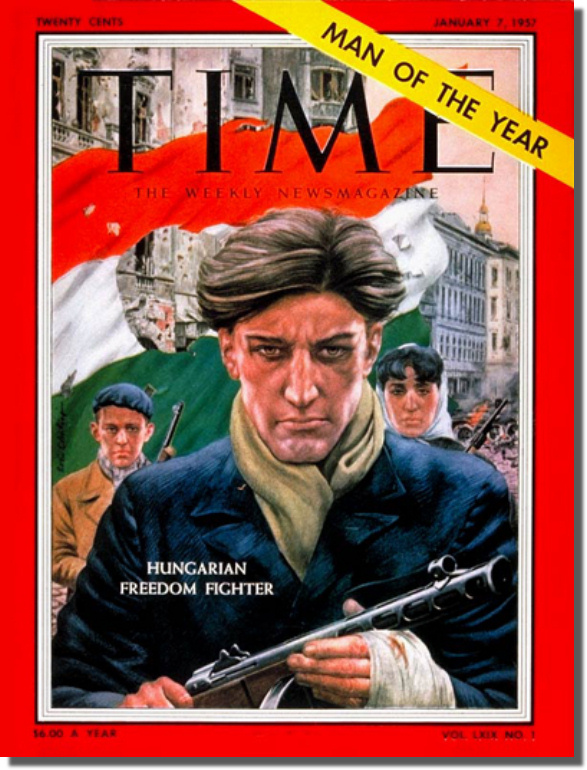
Consequences?
According to Kissinger, the “juxtaposition of Hungary and Suez established the coordinates of the next phase of the Cold War. . .The United States had left Hungary adrift in the sea of historical evolution, and American allies with a sense of their impotence.”
And today? Quoting a Hungarian novelist,“the West deserted us once; will it welcome us now?’ as Hungary finally prepared to join NATO, Georgetown University Professor Derek Leebaert observes that “such memories would help shape the twenty-first century landscape.”
In addition to the suffering and oppression of Hungarians in Hungary proper in 1956 and the memory of that suffering noted above, the massive Soviet invasion and the brutal crushing of the unequivocal expression of Hungarians to be free also impacted the Hungarian communities in states neighboring Hungary – a development that is virtually forgotten today.
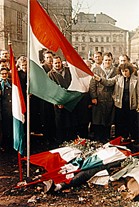
For instance, one consequence was the solidly Stalinist Romanian government’s virtual liquidation of the Hungarian-language Bolyai University in Romania, which was implemented by the secretary of the Central Committee, Nicolae Ceausescu along with other anti-minority policies. Communal properties confiscated by the previous regime have yet to be fully restored to the Hungarian minority.
Remedies.
Righting wrongs against Hungarian minorities that extend back to the Cold War period and respecting the rights of such minorities would be a fitting commemoration of 1956 and a tribute to the memory of thousands of unsung heroes who did not compromise but sacrificed their lives for the cause of liberty sixty years ago.
Today, Hungary is a committed NATO and strong U.S. ally and a multi-party democracy, albeit an imperfect and evolving one, as even mature democracies evolve. Having regained its freedom from Soviet domination a mere twenty-six years ago, the moral, spiritual and material damage caused by close to fifty years of Soviet imposed communism is still visible.
Nevertheless, Hungary’s support for United States foreign policy goals stands in marked contrast to West European ambivalence about U.S. global leadership after the end of the Cold War. Hungarian identification with the U.S. extended beyond elite opinion and was rooted strongly in the popular imagination.
This reservoir of popular support was a precious commodity that gave U.S. foreign policy a competitive advantage in the region during the Cold War and the years that have followed. It is a commodity we need to nurture today in order for us to be able to effectively stand up against growing Russian aggression and to combat terrorism.
This instinctive popular support, however, has been at risk in Hungary in recent years, mainly due to the perception of a lack of evenhandedness in addressing the political landscape there. It is also due to a constant barrage of public, humiliating and patronizing criticism questioning Hungarians’ commitment to freedom and liberty.
1956 starkly refutes this misleading and skewed picture of Hungarians and amply justifies the restoration of good bi-lateral relations. Let’s not misjudge what is occurring on the ground as we misjudged the events in 1956 and paid a high price. We should remain constructively engaged in Hungary.
Finally, in order to strengthen and safeguard liberty throughout the region, today’s generation — the beneficiary of the restored freedoms following the demise of communism — must be vigilant and guard against any curtailment of democracy and infringement of fundamental human rights and Western standards relating to minority rights. A free, independent, democratic and pro-Western society is the legacy of 1956 that should not be permitted to fade.
References
- Peter Grose, Operation Rollback: America’s Secret War Behind the Iron Curtain (Boston: Houghton Mifflin Company, 2000)
- Henry Kissinger, Diplomacy (New York: Simon & Schuster, 1994), pp. 563, 566 and 558.
- Derek Leebaert, The Fifty-Year Wound: The True Price of America’s Cold War Victory (Boston: Little, Brown and Company, 2002), p. 201.
- Oleg Penkovskiy, The Penkovskiy Papers, trans. Peter Deriabin (New York: Doubleday & Company, Inc., 1965), pp. 212 and 213.
- Martin Ben Swartz, A New Look at the 1956 Hungarian Revolution: Soviet Opportunism, American Acquiescence (Ann Arbor: U-M-I Dissertation Service, 1989). Pp. 207, 304, 305, 307, 308 and 313