2014 Commemoration of the 1848 Hungarian Revolution and War of Liberation: The American Hungarian Federation – Founded 1906
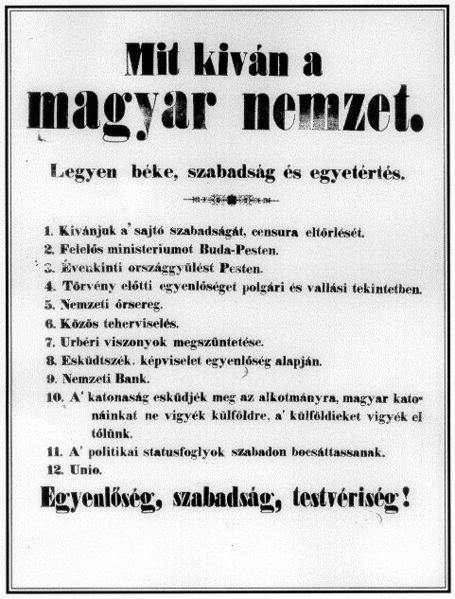
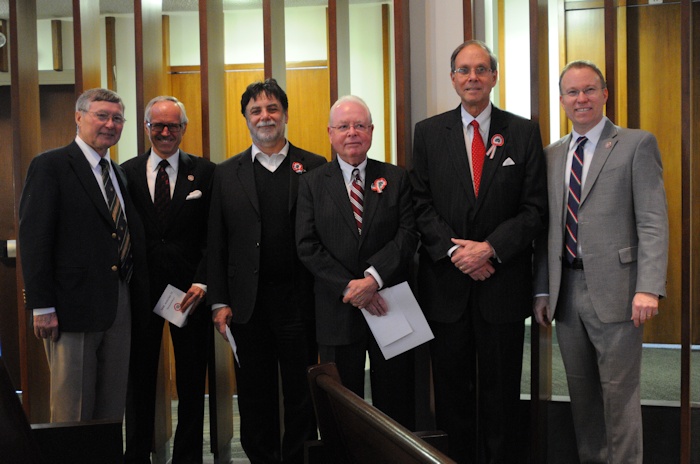
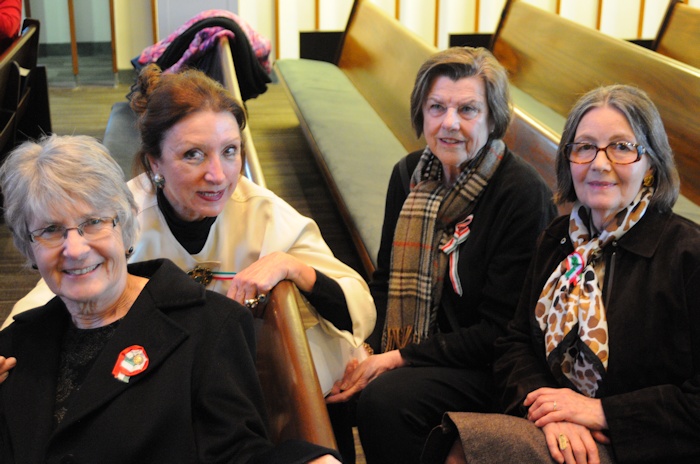
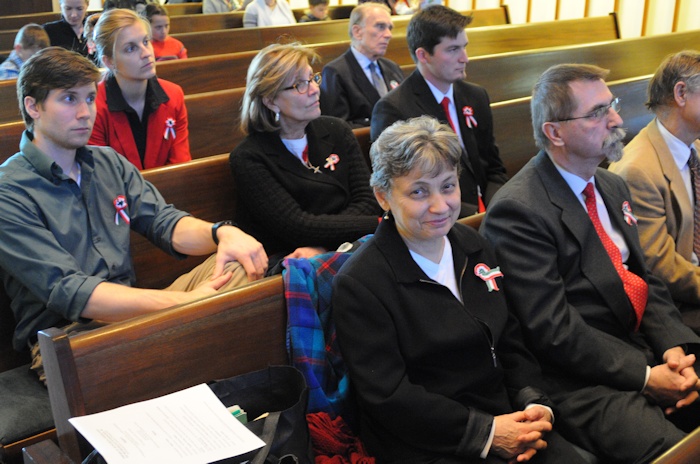
AHF commemorates Hungarian National Day and the 1848 Revolution and Freedom Fight. The 1848 Hungarian Revolution, under its leader Louis Kossuth soughtto throw off the Austrian Yoke. It was quelled under the combined forces of Imperial Austria and Russia, but its impact on the United States and Central and Eastern Europe is felt even today. The annual commemoration of 1848, organized by the Washington, D.C. Chapter of the American Hungarian Federation, was held this year on March 15th on the campus of American University in Washington, D.C.
Each year, speakers focus on the significance of the 1848 revolution and how its ideals and goals relate to today’s Hungary, including the need for unity, honest political debate, the political and human rights situation in Central and Eastern Europe and relations with the United States. Zoltán Bagdy, AHF Co-President and Chair of its Cultural Affairs Committee, welcomed guests and served as Master of Ceremonies.
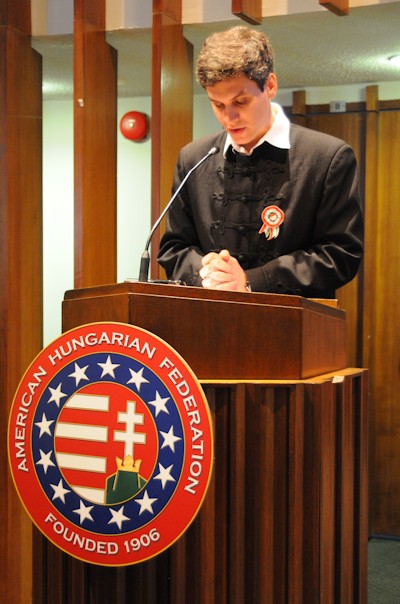
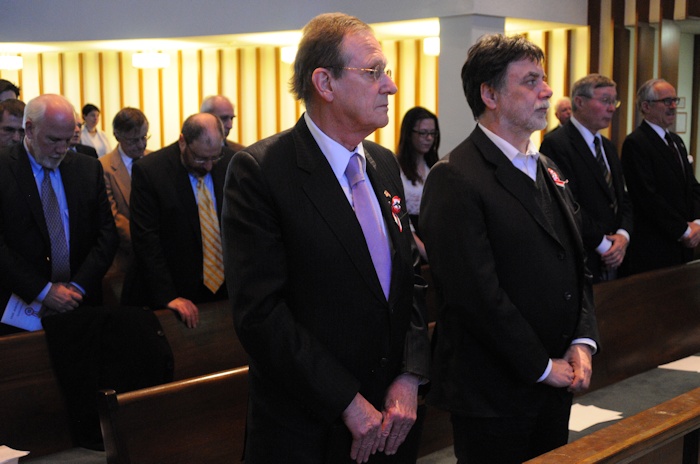
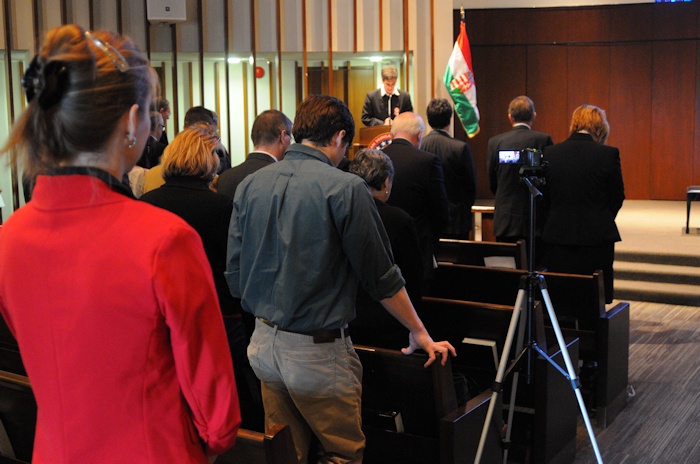
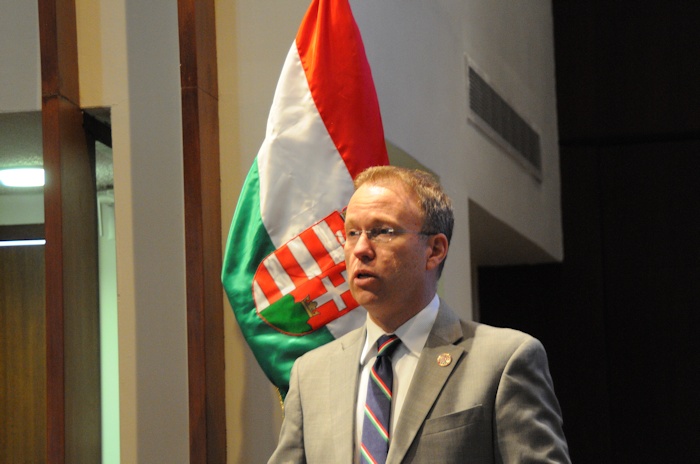
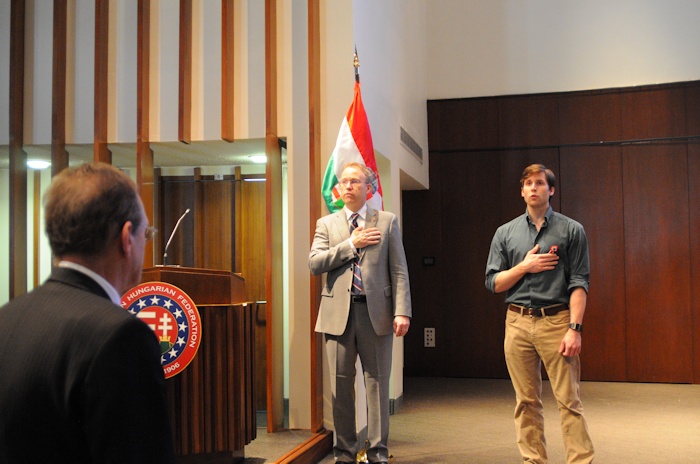
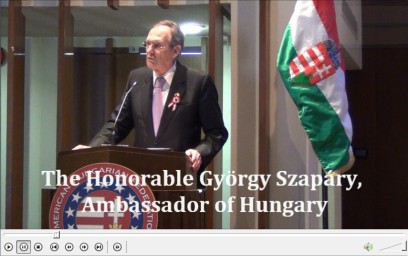
Bryan Dawson, AHF Executive Chairman, and Andras Lincoln sang the national anthems of the United States and Hungary. The Rev. Miklós Peleskey delivered the Benediction followed by opening remarks by Hungarian Ambassador Gyorgy Szapary who focused on how the fateful events on 1848 were one of many battles for freedom and democracy and helped shape the future of modern Hungary. Ambassador Szapary also read a message from Hungarian Prime Minister Viktor Orban to Hungarians abroad and outside the borders encouraging all Hungarians everywhere to become part of the political process [download the Prime Minister’s message].
“Március 15-ének különleges jelentése van nekünk, magyaroknak. Része a kollektív emlékezetünknek és március 15-e és az utána következő történelmi események a mai napig lelkesítenek és inspirálnak minket. Jó okkal, mert március 15. a szabadság ünnepe. A magyar szabadság ünnepe.Ez egy felemelő és boldog ünnep, amelyet mi magyarok hoztunk létre saját magunknak. Amikor 1848/49-re emlékezünk akkor a magabiztos és bátor polgárok sikerére emlékezünk, akik a saját kezükbe vették sorsuk irányítását. és nem hagyták, hogy bárki más helyettük döntse el, milyen országban akarnak élni.
48/49 nem az első és nem is az utolsó eset a magyar történelemben, amikor magyarok összefogtak és harcba szálltak a szabadságukért. Bátran állíthatjuk, hogy a modern magyar nemzet a márciusi események nyomán született. De nemcsak a modern politikai nemzet született meg ekkor, hanem a demokratikus magyar politikai tradíció.
A 19. és 20. század eseménydús történelmében a 48/49 mindig megmaradt referenciának, amelyhez újra visszatértünk inspirációért. Így volt az 1956-os forradalom és szabadságharc idején és így volt a 1989-ben a kommunizmus békés úton történő megbuktatásakor is. Március 15. arra emlékeztetett mindannyiunkat, hogy nem kell zsarnokságban élnünk, hogy a szabadság és méltóság iránti vágyunk legyőzheti az útjában álló akadályokat.
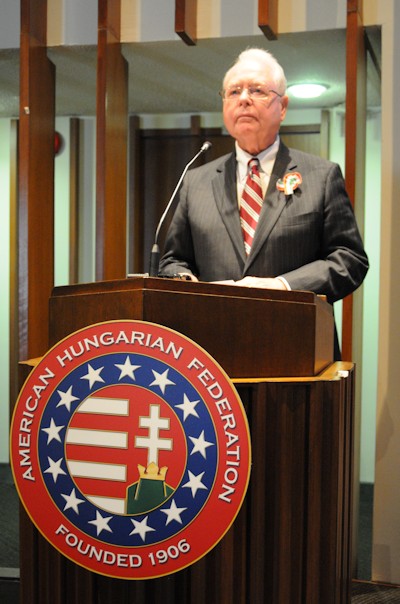
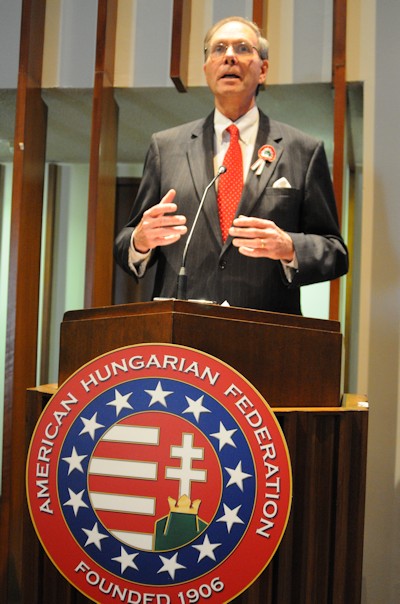
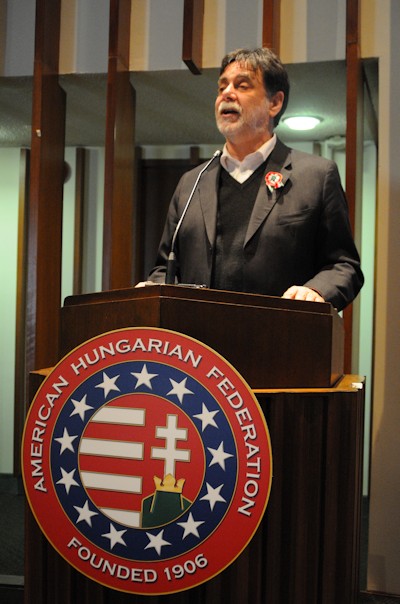
The Federation’s president, Frank Koszorus, Jr., addressed the gathering, giving his remarks the title, “Dead White Men and We Shall Overcome.” He started by describing how two events from the 1960s came to his mind as he walked around American University’s campus, his alma mater. Back then there were some students and even a professor or two who thought “studying about dead white men (in other words history) was irrelevant to their goal of opposing the Viet Nam War and ‘making revolution.’” Reflecting on that event, the thought came to his mind that some in our community today, especially members of the younger generation, may wonder why commemorating 1848 today is relevant. He gave two answers.
“Knowing about our special history gives us a sense of identity. As psychologists and sociologists teach us, we gain a sense of positive self-esteem from our identity group, which furthers a sense of community and belonging.” That self-esteem is heightened when one considers Hungary’s unique history which Theodore Roosevelt recognized on April 2, 1910, “There is no more illustrious history than the history of the Magyar nation….The whole civilized world is indebted to Magyarland for its historic deeds.”
Koszorus suggested a second reason. “Don’t misinterpret what I am about to say — I’m not campaigning for any political party. But it is with great disappointment and immeasurable sadness that we witness as some go to extraordinary lengths to needlessly tear down the image of Hungary and Hungarians. Our self-esteem, sense of identity will not allow us to just sit idly on the sidelines,” he said. “But what does this have to do with our commemorating 1848?” he asked.
“Well, in combating falsehoods and the blackening of our history, we can draw upon the example of Hungarian patriots and heroes, such as Kossuth Lajos. His trip to the United States (December 1851 to July 1852) and his 300 eloquent addresses educated his audiences about Hungary’s true character and love of freedom, liberty and democracy. Kossuth’s example can and should inspire us.
As Americans we have the right to speak freely and to assemble — powerful tools in the campaign for truth. Without whitewashing the tragedies, such as the Holocaust, let us actively live with these freedoms and counter those who would rob us of ‘our illustrious history,’” said Koszorus.
The second event mentioned by Koszorus occurred on April 4, 1968 when he and “hundreds of students and faculty members gathered in this very room to mourn the death of Martin Luther King who had just been assassinated. After a moving service – and just picture the candles flickering and tears streaming down faces – we held each others’ hands and sang, “We shall Overcome,” a protest song that became a key anthem of the Civil Rights Movement in the 1960s.” Koszorus recited a few stanzas of the song, including: “We shall overcome, We shall overcome,We shall overcome, some day…We’ll walk hand in hand, some day. Oh, deep in my heart, We shall all be free…”
And as we were swaying and singing I thought what marvelous achievements our Hungarian American community could realize if only we could hold each others’ hands and work together for the commonweal.” Koszorus then asked everyone to stand, hold hands, and remember, “Well dear friends we can; a number of issues await our participation.”
He mentioned the image issue referenced above, the plight of the Hungarian minorities, especially the Hungarian community in Karpatlaja, and how the Federation with others will explore acquiring a house, a Magyar Haz, available to all as one house used to be.
Koszorus concluded his remarks, “So let us leave this afternoon with a deep sense of gratitude for our illustrious history and the heroes such as Kossuth who made that history. And let us also leave by drawing upn their example and rededicating ourselves to selflessly serve our community and our causes.”
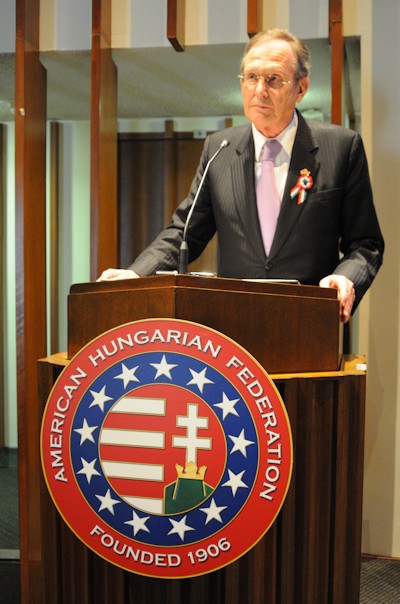
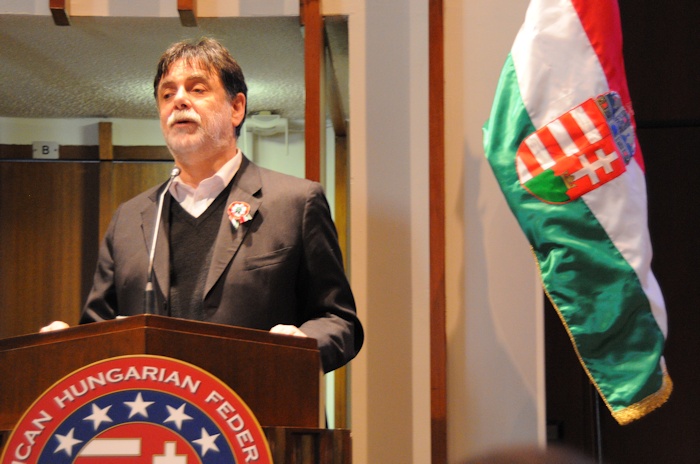
The Keynote address was delivered by Tamas Fellegi, former Hungarian Minister of National Development and Sectoral Director, then CEE of Legal and Governmental Affairs of Hungarian Telecom (MATÁV Rt.). Currently, he is Managing Partner of EuroAtlantic Solutions, an international consulting firm, and President of the Hungary Initiatives Foundation.
Dr. Fellegi reflected on his life under Communism and a government that sought to limit the celebration and memory of a “National Day,” how the oppressive regime feared it, and what the anniversary of the brave fight for freedom meant to him, saying:
“Nekem személy szerint március 15 a legszebb magyar ünnep: a megújulás, a szabadság, az új Magyarország, és a modern magyar nemzet ünnepe. Nem véletlen, hogy az elnyomó hatalmak mindig féltek tőle – minden korban így volt ez. Emlékszem fiatalkorunk március 15-i hivatalos és nem hivatalos ünnepségeire. A kádári hatalom félelmére, a rendőrség és a munkásőrség kivonulásaira, amellyel az ellenünneplést akarták megakadályozni. Nem véletlen, hogy a fiataloknak március 15-e volt A NEMZETI ÜNNEP – csupa nagybetűvel. Hiszen március 15. a cselekvő remény ünnepe.”
He added that Hungary, as it did in 1848, 1956, and throughout its history, must continue to be willing to fight for its freedom, its independence against all odds, against all enemies great and small:
“1848 forradalma utat mutat: ha a helyzetünk azt követeli, megalkuvás nélkül szembe kell szállnunk akár a legnagyobb hatalmakkal is, hogy kivívjuk vagy megvédjük szabadságunkat és szuverenitásunkat. Ezt az utat jártuk 1848-1849-ben, ezt az utat jártuk 1956-ban is, és nem szabad letérnünk erről az útról a 21. században sem.”
Finally, he reminded us that the greatest lesson of 1848, with its great leaders, its great message, was that of unity. We must learn from the spirit 1848, learn to set aside our differences, debate honestly, and work together for a common cause:
“‘48 legfontosabb tanulsága: különböző habitussal rendelkező emberek, különböző elképzeléssekkel harcoltak egy közös célért: Magyarország szabadságáért és függetlenségért. A fiatalság Petőfiékkel az élen, Széchenyi István, a legnagyobb magyar és az őt követő “fontolva haladók”, Deákkal, a haza bölcsével az élen, mindannyian Magyarország sorsának jobbra fordítását tűzték ki célul. A fő üzenet, az én megértésem szerint az, hogy egymással szembeni ellenérzéseket, ellentétes elképzeléseket –még ha komoly kompromisszumok árán is, – mindig tudnunk kell félre tenni, ha egy nagy közös cél eléréséről van szó.” [download his remarks]
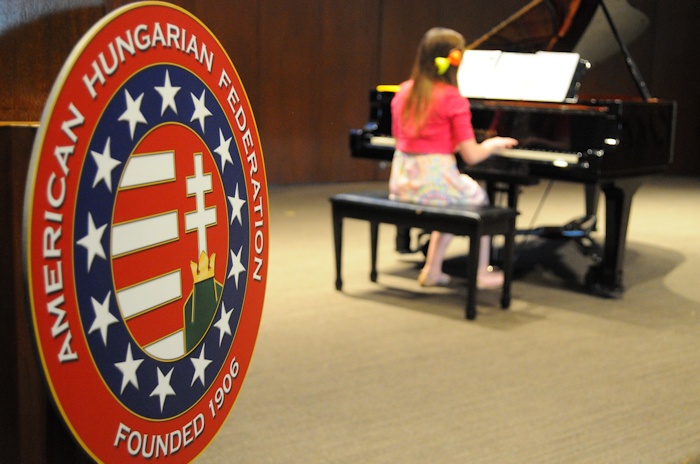
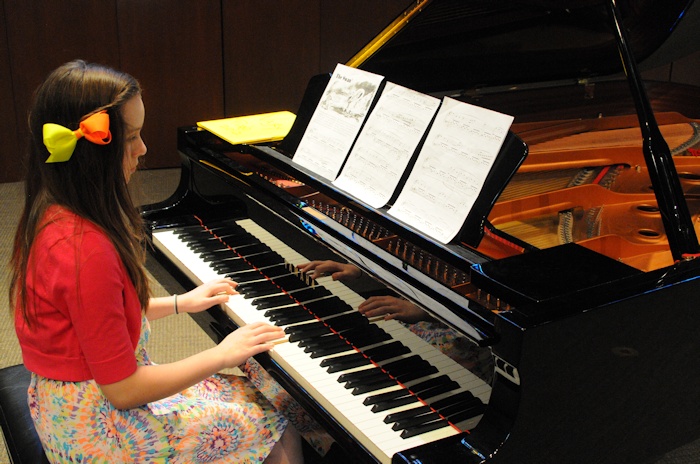
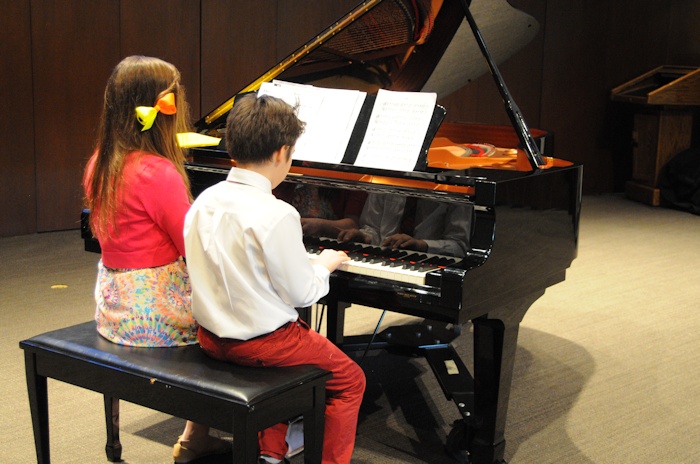
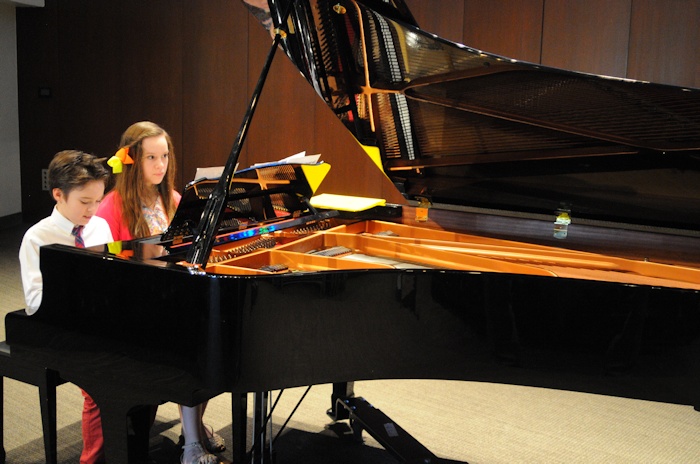
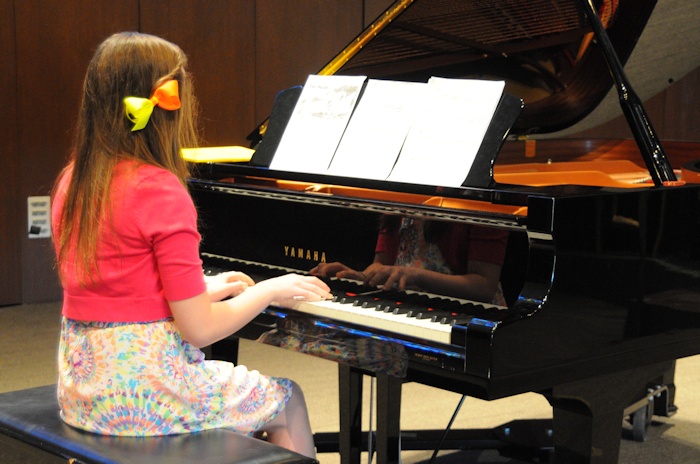
The program included members of the next generation of Hungarian-American leaders. Vajk and Xitlalli Dawson first performed Valse (for four hands) from Mes Premiers Pas by Thierry Masson. Xitlalli then performed “Le Cygne” (The Swan) – the 13th and penultimate movement of The Carnival of the Animals by Camille Saint-Saëns and dedicated the piece to the Hungarian community in Kárpátalja struggling for survival. (Transcarpathia or Subcarpathian Ukraine).
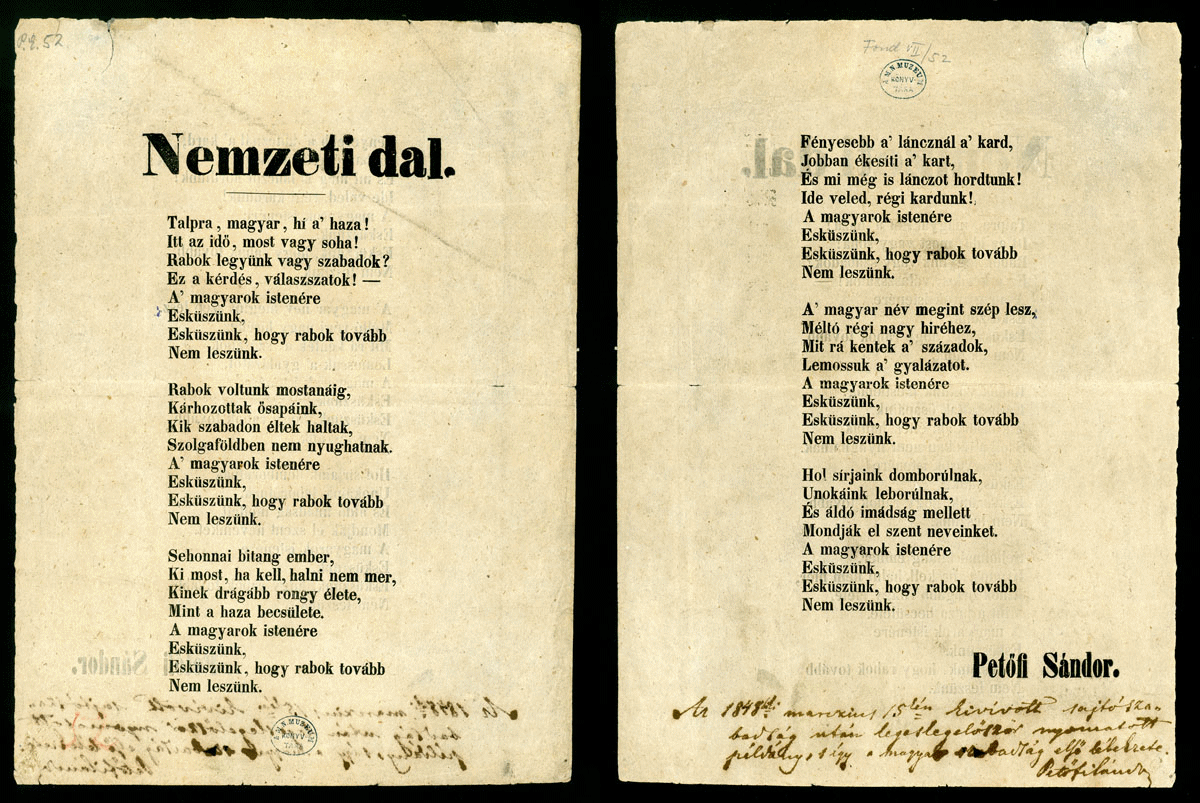
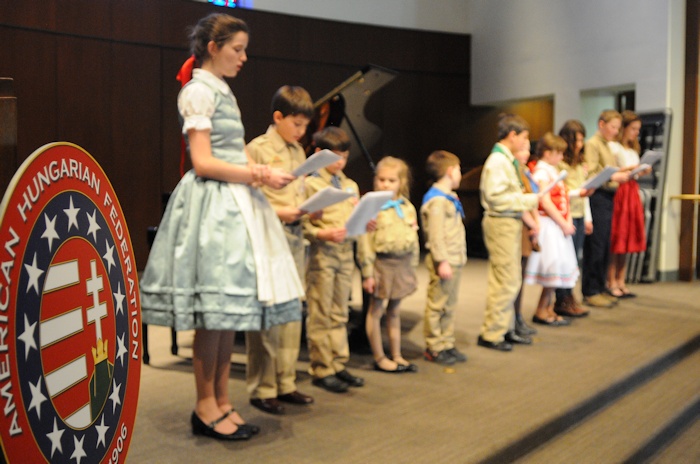
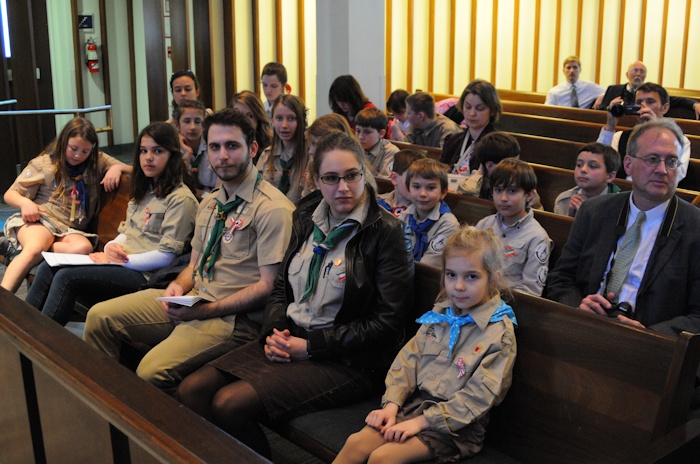
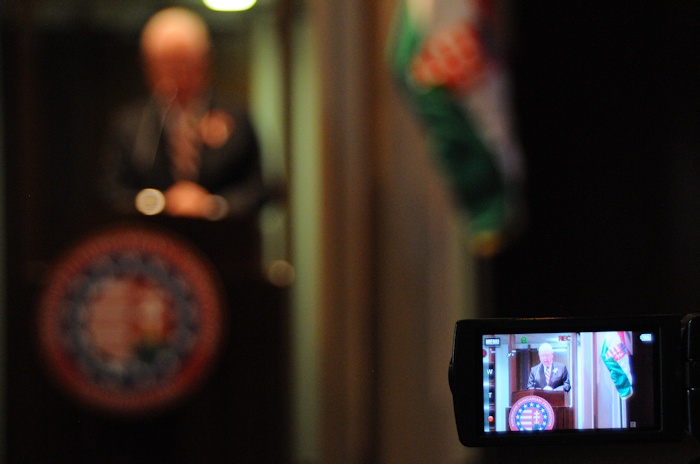
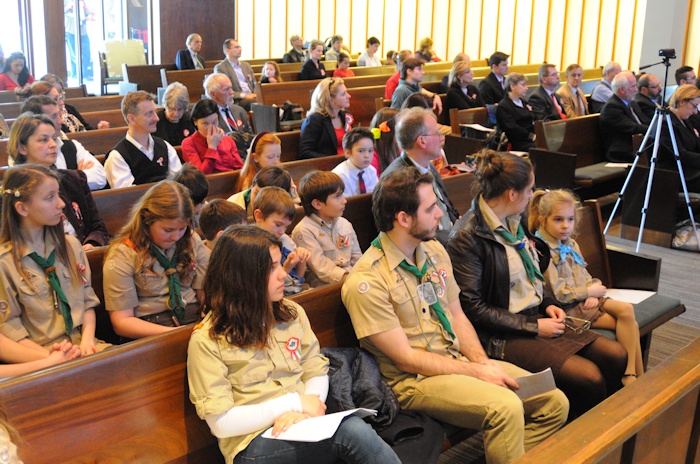
Members of the The 4th Bátori József Hungarian Scouts Troop of Washington, DC were again a special part of the program. This year, the reciting of Petőfi Sándor’s Nemzeti Dal (“Talpra Magyar”) fell on the talented Eszter Csenteri who thrilled the audience with her expert, emptional delivery. She and the entire program can be seen on the video. To close the program, and in keeping with the decades-long tradition of the event, the audience sang patriotic Kosuth Dalok (Kossuth Songs). The Rev. Judit Mayer of the Hungarian Reformed Church of Washington, D.C., provided closing remarks and prayer – Bryan Dawson.
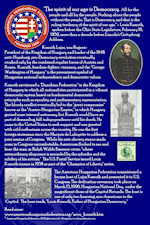
“All for the people and all by the people. Nothing about
the people without the people. That is Democracy, and that is the ruling
tendency of the spirit of our age.” This excerpt was from a speech Kossuth gave to the Ohio State Legislature in 1852, over a decade
before Lincoln’s famed “for the people, by the people” speech
given at Gettysburg in 1863. Kossuth was the first foreign Statesman officially
invited to the US since the Marquis de Lafayette. His upcoming speech
in the Congress of the United States made the pre-civil war joint house
nervous due to his democratic views on equality of all men. Kossuth learned
English while in prison and exile and spoke to half the population of
the US who enthusiastically greeted and flocked to hear him. Despite Hungary’s
epic struggle and Kossuth’s brave and noble efforts, the US, the “Bastion
of Democracy” turned him away, empty handed. Hungary was alone again
in its fight for democracy in 1956, and didn’t gain freedom until 1989 and would soon join NATO.
Today, there are many reminders of Kossuth’s impact on America and the
world. In North America, there is a Kossuth County in the state of Iowa,
a town with his name in Indiana, Ohio and Mississippi,
a settlement with a Kossuth Post Office is in Pennsylvania. In addition,
there are Kossuth statues and plaques in New York, Cleveland, Akron, New
Orleans, Washington, and Ontario, Canada. The Hungarian
Reformed Federation‘s building on Dupont Circle, in Washington, DC
is called Kossuth House with a memorial plaque commemorating his speech
on democracy. See the picture gallery and memorials on Louis
Kossuth in North America.
AHF presents a gift to to the American People: The Kossuth Bust in the US Capitol [read more]









 Hear Louis Kossuth Speak! Audio Recording and text of 1890 Louis Kossuth
speech