11/25/2013 – AHF participates in drafting Central and East European Coalition Fall 2013 Policy Paper. The Central and East European Coalition (CEEC) is comprised of 18 national organizations, including the American Hungarian Federation (AHF), whose members trace their heritage to Central and Eastern Europe. The CEEC raises issues of common concern to its diverse membersip, such as NATO’s enlargement, energy security and visa waiver. As part of its mission, the CEEC, with the active participation of AHF, prepared the 2013 Policy Brief below, which, among other things, expresses support for “the equitable and prompt restitution of properties – including private, communal, and church properties – that had been illegally confiscated by governments of CEE, from ethnic minorities and the populations at large.”
CEEC POLICY BRIEF [download]
Fall 2013

ACTION NEEDED
1. Support the reintroduction in the 113th Congress of a bill similar to the NATO Enhancement
Act (112th Congress) to encourage further enlargement of NATO and to deepen U.S. strategic
partnerships with NATO allies.
Support the NATO aspirations of Georgia and other qualified countries.
Support S. 680 to increase spending for NATO Operation and Maintenance.
1. NATO AND SECURITY IN CENTRAL AND EASTERN EUROPE
Proactive U.S. leadership is vital to security cooperation with allies in Central and Eastern Europe (CEE) through both the North Atlantic Treaty Organization (NATO) and direct bilateral mechanisms. NATO remains an indispensable force for regional stability, providing member states with essential elements of physical and
political security. Strengthening the alliance should remain a top U.S. priority.
The CEEC advocated for the successful enlargement of NATO from the Baltic to the Black Seas and strongly urges the U.S. Congress to support the NATO aspirations of Georgia and other qualified countries seeking membership. Georgian citizens have expressed their support for Georgia’s entry into NATO several times, and Georgia is a substantial contributor of troops to NATO and to other international coalitions in Asia and the Middle East. The CEEC supports the reintroduction of a bill similar to the NATO Enhancement Act, S. 2177, introduced in the last Congress, which would substantially strengthen NATO and NATO partnerships.
At the 2012 Chicago Summit, NATO decided to extend its commitment to protect the Baltic airspace until at least 2018. The agreement is an example of Smart Defense, demonstrating how the Alliance can balance its political and military needs in an economically efficient way. “The NATO air policing mission has both practical and political importance, it is the strongest signal of NATO’s presence in the Baltic region,” stated Estonian Defense Minister Urmas Reinsalu. The CEEC welcomes such measures and further notes that, in light of the September 2013 Russian “Zapad 2013” military exercises based on the invasion of the Baltics and Poland, it is imperative to continue to support NATO’s strong presence in the Baltics, and the rest of Central and Eastern Europe.
The CEEC supports the efforts of the United States, bilaterally and through NATO, to protect cyber and energy security infrastructures from disruption and aggression. It further urges the United States, jointly with its NATO allies, to establish effective counter-measures against cyber attacks, cyber crime and cyber espionage. Acts of cyber aggression against NATO members also represent an ongoing security challenge to the United States.
ACTION NEEDED
Cosponsor a human rights bill affirming the Armenian Genocide. Rep. David Valadao (R-CA)
has introduced H.R. 227 which calls on the President to work toward: 1) equitable and
durable Armenian-Turkish relations based upon Turkey’s acknowledgment of the facts and
consequences of the Armenian Genocide, and 2) a comprehensive international resolution of
this crime against humanity.Support action by the Administration and Congress: 1) to acknowledge U.S. strategic
interests in the CEE region, and 2) to advocate for the ability of independent nations to make
their own decisions without Russian intimidation.Ensure that the Magnitsky Act is fully implemented, and continue to monitor human rights
and corruption issues in the Russian Federation as outlined by the Magnitsky Act.Introduce a resolution regarding the Ice Hockey Federation’s inappropriate decision to hold
the 2014 IIHF World Championship in Belarus, in light of human rights abuses in that country.Support the equitable and prompt restitution of properties – including private, communal,
and church properties – that had been illegally confiscated by governments of CEE, from
ethnic minorities and the populations at large.
2. DEMOCRACY, HUMAN RIGHTS AND THE RULE OF LAW
The CEEC staunchly supports democracy and the indispensable elements of the rule of law, human rights, minority rights, freedom of the press and historical accuracy, all of which are especially important in the CEE region, considering its history, previous Soviet domination, and ethnic, national and religious diversity.
While democracies have emerged and developed in CEE since the collapse of communism, issues remain to be resolved. An autocratic regime still reigns in Belarus. Vestiges of intolerance and discrimination against
national minorities linger even within some countries that have joined Western institutions. Denial of crimes
against humanity, including the Armenian and Ukrainian Genocides of 1915 and 1932-33, respectively, undermines the pillars of democracy.
The Russian government uses many avenues to influence and attempt to dominate the countries of the CEE region. These have included both political and military actions, economic manipulation (e.g., blocking energy
transit, trade barriers, and cyber-attacks), and accusations of alleged maltreatment and discrimination against
people of Russian descent living in CEE countries. In 2008, Russian troops forcibly annexed the Georgian territories of Abkhazia and South Ossetia, keeping heavy military presence in close proximity to the strategic East-West transportation corridor.
More recently, Russia sees the aspirations of neighboring CEE countries toward integration with the European Union as a threat to its national interests. It has threatened and implemented economic consequences should aspiring countries advance EU Association Agreements, and has pressured them to join an alternative Russian-dominated Eurasian Customs Union. U.S. foreign policy, countering Russia’s attempts to reestablish a “sphere of influence” in the region, should emphasize the promotion of democratic principles and institutions within the Russian Federation.
The Magnitsky Act was passed into law during the last Congress as part of the Russia Trade bill (Public Law No. 112-208) with CEEC support, and we applaud its subsequent implementation. The CEEC believes that the law should be fully implemented and expanded to include other human rights violators in the Russian Federation, to deny these individuals visa privileges to the United States, and to have their assets frozen. Moscow’s increasing crackdown against its own citizens is troubling. It is critical that the United States continue to defend internationally recognized human rights and freedoms.
Russian revisionist history denies or excuses Stalin-era atrocities and actions, such as the Holodomor (Famine-Genocide) in Ukraine, Soviet occupation of CEE countries, murder and deportation of hundreds of thousands of CEE nationals. Russia’s continual dissemination of propaganda that distorts and falsifies both current events and history is a powerful tool used to discredit and attack perceived adversaries. Democracy in Russia is threatened, as demonstrated by the repression of NGOs, election fraud and rampant corruption.
The United States needs to lend its moral voice in instances where human rights abuses are implicated. For example, similar to the resolution adopted by the European Parliament, the United States should focus attention on the International Ice Hockey Federation’s inappropriate decision to hold the World Championship in Belarus in 2014, citing torture of political prisoners. The CEEC also is concerned that the Russian Federation is using the Sochi Winter Olympics to further cultural imperialism with total insensitivity to the rights and interests of the local native Caucasus populations. The United States should use the opportunity to more closely scrutinize Moscow policies of increasingly running roughshod over its own citizens and minorities.
ACTION NEEDED
Cosponsor legislation that would modify the Visa Waiver Program to allow further expansion
and inclusion of the most dependable allies of the United States. Bills currently under
consideration include:
– H.R. 1354, Jobs Originated Through Launching Travel introduced by Rep. Heck (R-NV);
– H.R. 490, the Visa Waiver Program Enhanced Security and Reform Act (Rep. Quigley, D-IL);
– S.223, the Visa Waiver Program Enhanced Security and Reform Act (Sen. Mikulski, D-MD).Support the creation of a P visa category.
3.
VISA WAIVER PROGRAM
The CEEC believes that it is in the best interest of the United States to have the Visa Waiver Program (VWP) expanded to CEE countries that have demonstrated a capacity and willingness to cooperate with the United
States in achieving counter-terrorism goals. The CEEC also supports the establishment of a new P visa category
that would facilitate travel of ethnic cultural/educational groups to the United States.
The VWP pilot’s relaxed requirements allowed six CEE countries (the Czech Republic, Slovakia, Hungary, Latvia, Lithuania, and Estonia) to join the VWP in 2008. However, for those not admitted during the pilot, such as Poland, an automatic reinstatement of the standard eligibility rules occurred in June 2009. These rules include requiring any aspiring country to have less than a 3 percent visa refusal rate to be eligible to participate in the VWP (as opposed to a 10 percent maximum established in the pilot).
These rules have had the unfortunate effect that for millions of CEE Americans, mostly of Polish descent, their relatives still cannot travel freely to the United States. The CEEC urges the passage of legislation which would allow for the modification of the VWP that would lead to the subsequent inclusion of additional CEE nations into the Program.
The CEEC also supports the establishment of a new P visa category to cover groups and individuals coming to the United States for cultural/educational purposes at the invitation of a recognized U.S.-based group with ethnic ties to the invitee’s country. This new category includes those coming to present and/or teach ethnic or folk culture, music, theater, dance, and/or other artistic endeavors from the country of origin.
ACTION NEEDED
Actively support and implement U.S. foreign and defense policies that strengthen CEE
countries in moving toward greater integration with Western institutions.Monitor TTIP negotiations to ensure that the agreement mutually benefits the United States
and the countries of the CEE region.
4. TRADE AND ECONOMIC INTEGRATION
Healthy and growing economies are essential components to achieving and maintaining well-functioning democracies in CEE. The CEEC advocated for policies and reforms that encourage the continued integration of post-communist countries into Western institutional structures, thus supporting their economic development. For these countries, as well as those that have already made progress in such integration, the CEEC advocates for policies and reforms that expand the opportunities for economic growth, through increased trade, and market economic systems based on the rule of law, appropriate regulation, transparency, and ethical business practices.
Currently, a number of CEE countries (e.g., Ukraine, Georgia, Armenia and Belarus) are in various stages of pursuing increased economic integration with Western institutions through adoption of Association Agreements (AA) with the European Union (e.g., Ukraine, Georgia, Armenia and Belarus). These agreements typically require commitments to political, economic, trade, or human rights reform in a country in exchange for tariff-free access to some or all EU markets (industrial goods, agricultural products, etc.), and financial or technical assistance. The CEEC is concerned about pressure on the acceding countries to defect from the AA process and instead move toward integration with a Russia-dominated customs union.
A number of CEE countries that are well integrated into Western institutions, the EU in particular, are striving to improve their economic performance, provide better employment opportunities, and adjust to the challenges of a dynamic, competitive world economy. While the EU is pursuing a number of free trade agreements with various trading partners, a recent development is a proposed comprehensive trade agreement between the United States and the EU (otherwise known as TTIP — the Transatlantic Trade and Investment Partnership). This latter major agreement aims to build on the already robust economic relationship between the United States and the EU, through further reduction of tariffs, and better coordination of regulatory regimes which will support trade-in-services and a positive and transparent investment climate.
ACTION NEEDED
Cosponsor bipartisan legislation, H.R. 580 and S. 192, the Expedited LNG for American Allies
Act, introduced by Rep. Mike Turner (R-OH) and Sen. John Barrasso (R-WY).Cosponsor H.R.2771 and H.R.2471, Expedite Our Economy Act of 2013, introduced by Rep.
Ted Poe (R-TX), to repeal the requirements under the Natural Gas Act for obtaining
authorization for the exportation or importation of natural gas, and for other purposes.Cosponsor H.Res.284, expressing the sense of the House of Representatives with respect to
promoting energy security of European allies through opening up the Southern Gas Corridor,
introduced by Rep. Mike Turner (R-OH).
5. ENERGY
Energy affects the CEE region’s political and economic viability, as well as its social stability. Russia is the current primary and, in many cases, sole source of gas and oil supplies, which it manipulates to attain its political and economic objectives. Evidence of such manipulation includes abrupt cut-offs of gas and oil to CEE countries, price escalations of natural gas to selected EU countries, redirection of gas transit routes through Nordstream (pipeline connection from Russia to Germany via the Baltic Sea).
The United States can facilitate the region’s energy diversification and independence by enacting bipartisan legislation, H.R. 580 and S. 192, the Expedited LNG for American Allies Act. The act seeks to help strengthen our strategic partnerships with key allies by streamlining the regulatory process to export natural gas to NATO countries, which would also reduce the U.S. trade deficit and boost domestic job growth. Furthermore, the United States should promote the development of alternative energy sources; examples include: development of a natural gas transmission corridor from the Caspian region to CEE, and interconnection of all electrical and gas resources with their western EU counterparts. In addition, H. Res. 284 evidences support for the Southern Corridor as a viable and sustainable source of energy for Europe and the CEE region.
Supporting The Expedite Our Economy Act of 2013, H.R.2771 and H.R.2471, will facilitate the CEE countries in attaining their political and economic objectives, with minimal or no interference from Russia. This legislation will foster U.S. natural gas exports. It also facilitates support for foreign countries with development and production of their natural gas resources, and provides transparency concerning pricing, markets and investment.
The CEEC is also concerned about the safety of energy supplies in the region. For example, Russian resources are being used to build one large nuclear power plant in Belarus and another nuclear plant has been proposed in the Kaliningrad region. The close proximity of the two plants may expose large parts of the region’s population to potentially serious nuclear devastation in case of an accident. In view of previous nuclear disasters, at a minimum, the United States should actively advocate that the new nuclear power plants fully comply with internationally established safety standards.
ACTION NEEDED
1. Join the Congressional Caucus on Central and East Europe.
Maintain FMF and IMET funding levels for CEE countries.
Support robust funding for the countries of Armenia, Georgia and Ukraine, and continued
assistance funding to support democracy in Belarus.Maintain funding for educational and cultural exchange programs.
6.
U.S. ASSISTANCE TO AND PROMOTION OF REGIONAL DEMOCRATIC GOVERNANCE
While many countries within CEE have “graduated” from U.S. assistance programs under the SEED and FREEDOM Support Acts, U.S. funding should remain a priority for Armenia, Georgia, and Ukraine, and at a minimum should be maintained at current levels. Security Assistance Programs levels to the region, such as Foreign Military Financing (FMF) and International Military Education and Training (IMET), should also be
maintained. Also, funds should continue to be devoted to promoting democracy in Belarus. Furthermore,
financial and other support for governmental and non-governmental programs directed towards anti-corruption efforts and development of civil society in the region are critical.
Exchange programs, a part of public diplomacy, are an acknowledged and successful means of promoting international understanding, good will, and training to citizens of the United States and participating countries, and need to be continued.
ACTION NEEDED
1. Support passage of H.Res 302 (introduced by Rep. Shimkus, R-IL) designating August 23 as
Black Ribbon Day, to commemorate the victims of Soviet Communist and Nazi regimes, and
the date of the signing of the infamous Molotov-Ribbentrop Pact.
- Introduce similar legislation in the Senate.
6. BLACK RIBBON DAY
The CEEC supports the establishment of a national August 23 Black Ribbon Day, to honor and commemorate those who lost their lives, were tortured, deported, lost their property or otherwise suffered under the ravages
of the Soviet Communist and Nazi regimes. These repressions touched many Americans of CEE extraction, being directly affected themselves, or having relatives and friends who suffered. The infamous Molotov-Ribbentrop Pact was signed on August 23, 1939, dividing Europe between the Soviet and Nazi regimes. National
Black Ribbon Day is already officially observed by EU members, Canada and Georgia.
Related
About the CEEC
The Central and East European Coalition (CEEC) is comprised of 18 national organizations, including the American Hungarian Federation (AHF), whose members trace their heritage to Central and Eastern Europe. The CEEC raises issues of common concern to its diverse membersip, such as NATO’s enlargement, energy security and visa waiver. [read more]
CEEC Policy Briefs
9/23/2014 – AHF participates in drafting Central and East European Coalition Fall 2014 Policy Paper. The 2014 brief addresses Ukraine; NATO and Security in Central and Eastern Europe; the Visa Waiver Program and Immigration Reform; Energy Security; Democracy, Human and Minority Rights, the Rule of Law, and the Information War; US Assistance to and Promotion of Regional Democratic Governance; Trade and Economic democratic governance and the rule of law; Trade and Economic Integration; and Black Ribbon Day. [read more]

5/29/2012 – AHF participates in drafting CEEC Policy Brief on minority rights and NATO expansion and issues multiple action alerts including: Supporting S. 2177, the NATO Enhancement Act, introduced by Sen. Richard Lugar to encourage further enlargement of NATO and to deepen U.S. strategic partnerships with NATO allies. [read more]
5/29/2012 – AHF participates in drafting CEEC Policy Brief on minority rights and NATO expansion and issues multiple action alerts including: Supporting S. 2177, the NATO Enhancement Act, introduced by Sen. Richard Lugar to encourage further enlargement of NATO and to deepen U.S. strategic partnerships with NATO allies. [read more]
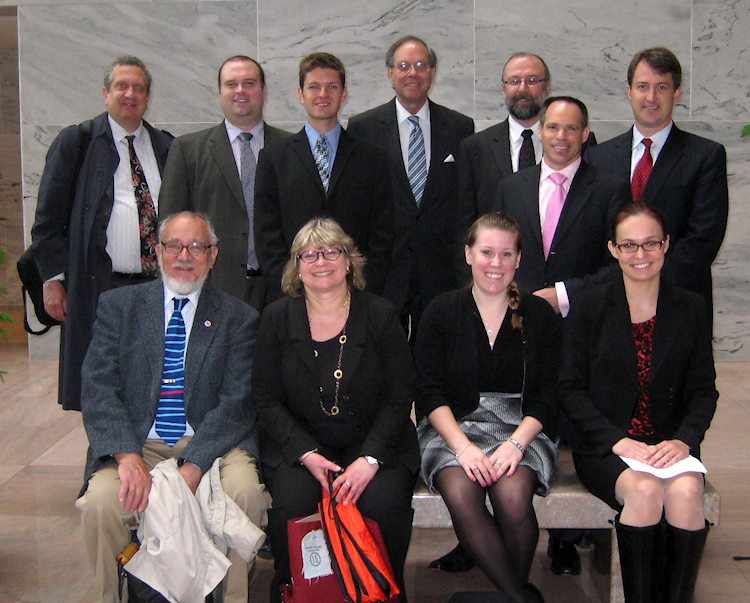
4/13/2011 – American Hungarian Federation drafts Central and East European Coalition 2011 Policy Brief, helps organize Advocacy Day on Capitol Hill.., In its continuous effort to raise issues important to the Hungarian American community, the American Hungarian Federation (AHF) participated in an April 13 Advocacy Day organized by the Central and East European Coalition (CEEC). The Advocacy Day involved meetings with key staffers in both the Senate and House of Representatives in the U.S. Congress. [read more]
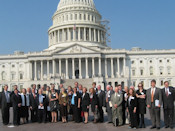
9/23/2010 – AHF helps plan CEEC Advocacy Day in US Congress, drafts 2010 Policy Brief addressing Democracy and Human and Minority rights.
[read more]
Related CEEC Articles

4/13/2011 – American Hungarian Federation Participates in Central and East European Coalition Advocacy Day on Capitol Hill… CEEC issues 2011 Policy Brief [read more]
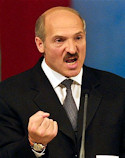
01/24/11 – CEEC and AHF Submit Letter to Secretary Clinton expressing deep concern over “brutal post-election crackdown by Lukashenka’s (Lukashenko) regime on peaceful demonstrators, democratic activists, journalists and civil society” in Belarus. [read more]
9/23/2010 – AHF helps plan CEEC Advocacy Day in US Congress, drafts human / minority rights Policy Brief… The CEEC holds Fall Advocacy Day.
[read more]
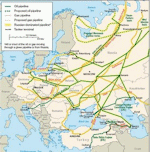
7/5/2010 – AHF participates in Capitol Hill policy seminar on energy security, “Coercion in the European Energy Sector: Implications for the United States.” The seminar was held on June 24, 2010 and sponsored by the Central and East European Coalition (CEEC) in cooperation with the Congressional Caucus on Central and Eastern Europe. [read more]

4/25/2009 – The American Hungarian Federation
Participates in White House Meeting… On April 24, 2009, the Central and East European Coalition (CEEC) met with Jeffrey M. Hovenier, Director for Central and Eastern Europe, National Security Council, and Katherine M. Helgerson, Director for Southeast European Affairs, National Security Council.
[read more]

7/25/2008 – American Hungarian Federation Participates in CEEC Meeting with Senator Schumer: Discusses Russia “Hegemony” statement… The purpose of the meeting was to seek clarification of statements contained in Senator Schumer’s June 3rd Wall Street Journal article that were susceptible to the interpretation that he condoned Russian designs on Central and Eastern Europe. [read more]
6/19/2008 – American Hungarian Federation Helps Plan and Participates in Successful CEEC Congressional Policy Discussion on Central and Eastern Europe. [read more]

3/5/2008 – American Hungarian Federation Participates in Meetings With Senator Obama’s and Senator Clinton’s Foreign Policy Advisors… A number of policy issues were discussed with former Secretary of State Madeleine Albright and other top officials. [read more]

3/3/2008 – American Hungarian Federation Raises Issue of Vojvodina Hungarians With Senator Senator Clinton’s Foreign Policy Advisor, Ron Asmus… The meeting touched upon numerous issues of concern to the member organizations of the CEEC. [read more]

3/29/2006 – The American Hungarian Federation helps organize congressional reception with the Central East European Coalition (CEEC). The reception’s main focus was concerns over political developments in Belarus, the former Soviet Republic, and Russia`s support for the policies of President Alexander Lukashenko. The opposition says President Lukashenko, who has led Belarus for more than a decade, has become increasingly authoritarian, suppressing free speech and jailing democratic dissenters. [download CEEC member Iryna Vidanava’s speech]

3/16/2006 – The American Hungarian Federation participates in protest over anti-democratic developments in Belarus. In a show of solidarity with fellow CEEC members, demonstrators gathered in front of the Belarusian Embassy in Washington, DC on March 16 to protest against the authoritarian regime of Alexander Lukashenko, and to offer support for the people of that country.