
5/29/2012 – AHF participates in drafting CEEC Policy Brief on minority rights and NATO expansion and issues multiple action alerts including: Supporting S. 2177, the NATO Enhancement Act, introduced by Sen. Richard Lugar to encourage further enlargement of NATO and to deepen U.S. strategic partnerships with NATO allies.
The Central and East European Coalition (CEEC) is comprised of 18 national organizations, including the American Hungarian Federation (AHF), whose members trace their heritage to Central and Eastern Europe. The CEEC raises issues of common concern to its diverse membersip, such as NATO’s enlargement, energy security and visa waiver. As part of its mission, the CEEC, with the active participation of AHF’s president, prepared the 2012 Policy Brief below, which, among other things, expresses support for minority rights.
CEEC POLICY BRIEF [download]
Spring 2012

ACTION NEEDED
Call, write, and Fax your Senator asking them to support S. 2177, the NATO Enhancement Act, introduced by Sen. Richard Lugar to encourage further enlargement of NATO and to deepen U.S. strategic partnerships with NATO allies.
How to help? [read more]
1. NATO AND SECURITY IN CENTRAL AND EASTERN EUROPE
Proactive U.S. leadership is vital to security cooperation with allies in Central and Eastern Europe (CEE) through both the North Atlantic Treaty Organization (NATO) and direct bilateral mechanisms. NATO remains an indispensable force for regional stability, providing member states with essential elements of physical and political security. Strengthening the alliance should remain a top U.S. priority.
The CEEC advocated for the successful enlargement of NATO from the Baltic to the Black Seas and strongly urges U.S. Congress to support the NATO aspirations of Georgia and other qualified countries seeking membership. Georgian citizens have expressed their support for Georgia’s entry into NATO several times, and Georgia is a substantial contributor of troops to NATO and to other international coalitions in Asia and the Middle East. The CEEC supports the NATO Enhancement Act, S. 2177, introduced by Sen. Richard Lugar, which would substantially strengthen NATO and NATO partnerships.
On February 8, 2012, NATO announced that it was extending its air policing operation over the Baltic countries until at least 2018. That program, first launched in 2004, is an excellent example of cooperative“smart defense.” NATO Secretary General Anders Fogh Rasmussen said that the mission “continues to demonstrate the Alliance’s commitment to collective defense and solidarity for all its members,” and the CEEC welcomes such measures. The CEEC also strongly urges the U.S. to pursue its program for missile defense in Europe despite Russian objections. The protection is needed given Iran’s forward movement in developing ballistic missiles.
The CEEC supports the efforts of the United States, bilaterally and through NATO, to protect cyber infrastructure from disruption and aggression. It further urges the U.S, jointly with its NATO allies, to establish through cooperation, education, international best practices and collective responses, effective counter-measures against cyber attacks, cyber crime and cyber espionage. Acts of cyber aggression against NATO members also represent an ongoing security challenge to the United States.
ACTION NEEDED
1.
Call, write, and Fax your Senator asking them to cosponsor S. 1039, the Sergei Magnitsky Rule of Law Accountability Act of 2011, introduced by Sen.
Benjamin Cardin (D-MD) and Sen. John McCain (R-AZ)
Call, write, and Fax your Congressman asking him to cosponsor H.R. 4405, introduced by Rep. James McGovern (D-MA) and Rep. Frank Wolf (R-VA) to ensure that any action taken regarding the Jackson-Vanik Amendment addresses human rights and democracy within Russia.
Call, write, and Fax your Congressman asking him to support and cosponsor H.Res. 304, a human rights bill affirming the Armenian Genocide, introduced by Rep. Robert Dold (R-IL) and Rep. Adam Schiff (D-CA)
Call, write, and Fax your Senator asking them to support and cosponsor S. Res. 399, introduced by Sen. Robert Menendez (D-NJ) and Sen. Mark Kirk (R-IL).
How to help? [read more]
2. DEMOCRACY, HUMAN RIGHTS AND THE RULE OF LAW
The CEEC staunchly supports democracy and the indispensable elements of the rule of law, human rights, minority rights, and historical accuracy, all of which are especially important in the CEE region, considering its history, previous Soviet domination, and ethnic, national and religious diversity. While democracies have emerged and developed in CEE since the collapse of communism, issues remain to be resolved. An autocratic regime still reigns in Belarus. Vestiges of intolerance and discrimination against national minorities linger even within some countries that have joined Western institutions. At the same time,
accusations of such discrimination have been levied by Russia against other CEE countries as a propaganda tool to discredit them. Denial of crimes against humanity, including the Armenian Genocide, undermines the pillars of democracy.
Russian revisionist history denies or excuses Stalin-era atrocities and actions, such as the Holodomor in Ukraine, and the Soviet occupation and deportation of hundreds of thousands of CEE nationals. Russia’s continual dissemination of propaganda that distorts and falsifies both current events and history is a powerful tool used to discredit and attack perceived adversaries. Democracy in Russia is threatened, as demonstrated by rampant fraud and corruption in its recent parliamentary and presidential elections.
An issue regularly on the U.S. agenda vis-à-vis Russia is the possible repeal of the Jackson-Vanik Amendment. The CEEC is concerned that, if this were to occur, it not be interpreted as an approval of Russia’s domestic and foreign policies. We therefore urge that any Congressional action be accompanied by comparable measures so that violations of human/minority rights and fundamental freedoms, aggressive policies, and undemocratic practices, not go unchecked.
The Russian government also uses many avenues to influence and attempt to dominate the countries of the CEE region. These have included both political and military actions, economic manipulation (e.g., blocking energy transit, trade barriers, and cyber attacks), accusations of alleged maltreatment and discrimination against people of Russian descent living in CEE countries, and delay in the removal of Russian military forces from the region. In 2008, the Russian military forcibly annexed the territories of Abkhazia and South Ossetia
of the Republic of Georgia, and the situation today remains unchanged.
U.S. foreign policy countering Russia’s attempts to reestablish a “sphere of influence” in the region should emphasize the promotion of democratic principles and institutions within the Russian Federation. The CEEC urges that U.S. foreign policy also include the aim of improving Russia’s relations with its neighbor nations, and that such policy be pursued in a forceful and proactive manner.
ACTION NEEDED
1. Call, write, and Fax your Senator and Congressman asking them to support and cosponsor H.R. 3855 / S. 2046, the Visa Waiver Program Enhanced Security and Reform Act – currently under consideration by the Committees on the Judiciary (in the House and Senate) – that would allow for expansion of the VWP. The bill is a direct result of close cooperation between congressional offices and Departments of State and Homeland Security.
- Call, write, and Fax your Senator asking him to support and cosponsor S.2233, Jobs Originated through Launching Travel Act (JOLT) sponsored by Sen. Charles Schumer (D-NY) and corresponding H.R.3341, Visa Improvements to Stimulate International Tourism to the United States of America Act sponsored by Rep. Mazie Hirono (D-HI). Both bills aim to increase travel to the United State while modernizing the Visa Waiver Program incorporating provisions of H.R. 3855/S. 2046.
How to help? [read more]
3.
VISA WAIVER PROGRAM
The pilot edition of the Visa Waiver Program (VWP), which allowed six EU countries from CEE (the Czech Republic, Slovakia, Hungary, Latvia, Lithuania, and Estonia) to join the VWP in 2008, expired in June 2009, leading to an automatic reinstatement of the standard eligibility rules.
These rules include requiring the aspiring country to have less than a 3 percent visa refusal rate in order to be eligible for participation in the Program (as opposed to 10 percent that was set in the Pilot).
These rules have had the unfortunate effect for millions of CEE Americans, mostly of Polish descent, that their relatives still cannot travel freely to the U.S., regardless of years of proven, dependable friendship and loyalty to America.
The CEEC believes that it is in the best interest of the U.S. to have the Visa Waiver Program expanded, especially to countries that have demonstrated a capacity and willingness to cooperate with the U.S. in achieving counter-terrorism goals.
The CEEC also supports the establishment of a new P visa category to cover groups and individuals coming to the U.S. for cultural purposes at the invitation of a U.S.-based group with ethnic ties to the invitee’s country. This new category includes those coming to present and/or teach ethnic or folk culture, music, theater, dance, or other artistic endeavors of the country of origin.
4. ENERGY
Energy affects the CEE region’s political and economic viability, as well as its social stability. Russia is the current primary and in many cases sole source of gas and oil supplies, which it manipulates to attain its political and economic objectives. Evidence of such manipulation includes abrupt cut-offs of gas and oil to CEE countries, price escalations of natural gas to selected EU countries, redirection of gas transit routes through Nordstream, and reductions of gas supplies to Europe during the 2012 severe cold spell.
U.S. policy towards CEE should promote energy security and facilitate economic collaboration among countries in the region. The CEEC urges support for a NATO Center of Excellence for Energy Security (ENSEC COE) in Lithuania, which could help implement the NATO Strategic Concept of 2010’s endorsement of developing “the capacity to contribute to energy security.” In addition, support energy diversification and independence in the region, e.g., development of safe shale gas technology, LNG infrastructure, alternative energy sources, as well as a gas corridor from the Caspian region to the CEE.
Additionally, Russian resources are being used to build two large nuclear power plants in Belarus and Kaliningrad, potentially exposing parts of the CEE region to serious nuclear devastation in case of an accident. At a minimum, the U.S. should ensure that compliance with internationally established standards occurs and encourage the EU to monitor and influence these developments.
ACTION NEEDED
1. Call, write, and Fax your Congressman asking him or her to join the Congressional Caucus on Central and East Europe, co-chaired by Rep. Thaddeus McCotter (R-MI) and Rep. Daniel Lipinski (D-IL).
Call, write, and Fax your Congressman asking him or her to maintain FMF and IMET funding levels for CEE countries.
Call, write, and Fax your Congressman asking him or her to support robust funding for the countries of Armenia, Georgia and Ukraine, and continued assistance funding to support democracy in Belarus.
Call, write, and Fax your Congressman asking him or her to maintain funding for educational and cultural exchange programs.
How to help? [read more]
5.
U.S. ASSISTANCE TO AND PROMOTION OF REGIONAL DEMOCRATIC GOVERNANCE
While many countries within CEE have “graduated” from U.S. assistance programs as provided for under the SEED and FREEDOM Support Acts, U.S. funding should remain a priority for these countries, and at a minimum should be maintained at current levels.
Security Assistance Programs levels to the region, such as Foreign Military Financing (FMF) and International Military Education and Training (IMET), should also be maintained.
Exchange programs, a part of public diplomacy, are an acknowledged and successful means of promoting international understanding, good will, and training to citizens of the United States and participating countries.
ACTION NEEDED
Call, write, and Fax your Congressman asking him support designating August 23 as Black Ribbon Day to commemorate the victims of Soviet Communist and Nazi regimes and the date of the signing of the infamous Molotov-Ribbentrop Pact.
How to help? [read more]
6. BLACK RIBBON DAY
The CEEC supports the establishment of a national August 23 Black Ribbon Day, to honor and commemorate those who lost their lives, were tortured, deported, lost their property or otherwise suffered under the ravages of the Soviet Communist and Nazi regimes. These repressions touched many Americans of CEE extraction, being directly affected themselves, or having relatives and friends who suffered. The infamous Molotov-Ribbentrop Pact was signed on August 23, 1939, dividing Europe between the Soviet and Nazi regimes. In 2009, August 23 was designated Black Ribbon Day in Canada.
Related
About the CEEC
The Central and East European Coalition (CEEC) is comprised of 18 national organizations, including the American Hungarian Federation (AHF), whose members trace their heritage to Central and Eastern Europe. The CEEC raises issues of common concern to its diverse membersip, such as NATO’s enlargement, energy security and visa waiver. [read more]
CEEC Policy Briefs
9/15/2014 – AHF participates in drafting Central and East European Coalition Fall 2014 Policy Paper. The 2014 brief addresses Ukraine; NATO and Security in Central and Eastern Europe; teh Visa Waiver Program and Immigration Reform; Energy Security; Democracy, Human and Minority Rights, the Rule of Law, and the Information War; US Assistance to and Promotion of Regional Democratic Governance; Trade and Economic democratic governance and the rule of law; Trade and Economic Integration; and Black Ribbon Day. [read more]
11/25/2013 – FALL 2013: AHF participates in drafting Central and East European Coalition (CEEC) Fall 2013 Policy Paper. It includes language on minority rights: “…support the equitable and prompt restitution of properties – including private, communal, and church properties – that had been illegally confiscated by governments of CEE, from ethnic minorities and the populations at large.” [read more]
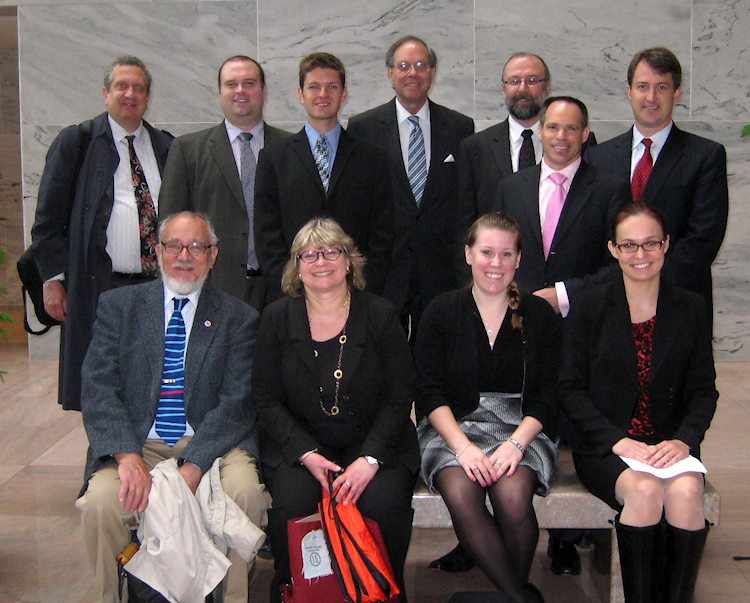
4/13/2011 – American Hungarian Federation drafts Central and East European Coalition 2011 Policy Brief, helps organize Advocacy Day on Capitol Hill.., In its continuous effort to raise issues important to the Hungarian American community, the American Hungarian Federation (AHF) participated in an April 13 Advocacy Day organized by the Central and East European Coalition (CEEC). The Advocacy Day involved meetings with key staffers in both the Senate and House of Representatives in the U.S. Congress. [read more]
9/23/2010 – AHF helps plan CEEC Advocacy Day in US Congress, drafts 2010 Policy Brief addressing Democracy and Human and Minority rights.
Related CEEC Articles

4/13/2011 – American Hungarian Federation Participates in Central and East European Coalition Advocacy Day on Capitol Hill… CEEC issues 2011 Policy Brief [read more]
01/24/11 – CEEC and AHF Submit Letter to Secretary Clinton expressing deep concern over “brutal post-election crackdown by Lukashenka’s (Lukashenko) regime on peaceful demonstrators, democratic activists, journalists and civil society” in Belarus. [read more]
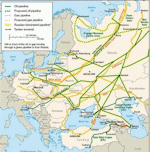
7/5/2010 – AHF participates in Capitol Hill policy seminar on energy security, “Coercion in the European Energy Sector: Implications for the United States.” The seminar was held on June 24, 2010 and sponsored by the Central and East European Coalition (CEEC) in cooperation with the Congressional Caucus on Central and Eastern Europe. [read more]

4/25/2009 – The American Hungarian Federation
Participates in White House Meeting… On April 24, 2009, the Central and East European Coalition (CEEC) met with Jeffrey M. Hovenier, Director for Central and Eastern Europe, National Security Council, and Katherine M. Helgerson, Director for Southeast European Affairs, National Security Council.
[read more]
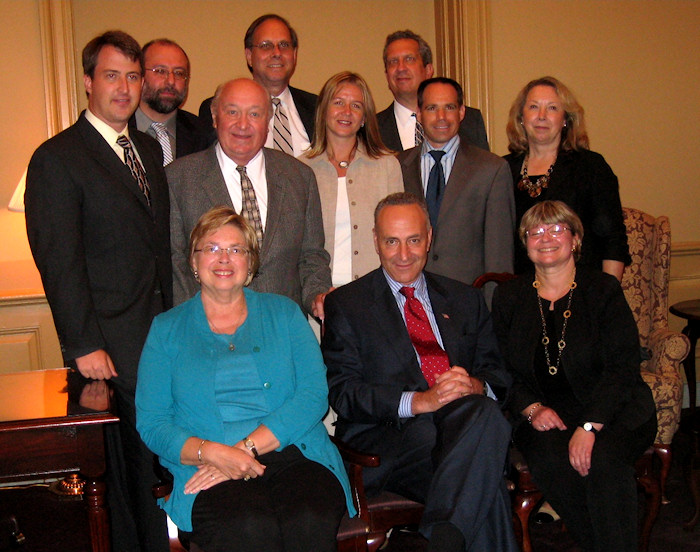
7/25/2008 – American Hungarian Federation Participates in CEEC Meeting with Senator Schumer: Discusses Russia “Hegemony” statement… The purpose of the meeting was to seek clarification of statements contained in Senator Schumer’s June 3rd Wall Street Journal article that were susceptible to the interpretation that he condoned Russian designs on Central and Eastern Europe. [read more]
6/19/2008 – American Hungarian Federation Helps Plan and Participates in Successful CEEC Congressional Policy Discussion on Central and Eastern Europe. [read more]

3/5/2008 – American Hungarian Federation Participates in Meetings With Senator Obama’s and Senator Clinton’s Foreign Policy Advisors… A number of policy issues were discussed with former Secretary of State Madeleine Albright and other top officials. [read more]

3/3/2008 – American Hungarian Federation Raises Issue of Vojvodina Hungarians With Senator Senator Clinton’s Foreign Policy Advisor, Ron Asmus… The meeting touched upon numerous issues of concern to the member organizations of the CEEC. [read more]

3/29/2006 – The American Hungarian Federation helps organize congressional reception with the Central East European Coalition (CEEC). The reception’s main focus was concerns over political developments in Belarus, the former Soviet Republic, and Russia`s support for the policies of President Alexander Lukashenko. The opposition says President Lukashenko, who has led Belarus for more than a decade, has become increasingly authoritarian, suppressing free speech and jailing democratic dissenters. [download CEEC member Iryna Vidanava’s speech]

3/16/2006 – The American Hungarian Federation participates in protest over anti-democratic developments in Belarus. In a show of solidarity with fellow CEEC members, demonstrators gathered in front of the Belarusian Embassy in Washington, DC on March 16 to protest against the authoritarian regime of Alexander Lukashenko, and to offer support for the people of that country.
Find Your Representative!