
Transylvania Today:
June – August 2017
Backdrop
According to the 2011 census, the population of Romania was 20,121,641, of which 6.1% were ethnic Hungarians. The majority of the Hungarians in Romania live in areas that were part of Hungary prior to the 1920 Treaty of Trianon.
The most prominent of these areas is Székely Land (Szeklerland, Tinutul Secuicesc or Székelyföld), which is in a region known as Transylvania. Of the forty-one counties of Romania, Hungarians form a significant population in the counties of Harghita (85.21%), Covasna (73.74%), and Mures (38.09%). Other counties with a notable Hungarian population include Satu Mare (34.65%), Bihor (25.27%), Sălaj (23.35%), and Cluj (15.93%).
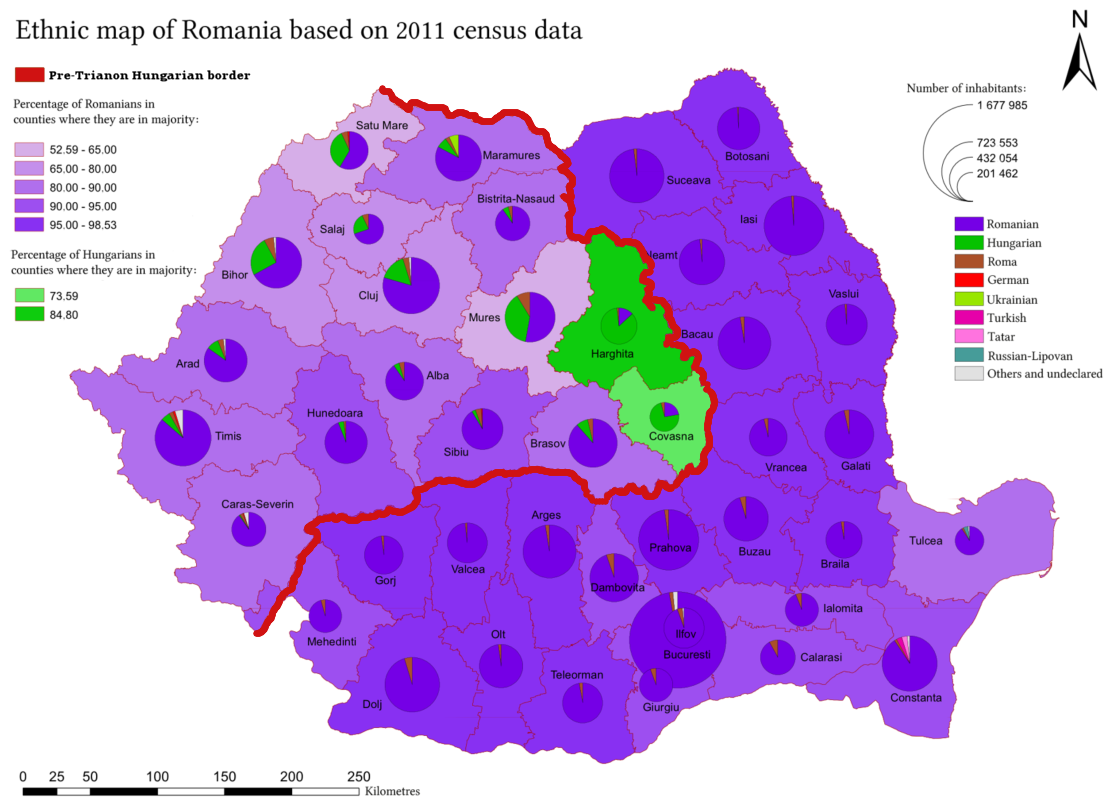
Romanians
16,792,868
German
36,042
Hungarians
1,227,623
Russian-Lipovan
23,487
Roma
621,573
Turks
27,698
Ukranians
50,920
Tatars
13,654
Hungarian goals and rights
The major representative of Hungarians in Romania, an organization known as the Democratic Union of Hungarians in Romania (UDMR), seeks to achieve self-government as well as cultural and territorial autonomy for the Hungarian minority. These goals mean guaranteeing the right of democratically elected officials in Hungarian communities to decide local affairs, preserve the use of the Hungarian language, maintain educational institutions, and promote Hungarian cultural activities. Although Romania co-signed the European laws protecting such minority rights, their implementation has been lacking and of little proven benefit to the broader Hungarian community.

[Download] the latest issue of Transylvania Today
Continued discrimination
In fact, the Hungarian community in Transylvania continues to experience systematic discrimination by Romanian authorities, including illegal arrests, closure of Hungarian institutions that include schools, and prevention of Hungarian cultural activities. This deliberate discrimination also involves illegal actions carried out by Romanian citizens, such as vandalism of assorted Hungarian properties including buildings, homes, and cemeteries.
Closing a Hungarian Roman Catholic high school
The latest example of Romanian discrimination against the Hungarian population of Transylvania involves a Romanian plan to close a Hungarian Roman Catholic high school. To express their opposition to this plan, on September 5, 2017, thousands gathered in the Transylvanian city of Targu Mures*,*formerly known as Marosvásárhely, to peacefully register their protest. Due to Romania’s Roman Catholics being predominately ethnic Hungarians, the planned closure of the school was viewed by the protesters as both an ethnic and religious-based assault on their legitimate minority rights.
The Romanian government attempted to rationalize the projected closure by alleging that the school lacked proper documentation and claimed this was the reason for launching an administrative proceeding last year against the school’s principal and the school itself.
The protest in Targu Mures was organized by the Roman Catholic Status Foundation and included prominent religious leaders. Participants included György Jakubinyi, Archbishop of Alba lulia; Béla Kató, Reformed Bishop of Transylvania; and Barna Kapás, head of the Status Foundation.
In the Hungarian government’s response to the Romanian plan to close the school, Hungarian State Secretary Levente Magyar expressed shock and informed a press conference that this move was tantamount to “an attack against the Catholic Church, the Hungarian minority, children, families, and the restitution process in Romania.”
Curtailing self-administration
Earlier, on June 26, 2017, Balázs Izsák, President of the Székely National Council, filed an appeal in a case against the Anti-Discrimination Council whose members include former President Traian Băsescu, former Prime Minister Victor-Viorel Ponta, Romanian politician George Crin Laurențiu Antonescu, and engineer Liviu Nicolae Dragnea. The Anti-Discrimination Council, otherwise known as the National Council for Combating Discrimination, was established in 2001, and is responsible for upholding Romanian and European Union anti-discrimination laws. The lawsuit, filed on May 2017, in the Bucharest Court of Appeals (Curtea de Apel), maintained that so-called reforms advanced by Romanian authorities discriminate against the Hungarian minority by eliminating every administrative unit that currently has a Hungarian majority in violation of EU Directive 2000/43, which calls for the equal treatment of persons irrespective of racial or ethnic origin.
The lower court promptly rejected the President of the Székely National Council’s claim, resulting in the pending appeal.
Related

Transylvania Today
Founded over 100 years ago, the American Hungarian Federation (“AHF”) has for decades promoted human and minority rights, including the rights of Hungarians living in the countries neighboring Hungary.
AHF’s International Relations Committee is proud to announce, consistent with and in furtherance of its continuing and long-standing tradition and mission, a new initiative — Transylvania Today — a quarterly, brief update relating to the Hungarian minority in Transylvania.
 6/17/2014 – AHF Book Review: “Transylvania Today: Diversity at Risk,” edited by Csaba Zoltani. Written by noted experts, describes the issues faced by minorities in Transylvania in their effort to retain their identity in an adverse environment. The essays of the book capture some of the fault lines in Transylvania, created by the incorporation of a territory with western traditions into one of Byzantine culture. Minorities, according to the official census, constitute nearly one-quarter of the population of Romania. Contributors include Amb. Geza Jeszenszky, Prof. Andrew Ludanyi, Tilhamer Czika, Viktor Segesvary, and Andreas Bereznay. [read more]
 Congressmen Frank R.Wolf (R-VA) and James P. McGovern (D-MA), Co-Chairmen of the Tom Lantos Human Rights Commission of the United States Congress, echo AHF’s call, and send a letter to Traian Basescu, President of Romania, in connection with Bishop Tokes and the threatened revocation of the Order of the Star of Romania. [read more]
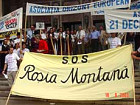
1/15/2014 – In 2009, PBS Television presented a documentary film on the planned open pit cyanide gold mine at Verespatak in Transylvania, now called Rosia Montana. In 2014, the Unitarian Church of Transylvania produced this English-language video entitled “Life over Gold – a Unitarian stand for Roşia Montană.” [read more] and view both videos.
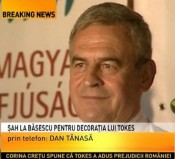
11/24/2013 – Romania revokes the Knight’s Order of the “Star of Romania” from hero of the Romanian Revolution, Bishop László Tőkés. AHF writes to the US Helsinki Commission on this latest anti-Hungarian measure: “The Federation respectfully and strongly urges you to publicly on behalf of the Helsinki Commission raise Romania’s most recent anti-Hungarian phenomenon – the revocation of the Medal Star of Romania previously awarded Bishop Laszlo Tokes for his extraordinarily courageous role in toppling the Ceaucescu dictatorship during the 1989 revolution. And what was Bishop Tokes’s transgression resulting in the revocation? Exercising his constitutional rights by standing up for the interests of the Hungarian minority in Romania. The revocation should be reversed.” The revocation comes years of a coordinated smear campaign against him. [read more]

6/19/2013 – Kiállást vár az amerikai Helsinki Bizottságtól az Amerikai Magyar Szövetség: Az Amerikai Magyar Szövetség feljegyzésben szólította fel ismételten a szervezetet, hogy június 27-ig “nyilvánosan és bizalmasan is vesse fel” a romániai egyházi és közösségi javak, beleértve a levéltárak igazságos és azonnali visszaszolgáltatásának kérdését. [tovább]
Miért támadja Magyarországot az amerikai szenátor? [tovább]