
Transylvania Today:
January 2017
Backdrop:
As we have noted on numerous occasions, Hungarian minority rights continue to be a major issue for the American Hungarian Federation (AHF). What follows is a rundown of recent developments of concern to us in Transylvania.
Ongoing theft without restitution of Hungarian properties:
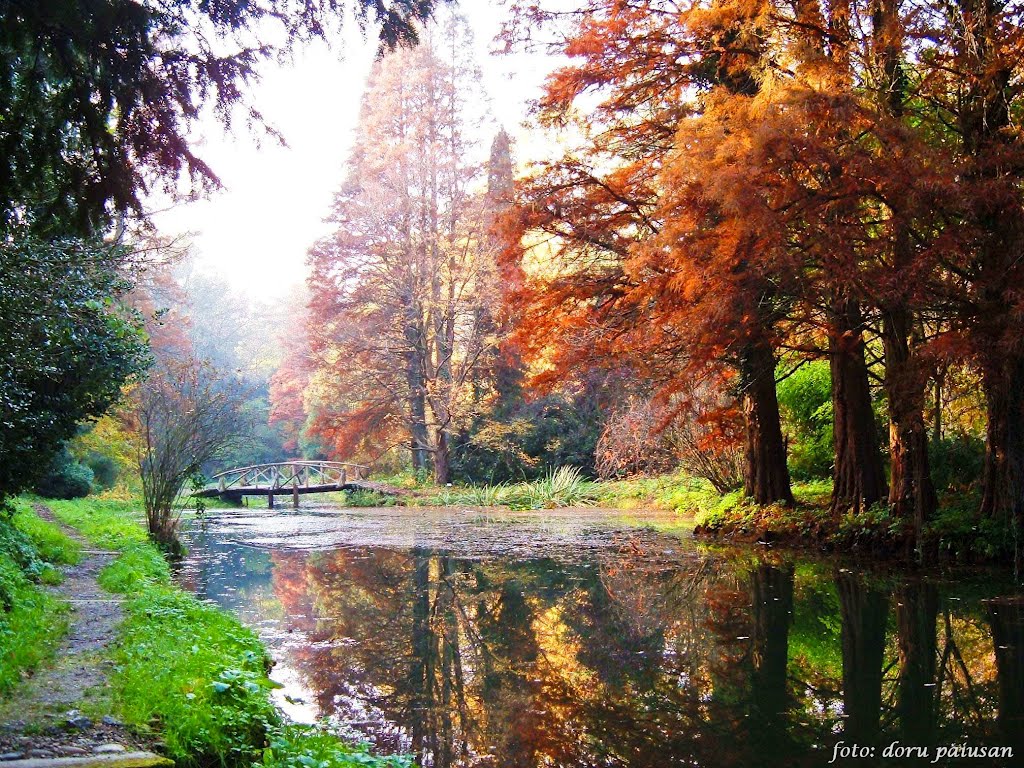
Europe’s third largest arboretum at Simeria (Piski) in Hunedoara County houses some 2,160 species of plants. For hundreds of years, it was the property of Transylvanian Hungarian nobility, the last being the Ocskay family. On March 2, 1949, the communists seized it and gave the family residing there in its palatial home thirty minutes to gather their belongings. They were then deported 200 km away to Târgu Mureş (Marosvásárhely).
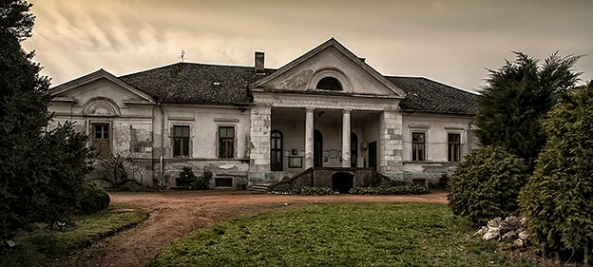
The palace at Piski is now used by the Romanian state as an institute for dendrological studies with much of the park largely abandoned. Since the change of regimes in Romania, the Ocskay family has tried through the court system to regain their illegally seized property, but without success. Regrettably, restitution is only partially practiced in Romania.
Romanian assurances ignored:
The first of December is a Romanian national holiday. It commemorates the day of 1918, when an assembly of Transylvanian Romanians met in Alba Iulia (Gyulafehérvár) and proclaimed their wish to join the Kingdom of Romania. The meeting was neither a representative body nor did it call for a plebiscite, thus ignoring the wishes of the other ethnicities living in the region.
The proclamation of the meeting stipulated among other rights, “full national freedom for co-inhabiting peoples, with each people studying, managing, and judging in its own language.” There was to be “full freedom of the press, association, and meeting,” as well as “free propagation of all human thoughts.” In addition, the declaration stipulated “the preservation of democratic local autonomy and the equality of all nationalities.”
As a condition for entry into the European Union (EU), Romania agreed to the Copenhagen criteria that upholds democracy, the rule of law, human rights, and protection of minorities. Per the Venice Commission, this convention applies to any ethnic group that forms a historic and current minority in a well-defined area.
Despite these assurances, according to news reports, during the last four years prefects representing the government in Bucharest launched 120 legal processes against minority use of their signs, symbols, or their own language. Furthermore, a government decree that monuments related to Hungarian events must also display a sign in Hungarian has not been fulfilled.
It is therefore not unusual that politicians, like Traian Băsescu, make wild extraterritorial claims to the effect that Romania extends to the river Tisza, which is well inside Hungary.
The sub-prefect of Timiş (Temes) County, Zoltán Marossy, was dismissed from his job by Dacian Cioloş, the prime minister, because he mentioned that Romania needs to recognize the need for autonomy of certain regions.
Governmental tools used to hasten assimilation of the Hungarian minority:
The schools maintained by the diverse Hungarian churches, including Catholic, Protestant, and Unitarian, are where children learn the language of their ethnicity. The Romanian method of hastening assimilation is to deprive these churches possession of their learning institutions. This includes questioning the legality of the ownership now in hands of these churches, refusing the return of the illegally seized church properties, and renationalizing any buildings which were returned.
A prime example involves the Catholic high school of Târgu Mureş (Marosvásárhely) that was restituted in 2004. From the early 20th century, the building housed the Unirea Romania and the II Rákoczi Ferenc schools. In the latter, the language of instruction was Hungarian. Only in 2014, did the authorities give an operating license to the school. However, recently the authorities declared that the license to operate was not valid, removed the principal, and forbade him from entering the school premises. The consequence was that the teachers could not be paid, nor could the contractors who deliver school supplies. The case is unresolved as of this writing.
Potentially, very serious consequences may ensue if the authorities continue to use the legal system to deprive minorities from re-establishing the schools that under Communism were illegally seized. Several hundred restituted buildings are used for education at all levels. As the renationalization of the Székely Mikό College showed, regardless of the proof of ownership, the authorities do not hold property rights to be very important despite all the signed assurances they have made.
Governmental objection to the use of Hungarian words:
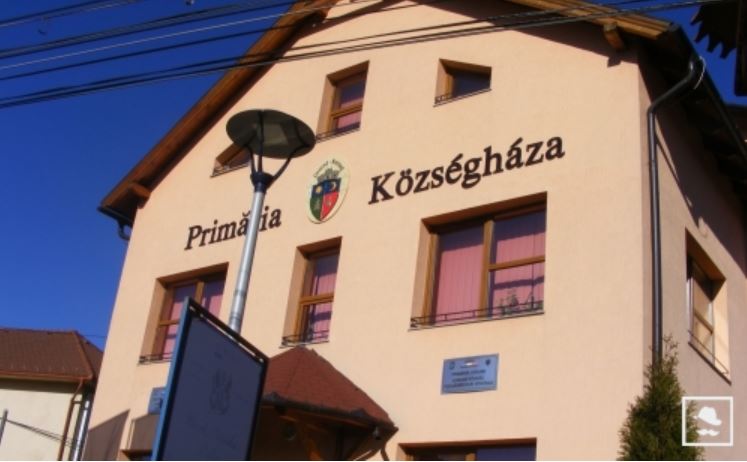
Although the Romanian government recognizes the principle of freedom of speech, legally it tries to limit the use of minority languages, including in signs where they are publicly displayed. The objection to the use of Községháza, with the identical Primăria in Romanian also displayed on community houses in predominantly Hungarian speaking districts, continues.
The falsity of the claim that there is no equivalent to the Hungarian word in Romanian has been demonstrated as in several dictionaries there indeed exists an equivalent word. With the legal system refusing to acknowledge this fact, the only recourse remains referral to the European Court of Justice.
Fortunately, a law proposed by Bogdan Diaconu to punish those who use flags that display the symbols of the minority with a fine roughly twice the average monthly wage was rejected by the Romanian Parliament at the end of December.

Rejection of Hungarian
World Heritage Site:
Every year at Pentecost, several hundred thousand ethnic Hungarians take part in the pilgrimage at Şumuleu Ciuc (Csiksomlyό), which commemorates the victory of 1567 at Pentecost against the King who wanted to convert the Szeklers to the Protestant faith. The local monks dubbed this as a miracle, providing the incentive to start the pilgrimage.
In 2012, the Romániai Magyar Demokratikus Szövetség (RMDSZ) representing the Hungarian population in Transylvania, and as a member of the government, suggested that the government should apply to UNESCO to declare Şumuleu Ciuc (Csiksomlyό) a World Heritage Site. The application was drafted based on the expert opinion of over 100 analysts. Even though the application was judged to be complete, at the meeting where it was to be voted on it was rejected as “incomplete.”
Sadly, the Romanians present at the meeting applauded the rejection of the application. Hearing the results, the Hungarian politicians vowed to resubmit the application and demanded the ouster of the Romanian Minister of Culture, Corina Şuteu, who, per the RMDSZ, blocked the application.
Transparency International on Romanian corruption:
According to a recent report by Transparency International, 29% of Romanian families reported having paid bribes in their daily dealings. In the European Union (EU), this is the most wide-spread corruption of any member country. Overall in the EU, only one family out of twenty paid bribes.
Contributed by Csaba K. Zoltani, editor of Transylvania Today: Diversity at Risk. (2013), for the American Hungarian Foundation (AHF)
Related

Transylvania Today
Founded over 100 years ago, the American Hungarian Federation (“AHF”) has for decades promoted human and minority rights, including the rights of Hungarians living in the countries neighboring Hungary.
AHF’s International Relations Committee is proud to announce, consistent with andin furtherance of its continuing and long-standing tradition and mission, AHF launched a new initiative — quarterly, brief updates relating to the Hungarian minority in Transylvania.
 6/17/2014 – AHF Book Review: “Transylvania Today: Diversity at Risk,” edited by Csaba Zoltani. Written by noted experts, describes the issues faced by minorities in Transylvania in their effort to retain their identity in an adverse environment. The essays of the book capture some of the fault lines in Transylvania, created by the incorporation of a territory with western traditions into one of Byzantine culture. Minorities, according to the official census, constitute nearly one-quarter of the population of Romania. Contributors include Amb. Geza Jeszenszky, Prof. Andrew Ludanyi, Tilhamer Czika, Viktor Segesvary, and Andreas Bereznay. [read more]
 Congressmen Frank R.Wolf (R-VA) and James P. McGovern (D-MA), Co-Chairmen of the Tom Lantos Human Rights Commission of the United States Congress, echo AHF’s call, and send a letter to Traian Basescu, President of Romania, in connection with Bishop Tokes and the threatened revocation of the Order of the Star of Romania. [read more]
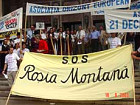
1/15/2014 – In 2009, PBS Television presented a documentary film on the planned open pit cyanide gold mine at Verespatak in Transylvania, now called Rosia Montana. In 2014, the Unitarian Church of Transylvania produced this English-language video entitled “Life over Gold – a Unitarian stand for Roşia Montană.” [read more] and view both videos.
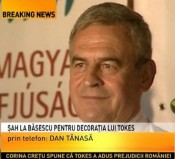
11/24/2013 – Romania revokes the Knight’s Order of the “Star of Romania” from hero of the Romanian Revolution, Bishop László Tőkés. AHF writes to the US Helsinki Commission on this latest anti-Hungarian measure: “The Federation respectfully and strongly urges you to publicly on behalf of the Helsinki Commission raise Romania’s most recent anti-Hungarian phenomenon – the revocation of the Medal Star of Romania previously awarded Bishop Laszlo Tokes for his extraordinarily courageous role in toppling the Ceaucescu dictatorship during the 1989 revolution. And what was Bishop Tokes’s transgression resulting in the revocation? Exercising his constitutional rights by standing up for the interests of the Hungarian minority in Romania. The revocation should be reversed.” The revocation comes years of a coordinated smear campaign against him. [read more]

6/19/2013 – Kiállást vár az amerikai Helsinki Bizottságtól az Amerikai Magyar Szövetség: Az Amerikai Magyar Szövetség feljegyzésben szólította fel ismételten a szervezetet, hogy június 27-ig “nyilvánosan és bizalmasan is vesse fel” a romániai egyházi és közösségi javak, beleértve a levéltárak igazságos és azonnali visszaszolgáltatásának kérdését. [tovább]
Miért támadja Magyarországot az amerikai szenátor? [tovább]