
Transylvania Today:
October 2017
Backdrop:
Hungarian minority rights continue to be limited throughout Transylvania, but the people’s resolve remains strong and has been encouraged by the recent visit of the American Ambassador to Romania.
Ethnic Tolerance Curtailed:
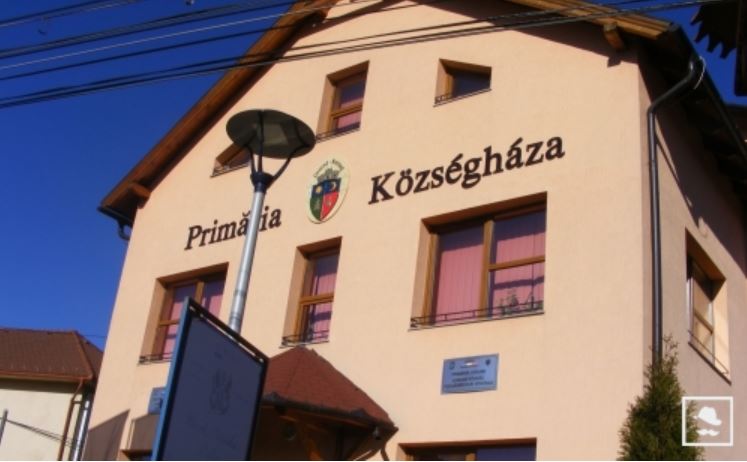
Corund (Korond), world-renowned for its ceramic pottery, has a population that is 96.7% Hungarian with 3% Roma (Gypsies). Its municipal building carries, in both Hungarian and Romanian, the designation “municipal building” over the front entrance.
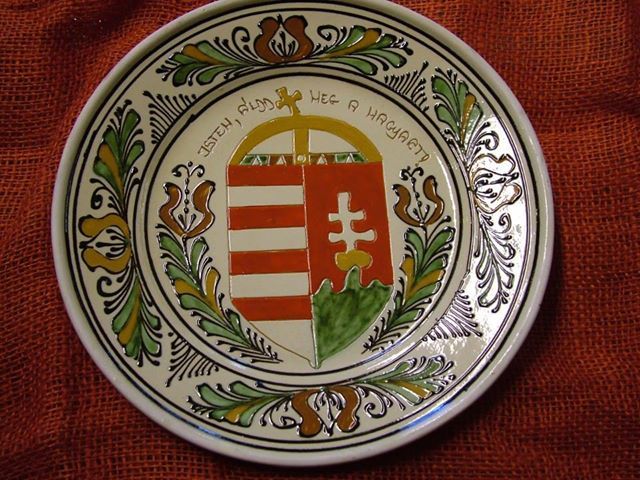
Romanian nationalists insist, despite facts to the contrary, that Romania is a unitary state. Furthering this advocacy, ADAC, a Romanian association led by Dan Tanasă, sued over half a dozen predominantly Hungarian ethnic municipalities over the use and display of the sign Községháza on their principal building. Recently, the county court of Hargitha (Hargita), which handled the Corund (Korond) case, ruled that displaying the sign Községháza is illegal since there is no Romanian word for it; and the court gave Corund (Korond) thirty days to remove the sign and obligated the municipality to pay the legal expenses of ADAC, the plaintiff. Local opinion is widely shared that multiculturalism, advocated by the EU, is still a prospect for the future in Transylvania.
Hungarian Days Celebrated in Cluj (Kolozsvár):
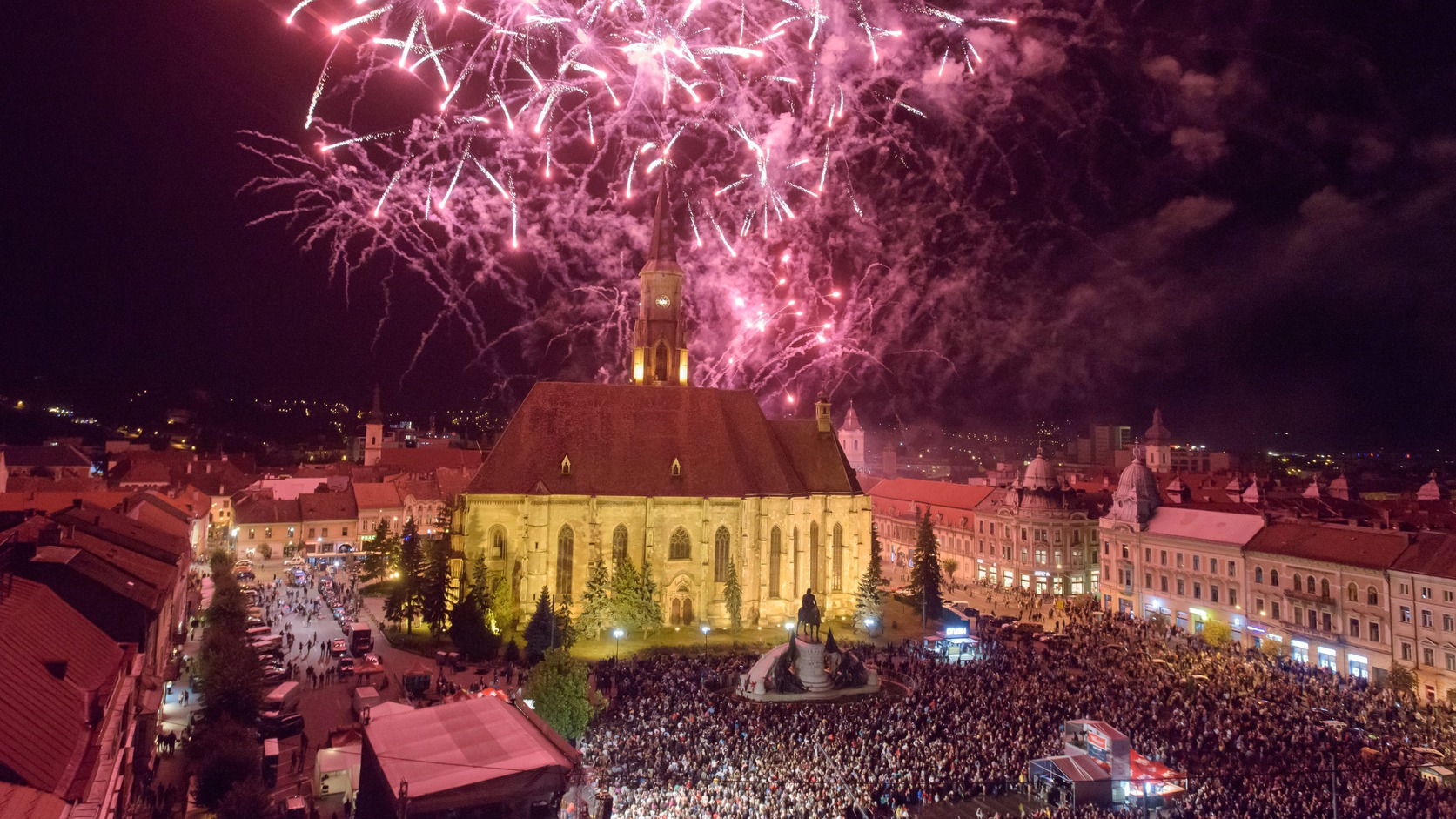
For the seventh year in a row, a festival lasting eight days was held in August 2016, in Cluj (Kolozsvár). It offered a variety of programs including literary, film, gastronomical, dance and children’s programs. The opera by Ferenc Erkel, Hunyadi Lászlό, and several concerts by well-known rock bands received an enthusiastic reception.
The song, “I Hate the 20th Century” by the band Beatrice, was used by opponents of the festival to try to label it in an unfavorable light. Images of Hitler and Stalin were projected onto the screen while the song was performed. The accusers labeled it a criminal act. The police were notified by Romanian media and some locals. The police investigated the matter and concluded that the complaint was without merit. The law (4th clause of the 2002/31 government decree) permits such image projections for “artistic purposes.” The lawsuit was another attempt to harm the Hungarian minority.
Restitution of Hungarian Properties in Limbo:
A quarter of a century after regime change, the restitution of illegally seized and used property is still unresolved. In fact, the Romanian state even seeks to renationalize some of the returned properties. A pertinent example is the ongoing process regarding the restitution of the Batthyáneum library of Alba Iula (Gyulafehérvár). The restitution was put on hold by the judge handling the case, who requires that the last will and testament of Bishop Ignác Batthyány, who deeded the property as dated July 31, 1798, be translated by someone who is not only an expert in Latin but also a medieval expert. As yet, no such expert has been found.
Significantly, the government decreed that all restitution processes must be completed by December 31, 2016.
U.S. Ambassador’s Visit was an intitial Encouragement:
Hans Klemm, the U.S. ambassador to Romania, was invited by leaders of the counties of Transylvania where a considerable portion of the 1.2 million of ethnic Hungarians live. He was photographed with his hosts as he was received and posed with them with the Szekler flag. Immediately, the Romanian media and the government expressed its displeasure. Rareş Bogdan, known for his anti-Hungarian pronouncements and anchorman on News-TV, also expressed his displeasure. Another channel, B1 TV, urged the government to express its affront as did Bogdan Diaconu, the head of the large political party PRU (Partidul România Unită). The former mayor of Cluj (Kolozsvár), Gheorghe Funar, claimed that the ambassador deeply offended the Romanian constitution and people. Diaconu also reiterated that Szeklerland does not exist.
Regrettably Ambassador Klemm has since followed his earlier courageous act of being photographed with the Szekely flag by reportedly saying that Romania has become a model in the region with respect to democracy and open governance, including the observance of the rights of minorities. AHF will check the accuracy of the report and, if necessary to correct the record, will respond accordingly.
Events provoked reaction outside of Romania. The AHF (American Hungarian Federation) congratulated the ambassador congratulated the ambassador while there were others, like HFP (Hungarian Free Press), that erroneously tried to associate the Szekler flag with right-wing politics. In fact, the flag is cherished by ethnic Hungarians throughout Transylvania. It is a reminder that minorities in multicultural Europe wish to retain their cultural values. The EU certainly supports such aspirations.
There is a constant effort by the authorities to wipe out any reference to the sizeable minorities in Romania. This also includes the substantial Roma (Gypsy) communities.
A Glimpse into the Past as It Used to be:
BBC commentator Michael Portillo retraced George Bradshaw’s journey through Transylvania as described in the latter’s rail travelogue published in 1913. From Transylvania to the Black Sea, a part of the Great Continental Railway Journey, is accessible through the Telegraph.co.uk Web site. Portillo remarked that not much has changed in a hundred years. The virgin beauty of the landscape and the presence of wild animals, unusual for Europe today, is a frequent occurrence. Of Europe’s regions, Transylvania has the largest numbers of brown bears and wolves.
Contributed by Csaba K. Zoltani, editor of Transylvania Today: Diversity at Risk. (2013), for the American Hungarian Foundation (AHF)
Related

Founded over 100 years ago, the American Hungarian Federation (“AHF”) has for decades promoted human and minority rights, including the rights of Hungarians living in the countries neighboring Hungary.
AHF’s International Relations Committee is proud to announce, consistent with andin furtherance of its continuing and long-standing tradition and mission, AHF launched a new initiative — quarterly, brief updates relating to the Hungarian minority in Transylvania.
 6/17/2014 – AHF Book Review: “Transylvania Today: Diversity at Risk,” edited by Csaba Zoltani. Written by noted experts, describes the issues faced by minorities in Transylvania in their effort to retain their identity in an adverse environment. The essays of the book capture some of the fault lines in Transylvania, created by the incorporation of a territory with western traditions into one of Byzantine culture. Minorities, according to the official census, constitute nearly one-quarter of the population of Romania. Contributors include Amb. Geza Jeszenszky, Prof. Andrew Ludanyi, Tilhamer Czika, Viktor Segesvary, and Andreas Bereznay. [read more]
 Congressmen Frank R.Wolf (R-VA) and James P. McGovern (D-MA), Co-Chairmen of the Tom Lantos Human Rights Commission of the United States Congress, echo AHF’s call, and send a letter to Traian Basescu, President of Romania, in connection with Bishop Tokes and the threatened revocation of the Order of the Star of Romania. [read more]
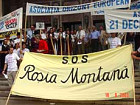
1/15/2014 – In 2009, PBS Television presented a documentary film on the planned open pit cyanide gold mine at Verespatak in Transylvania, now called Rosia Montana. In 2014, the Unitarian Church of Transylvania produced this English-language video entitled “Life over Gold – a Unitarian stand for Roşia Montană.” [read more] and view both videos.
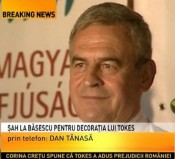
11/24/2013 – Romania revokes the Knight’s Order of the “Star of Romania” from hero of the Romanian Revolution, Bishop László Tőkés. AHF writes to the US Helsinki Commission on this latest anti-Hungarian measure: “The Federation respectfully and strongly urges you to publicly on behalf of the Helsinki Commission raise Romania’s most recent anti-Hungarian phenomenon – the revocation of the Medal Star of Romania previously awarded Bishop Laszlo Tokes for his extraordinarily courageous role in toppling the Ceaucescu dictatorship during the 1989 revolution. And what was Bishop Tokes’s transgression resulting in the revocation? Exercising his constitutional rights by standing up for the interests of the Hungarian minority in Romania. The revocation should be reversed.” The revocation comes years of a coordinated smear campaign against him. [read more]

6/19/2013 – Kiállást vár az amerikai Helsinki Bizottságtól az Amerikai Magyar Szövetség: Az Amerikai Magyar Szövetség feljegyzésben szólította fel ismételten a szervezetet, hogy június 27-ig “nyilvánosan és bizalmasan is vesse fel” a romániai egyházi és közösségi javak, beleértve a levéltárak igazságos és azonnali visszaszolgáltatásának kérdését. [tovább]
Miért támadja Magyarországot az amerikai szenátor? [tovább]