The Case of Oliver Boldoghy
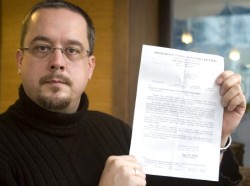
12/02/2011 – Slovakia strips citizenship to ethnic Hungarian minorties who assert their right to dual citizenship, an international norm, and in violation of their own Constitution. AHF submits a statement to US Congress and the Helsinki Commission and states, “Intolerance and discrimination targeting any group based on ethnicity, nationality or religion is not acceptable… The most recent anti-Hungarian incident involves Slovakia stripping Oliver Boldoghy, an actor and businessman, of of his Slovak citizenship after becoming a dual citizen.

“You can’t give in to tyranny, if I bow before the anti-democratic rules of the Slovakian government, if I accept the rules of the game, then tomorrow the entire Hungarian community will be bullied” – said Olivér Boldoghy to Magyar Hirlap.
[ Read the English translation of his Magyar Hirlap interview]
Boldoghy, an actor-entrepreneur, lost his Slovakian citizenship because he obtained Hungarian passport; he doesn’t have much expectations about potential Eu’s support regaining his Slovakian citizenship, rather he is of the opinion that it is the Hungarian community in Slovakia that ultimately has to win the battle of dual citizenship.
AHF’s letter continued, “this decision is not only contrary to American and European practices, it violates the Slovak constitution, which provides that “no one must be deprived of the citizenship of the Slovak Republic against his will.”
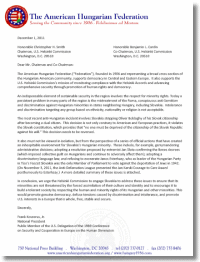
[download] AHF’s letter to the U.S. Helsinki Commission
The letter to the Helsinki Commission Chairmen appears below and it availaible for [download]. The attached statement, “Slovakia Should Respect the Rights of its Hungarian and Other Minorities,” is also available for download and appears in its entirety [below]
December 1, 2011
Honorable Christopher H. Smith,
Chairman, U.S. Helsinki Commission
Honorable Benjamin L. Cardin
Co-Chairman, U.S. Helsinki Commission
Dear Mr. Chairman and Co-Chairman:
The American Hungarian Federation (“Federation”), founded in 1906 and representing a broad cross-section of the Hungarian American community, supports democracy in Central and Eastern Europe. It also supports the U.S. Helsinki Commission’s mission of monitoring compliance with the Helsinki Accords and advancing comprehensive security through promotion of human rights and democracy.
An indispensable element of sustainable security in the region involves the respect for minority rights. Today a persistent problem in many parts of the region is the mistreatment of the Roma, conspicuous anti-Semitism and discrimination against Hungarian minorities in states neighboring Hungary, including Slovakia. Intolerance and discrimination targeting any group based on ethnicity, nationality or religion is not acceptable.
The most recent anti-Hungarian incident involves Slovakia stripping Oliver Boldoghy of his Slovak citizenship after becoming a dual citizen. This decision is not only contrary to American and European practices, it violates the Slovak constitution, which provides that “no one must be deprived of the citizenship of the Slovak Republic against his will.” This decision needs to be reversed.
It also must not be viewed in isolation, but from the perspective of a series of official actions that have created an inhospitable environment for Slovakia’s Hungarian minority. These include, for example, gerrymandering administrative divisions; adopting a resolution proposed by extremist Jan Slota confirming the Benes decrees (which imposed collective guilt on Hungarians and continue to adversely affect them); adopting a discriminatory language law; and refusing to exonerate Janos Esterhazy, who as leader of the Hungarian Party in Tiso’s Fascist Slovakia was the only Member of Parliament to vote against the deportation of Jews in 1942. (On November 3, 2011, the Anti-Defamation League presented the Jan Karski Courage to Care Award posthumously to Esterhazy.) A more detailed summary of these issues is attached.
In conclusion, we urge the Helsinki Commission to engage Slovakia to address these issues to ensure that its minorities are not threatened by the forced assimilation of their culture and identity and to encourage it to build a tolerant society by respecting the human and minority rights of its Hungarian and other minorities. This would promote genuine democracy, defuse tensions caused by discrimination and intolerance, and promote U.S. interests in a Europe that is whole, free, stable and secure.
Sincerely,
Frank Koszorus, Jr.
National President
Public Member of the U.S. Delegation of the 1989 Conference
on Security and Cooperation in Europe on the Human Dimension
[download] AHF’s Statement to the U.S. Helsinki Commission
SLOVAKIA SHOULD RESPECT THE RIGHTS OF ITS HUNGARIAN AND OTHER MINORITIES
December 2011
The American Hungarian Federation (the “Federation”), founded in 1906 as an umbrella organization representing a broad cross-section of the Hungarian American community, supports democracy, human and minority rights and the rule of law in Central and Eastern Europe. The Federation also supports continued American engagement in the region.
This statement focuses on two issues: (1) minority rights as the prerequisite to democracy in the multi-national state of Slovakia; and (2) intolerance and discrimination against the Hungarian minorities living there.
MINORITY RIGHTS: AN INDISPENSABLE ELEMENT OF REAL DEMOCRACY AND SUSTAINABLE SECURITY
The United States must remain engaged in the region to help strengthen democratic institutions and the stability that derives from democracy. That goal was among the reasons the United States fought the Cold War. Moreover, a strong, secure and stable NATO will also be in a better position to substantially contribute to the war against terrorists and resist Russia’s attempts to expand its influence in the region.
With the exception of NATO’s enlargement, some quickly lost sight of the economic, moral and spiritual damage left in the wake of close to fifty years of Communism that had been imposed on the region by Soviet bayonets. Free elections were held and therefore nothing more needed to be done, seemed to be the attitude shared by some decision and opinion makers. Thus, for example, Radio Free Europe/Radio Liberty broadcasts to the region were prematurely phased out.
Despite great strides toward freedom, democracy and democratic institution building, there is work to be done, as old impulses die hard.
An indispensable element of democracy and sustainable security in the region involves the respect for minority rights, the rule of law, and constitutional democracy, as opposed to illiberal democracy. This important question does not always receive the attention it should. As the tragic events in the nineties demonstrated, a primary cause of tensions and violence in the region is discrimination against and intolerance toward national, ethnic and religious minorities by the majority. A persistent problem in many parts of Central and Eastern Europe is the mistreatment of the Roma, conspicuous anti-Semitism and discrimination against Hungarians in, among other places, Slovakia.
A government that fails or refuses to respect minority rights can hardly be deemed to be genuinely democratic, even if it has come to power through the ballot. Moreover, granting legitimate minority rights to historical groups would defuse tensions and promote political stability and greater cooperation in the Carpathian Basin.
The issue of minority rights has nothing to do with borders or irredentism as some erroneously or falsely assert in order to ignore their international legal obligations. It has everything to do with meaningful and enduring stability in Central Europe, however. The Hungarian minorities who live in countries neighboring Hungary (due to the Treaty of Trianon which dismembered the country) seek redress for their grievances strictly through peaceful and democratic means and contribute substantially to sustainable stability in the region. The stability flowing from collective rights is not only of interest to Hungarians, but should also be of great interest to the U.S. and NATO.
SLOVAKIA: ANTI-HUNGARIAN MEASURES AND ATTITUDES
More than two decades after the collapse of Communism, Slovakia has yet to fulfill its promises to its ethnic Hungarians. Although Slovakia was accepted into NATO and the EU based, in part, on these promises, the irrefutable record demonstrates that its laws and practices fail to conform to European and Western standards relating to human and minority rights. The members of the Hungarian minority in Slovakia often face intolerant or discriminatory laws, practices or attitudes. A few examples of Slovakia’s less than exemplary record will suffice.
Punitive Citizenship Law. Hungary’s citizenship law facilitates the acquisition of Hungarian citizenship by ethnic Hungarians living outside of Hungary, not just in countries neighboring Hungary. Nevertheless, Slovakia passed a punitive citizenship law specifically in response to Hungary’s citizenship law. While on its face Slovakia’s law deprives dual citizens of Slovak citizenship, the timing of the new law clearly demonstrates that it targets Hungarians. Slovakia’s law is not only contrary to European and American practices and norms, it violates Paragraph 2 of Article 5 of the Slovak constitution, which provides that “no one must be deprived of the citizenship of the Slovak Republic against his will.”
NOTE: The Case of Oliver Boldoghy. The most recent anti-Hungarian incident involves Slovakia stripping Oliver Boldoghy of his Slovak citizenship after becoming a dual citizen. This decision must be reversed and the citizenship law substantially modified or repealed.
Janos Esterhazy Still Awaits Exoneration. Slovakia should at long last exonerate Janos Esterhazy who as the leader of the Hungarian Party in Tiso’s Fascist Slovakia was the only Member of Parliament to vote against the deportation of Jews in 1942 and the anti-Semitic laws, which he criticized as not being in accordance with humanitarian principles. Esterhazy also personally helped Jews flee Slovakia.
Immediately after the war in 1945, Esterhazy was arrested on the orders of Gustav Husak, a post-war communist leader of Czechoslovakia, for speaking out against the discriminatory anti-Hungarian measures introduced by the government. These measures, rooted in the anti-democratic concept of collective guilt, stripped ethnic Hungarians of their citizenship, virtually all of their rights, property (without compensation), dignity, and, in some cases, their lives. After being handed over to the KGB, Esterhazy was convicted as a “war criminal” by a Soviet court.
In 1947, while Esterhazy was imprisoned in the Soviet Union, the National Court in Slovakia in a perfunctory proceeding, and without any evidence, sentenced him to death in absentia on the trumped up charges of being a fascist and having contributed to the dissolution of Czechoslovakia. It is a cruel irony that Esterhazy was wrongly accused of doing exactly what Slovakia would do on its own forty-six years later in the “Velvet Divorce” of 1993 — dissolving Czechoslovakia. Upon his return from Russia, Esterhazy’s sentence was commuted to life in prison. He died in a Czechoslovak prison in 1957 and was buried in an undisclosed mass grave.
While Russia exonerated him on January 21, 1993, acknowledging that he had been “arrested without cause,” more than twenty years after the fall of Communism, Slovakia astonishingly refuses to exonerate Esterhazy, an unsung hero of anti-Nazi resistance.
NOTE: ADL Honors Esterhazy for Saving Persecuted Jews. On November 3, 2011, the Anti-Defamation League presented the Jan Karski Courage to Care Award posthumously to Esterhazy.
Discriminatory Language Law. An example of overt discrimination is the language law that took effect on September 1, 2009 in Slovakia and discriminates against ethnic Hungarians who comprise only 11% of the population and live in contiguous areas of southern Slovakia – the geographic location where they and their ancestors have lived for over a millenium.
The language law threatened the Hungarian minority’s culture and infringed on fundamental freedoms. The mere existence of the law, as drafted, caused considerable uncertainty, fear and anxiety among ethnic Hungarians. The result was to chill the use of their mother tongue, precisely why this law was so odious and anti-democratic. There was no place for such a law in 21st century Europe.
The language law was among the latest manifestation of the previous Slovak government’s intolerance toward its Hungarian minority. Not surprisingly, the Slovak National Party (“SNS”) was a member of the ruling coalition. Its chairman Jan Slota is known for his xenophobic outbursts: “Hungarians are the cancer of the Slovak nation, without delay we need to remove them from the body of the nation.” The Stephen Roth Institute has called the SNS “an extremist nationalist party.”
Such extremist attitudes contributed to the adoption of the law, even though Slovakia promised to respect the rights of its minorities before being accepted into NATO and the EU. Not only did the law cause considerable internal unease in Slovakia, it threatened much needed unity within NATO by increasing tensions between Slovakia and Hungary – both NATO allies.
International objections to the law included the conclusions by the European Commission for Democracy Through Law (the “Venice Commission”), which criticized provisions of this law as being incompatible with international standards and reminded Slovakia that it was not absolved “of the obligation to comply with the provisions of the international conventions for the protection of national minorities.” While this odious law has been modified, it is still on the books and does not reflect a tolerant attitude toward the Hungarians.
Lingering Effects of the Benes Decrees. The Slovak Parliament on September 20, 2007 adopted a resolution proposed by extremist Jan Slota ratifying and confirming the Benes Decrees originally issued between May 14 and October 27, 1945. Among the most controversial decrees were the ones which stripped ethnic Hungarians of their citizenship, virtually all of their rights, property (without compensation), dignity, homes and, in some cases, their lives – all on the unjustifiable basis of collective guilt. In postwar Czechoslovakia old, feeble and disabled retired civil servants were denied their pensions. Hungarian schools were closed and the Hungarian language forbidden even in their churches. Czechoslovakia also pursued a policy of ethnic cleansing in southern Slovakia and sent thousands of Hungarians to camps. The debilitations continue to affect many of the victims of the crimes committed in post-World War II Czechoslovakia.
The concept of collective guilt is abhorrent to Americans and to anyone committed to the rule of law, human rights and democracy. Indeed, the United States did not endorse the principle of collective guilt of Hungarians. The June 12, 1945 memorandum of the American political Mission to Budapest confirms this:
The United States Government would not consider it justified to deal with members of an ethnic group who constitute a minority as criminals against the state and as subject to expulsion from its territory, only because of their ethnic origin.
Nevertheless, as a result of pressure from the victorious powers, including the Soviet Union which favored Czechoslovakia, Hungary was forced to agree to a “population exchange.”
The Benes Decrees are still on the books and their discriminatory impact remains in effect. Compensation has yet to be paid to those whose properties were summarily and unjustly confiscated and legal redress for the inequities suffered by Hungarians solely because of their nationality are not in sight. Slovakia should provide legal redress to remedy the continuing and discriminatory effects of the Benes Decrees and thereby adopt the values shared by the trans-Atlantic community of nations.
CONCLUSION
Slovakia should be encouraged to build a tolerant society by respecting the human and minority rights of its Hungarian and other minorities and the rule of law, thereby converting promises into deeds. Concrete steps it should be urged to take include:
- Restoration of Oliver Boldoghy’s Slovak citizenship
- Repeal of the citizenship law that strips Slovak citizenship of persons seeking dual citizenship
- Exoneration of Janos Esterhazy
- Repeal of the discriminatory provisions of the language law
- Repeal of the multiple Benes Decrees that affected ethnic Hungarians based on collective guilt
These actions would defuse tensions caused by discrimination and intolerance, improve Hungarian/Slovak relations, promote United States interests in a Europe that is whole, free stable and secure, and serve the cause of justice, genuine democracy and the rule of law.
[<< Back to News from Slovakia]
[<< Go to News on the Slovak Language Law]
Related
[<< Back to Slovak Citizenship Cases]
Slovak Constitution: “no one must be deprived of the citizenship of the Slovak Republic against his will.”
The Slovak Citizenship Act, specifically targets Hungarians and was amended to combat Hungary granting citizenship freely to Slovaks, was adopted last year shortly after Hungary announced its plans to grant citizenship to ethnic Hungarians abroad. The law in force in Slovakia clearly states that anyone accepting the citizenship of another country will be stripped of their Slovak citizenship.
The Case of Ilonka Aladarne Tamas
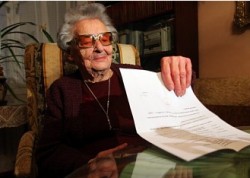
12/12/2011 – UPDATE: The Case of Ilonka Tamas. The latest outrage from Slovakia: a 99-year-old teacher loses citizenship. AHF issues a follow up statement to the Helskinki Commission. Her case is particularly disconcerting. She was born in 1912 in Rimaszombat (Slovak name: Rimavska Sobota), then the seat of Gomor County and part of Hungary. Thus, Mrs. Tamas was born in 1912 as a Hungarian citizen on Hungarian soil. She never relocated, but with the Treaty of Trianon, she became first a citizen of Czechoslovakia and then, with the recent breakup of Czechoslovakia, a citizen of Slovakia. She is now a “person without a registered address.”
[read more]
More Coverage of the Slovak Citizenship Issue

2/27/2014 – Memorandum felvidéki magyaroktól a szlovák kormánynak. Szlovák kormányhoz fordultak állampolgárságuktól megfosztott felvidéki magyarok. [tovabb]

12/5/2011 – American-Hungarian Federation turns to US Congress over widening Slovak citizenship row. The American-Hungarian Federation has turned to the US Congress Helsinki Commission with an appeal for it to take action in the case of a Slovak of Hungarian origin who has been stripped of his citizenship on the ground that he took up Hungarian citizenship, the alliance’s chairman told MTI. [read more]
Statement of the Ministry of Foreign Affairs of the Slovak Republic to the case of Olivér Boldoghy. While complying with general principles and norms of international law concerning citizenship, every state has a sovereign right to set its own legal regulation of citizenship. The current situation and the Oliver Boldoghy-case result from non-standard Hungarian citizenship regulation granting the Hungarian citizenship on the basis of ethnicity without any real ties of the person to the state. [read more]

11/28/2011 – The citizenship of an ethnic Hungarian resident of the Slovak town of Komarno causes a political row between Hungary and Slovakia over Hungary’s dual citizenship law. “Many people have taken up the Hungarian citizenship but they did not notify the Slovak interior ministry about it. The reason why myself with several others have openly admitted this is to take a conscious civilian action. We would like to create a precedent. We began a signature collection on the day of the Slovak constitution on September 1st and referring to the constitution we would like to achieve that this Fico law, this anti-dual citizenship law should is annulled,” Boldoghy said. [read more]
11/30/2011 – Ethnic Hungarian should appeal citizenship case in European courts, says Deputy PM. The Slovak constitution declares that no one can be deprived of their Slovak citizenship against their will, Semjen said, adding that this is the legal argument that should be followed in Boldoghy’s defence. The Slovak authorities had acted against universal human rights and the ethos of the European Union, Semjen said, adding that Hungary offers its full support to Boldoghy’s case. [read more]
Slovak Language Law Related Articles
Under the Slovak Language Law, the use of the minority language in official communication would be punishable in towns and villages where the ethnic community makes up less than 20 percent of the total population. The amendment requires that all documentation of minority schools should be duplicated in the state language. The law stipulates that the names of streets and buildings anywhere in Slovakia must be stated in the Slovak language [despite 1100-year-old tradition] and it also introduces sanctions of up to €5,000 ($7,000) on those who break rules promoting the use of Slovak in public and for municipalities and public offices for not using the Slovak language “properly.”


“Álláspontjának Tisztázására Szólította Fel az EBESZ Kisebbségügyi Főbiztosát az Amerikai Magyar Szövetség” – MTI 2011. szeptember 30., péntek 1:14
[ MTI cikk magyarul]

Hovorte po slovensky!* Slovakia criminalises the use of Hungarian: The Economist, Jul 30, 2009