
Segment 1: Gabriel Resources, a Canadian based multinational, plans to build the largest gold mine in Europe. Its subsidiary — Rosia Montana Gold Corporation — was granted a 20-year exploration license, but first it would have to buy up hundreds of houses and displace almost an entire village.
Segment 2: John Aston, vice president of the Rosia Montana Gold Corporation, describes the company’s plans in a positive light. Remus Celusa, a resident of Rosia Montana, wonders why the corporation can’t mine the gold “without destroying our mountain and everything we own.”
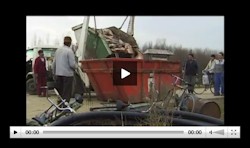
Segment 3: Gold Corporation began buying out homeowners in 2002, offering either cash or a home in a new community. While many people are taking advantage of the buyouts, others, like farmer Eugen David, are resisting.
Segment 4: The Rosia Montana gold mine has the potential for causing catastrophic environmental harm. In January 2000, heavy rains and snowfall flooded a holding pond of mining waste in the Romanian city of Baia Mare, spilling more than 20 million gallons of cyanide-laced sludge into the River Tisza.
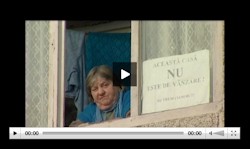
Segment 5: Gabriella Szekely, was a teacher in Rosia Montana for 34 years, but now has broken her ties with the village, and taken Gold Corporation’s money to leave. Margit Buran, a retired accountant is resolute – she won’t deal with the Canadian company.
PBS airs documentary on Cyanide Mine in Transylvania… Rumania plans the destruction of churches, cemeteries, homes and displacing an entire village to make room for one-mile-wide, open-pit cyanide mine, the largest gold mine in Europe.
Rumania annexed Transylvania and the Banat from Hungary after World War I at the Treaty of Trianon where Hungary lost an unprecedented 2/3 of her territory, 1/3 of her ethnic Hungarian population, and over 90% of her national railroads and natural resources. Transylvania, and expecially towns and villages inhabited by ethnic Hungaria communities, has long been a target for exploitation by the Rumanian government. Ceaucescu wanted to raze entire Hungarian vilages and replace them with communist-style, highly polluting industrial plants.
Today, over two decades after the Rumanian revolution that ended the brutal Ceaucescu dictatorship, another historic Translyvanian village with a significant ethnic Hungarian community, Rosia Montana (Verespatak in Hungarian), a gold producing area for over a millenia, is the site of another battle as the Rumanian government and international business join forces to divide an impoverished community in order to displace residents, flood huge areas, and establish an open-pit cyanide mine to extract what’s left of the gold.
In 2000, the world watched in horror as a dam containing toxic waste material from the Baia Mare Aurul gold mine (Nagybánya in Hungarian) in North Western Romania burst and released 100,000 cubic meters of waste water, heavily contaminated with cyanide, into the Lapus and Somes tributaries of the river Tisza, one of the biggest in Hungary. Protestors warn of another cyanide-induced Rumanian environmental disaster.
PBS Television presented a documentary film on the planned open pit cyanide gold mine at Verespatak in Transylvania, now called Rosia Montana after Rumanian annexation. In “Gold Futures,” WIDE ANGLE profiles rural farmers and townspeople confronting a choice, as a Canadian company prepares to excavate a massive open-pit gold mine where their village still stands. Hungarian film-maker Tibor Kocsis is cinematographer, director and editor of Gold Futures, and has been following the story of Rosia Montana for more than five years.
“Gold Futures” is a David-and-Goliath story set in a scenic Romanian village in the heart of Transylvania. At stake: Europes largest deposit of gold ore – and a 2000-year-old village community. Now, as a Canadian company (RMGC) plans to excavate the largest open-pit gold mine in Europe, mineral wealth and badly-needed jobs compete with time- honored rural traditions and concerns about poisoning the environment.
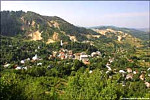
RMGC’s planned use of cyanide raises flags for some wary villagers who fear an environmental disaster like the one that occurred in 2000, when a ruptured dam at a nearby mine unleashed toxic cyanide sludge into the river system, contaminating the drinking water of millions of people and killing more than 1200 tons of fish downriver in Hungary.
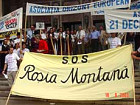
In addition to the threat of pollution, the project will mean the displacement of the entire village and all its residents. Excavation of the new one-mile-wide mine can’t begin until hundreds of houses and nearby shops, churches and even graveyards are demolished. Hungarians and Rumanians lived peacfully side-by-side for centuries. Together, joined by the world community, are working together to fight against the mine. [download the Press Release]
Related
- Why So Many Hungarians Across the Border?
- AHF Statements on Trianon
- Selected AHF Articles on Rumania
- Articles and Essays by AHF Members for download
- Congressional Resolutions and Records
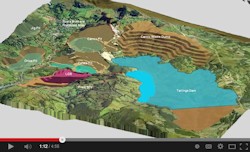
In 2014, the Unitarian Church of Transylvania produced this English-language video entitled “Life over Gold – a Unitarian stand for Roşia Montană“
- No Dirty Gold
- Salvati Rosia Montana– “People are more important than gold. Save Rosia Montana.” In English, Hungarian, Romanian, and German
- RosiaMontana.org is a page maintained by volunteers supporting the activities of Alburnus Maior, a Romanian NGO headquartered in Rosia Montana, Romania
- See Gabriel Mining’s rebuttal: www.truestory.ru
- Case Study on the Tisza cyanide disaster: The cyanide pollution of the rivers Szamos and Tisza was caused by AURUL, an Australian-Romanian joint venture that is situated in Romania’s Baia Mare (Nagybánya) region, close to Rosia Montana
Ramsar Forum: Cyanide pollution of the rivers Szamos and Tisza
- The Szekely Miko Matter
- AHF expresses concerns for Hungarian Minority in Rumania to Vice President Joe Biden
- AHF article on Autonomy for Romania’s Hungarian Communities published in Foreign Policy Review
- AHF Concerns related to the Hungarian Minority in Transylvania
- Controversy at the Babes-Bolyai State University
- Church and Synagogue Property Confiscation
- “There are no Nationalities in Romania” The American Hungarian Federation Co-Hosts Lecture by Bishop Arpad Szabo from Kolozsvar
- Révai Miklós emléktábla Nagycsanádon
- Rumania’s Basescu in the US
- AHF on Dual Citizenship for Hungarians
- The Csango Hungarians of Moldavia
- The Tragedy of the Treaty of Trianon
- An Essay on the foundations of Rumanian Identity, Nationalism and Ethnic Cleansing – CONCEPTUAL CONFUSIONS CONCERNING THE ROMANIAN IDENTITY: NEAM AND POPOR AS EXPRESSIONS OF ETHNO-NATIONALISM (PART 3) – “…the motivation and the goal was common: racially determined mass murder.” (Appeared in RFE/RFL Newsline, 6/5/2005 By Victor Neumann, professor of history at the West University of Timisoara, Romania.) [download]