[download the article] or
[read below]
Related


Nem fogadták el a megyék átszervezéséről szóló tervezeteket – AUDIÓ
Hallgassa meg László Edit összeállítását és Fazakas Imola beszélgetését Ambrus Attilával, újságíróval, politikai elemzővel, amelyek a Marosvásárhelyi Rádió Rádióújság című műsorában hangzottak el
[tovább]

AMSZ: Románia törvényei kiélezik az etnikai feszültségeket:
Aggodalmát fejezte ki a romániai régiós átalakítási tervek és az ottani magyar kisebbség helyzete miatt az Amerikai Magyar Szövetség abban a közleményében, amelyet kedden juttatott el. [tovább]

Az amerikai magyarok a kisebbségi jogok miatt aggódnak – Az Amerikai Magyar Szövetség aggodalmát fejezte ki az emberi jogok megsértése miatt Romániában. [tovább]
Aggódik az Amerikai Magyar Szövetség a magyar kisebbség helyzete miatt – A több mint 100 éves tengerentúli magyar érdekvédelmi ernyőszervezet szerint az Egyesült Államoknak köteleznie kell Romániát annak biztosítására, hogy az erdélyi kisebbségek kultúráját és identitását ne fenyegesse kényszer asszimiláció. [tovább]
6/28/2011 — The American Hungarian Federation Expresses Concern About Romania Ignoring Minority Rights… as Romania considers “redistricting.” The American Hungarian Federation, (“AHF”) founded in 1906 as an umbrella organization representing a broad cross-section of the Hungarian American community, has supported democracy, human and minority rights and the rule of law in Central and Eastern Europe. The situation of the Hungarian community living in Romania has been and is of concern to AHF.
AHF issued a statement expressing its concern that more than two decades after the collapse of Communism, Romania has yet to fulfill its promises to its ethnic Hungarians. Although Romania was accepted into NATO and the EU based, in part, on these promises, the irrefutable record demonstrates that its laws and practices continue to fail to conform to European and Western standards relating to human and minority rights, but in effect aggravate inter-ethnic tension.
In fact, the number of anti-Hungarian incidents and policies, such as a denial of the Hungarian community’s request for autonomy, threats and intimidation and proposals to Gerrymander counties to reduce the ability of Hungarians to effectively participate in public affairs, especially in matters affecting them, and to enjoy their culture (e.g. internal self-determination), is rising steeply in Transylvania.
In a transmittal letter submitted by AHF’s National President Frank Koszorus, Jr., Executive Chairman Bryan Dawson and Foreign Affairs Committee members Prof. Andrew Ludanyi and Geza Cseri, the organization urges that Romania be publicly and privately encouraged to build a tolerant society by respecting the rights of its Hungarian and other minorities and the rule of law, thereby converting promises into deeds. The United States should engage Romania to ensure that the minorities in Transylvania are not threatened by the forced assimilation of their culture and identity. This would promote genuine democracy in Romania, defuse tensions caused by discrimination and intolerance and promote United States interests in a Europe that is whole and free. The attached statement describes these concerns in more detail.
“We believe it is essential to regularly raise matters, such as the intolerance toward and discrimination against the Hungarian minority in Romania. This is what differentiates AHF from others — over 100 years of community service,” said the organization’s National President Frank Koszorus, Jr. “We, therefore, call on other organizations to join us in our continuing effort to focus on matters that require our attention today and serve the interest of our community. We trust that the Tom Lantos Institute to be inaugurated in Budapest later this week will forcefully speak out on this matter and on other instances of discrimination against Hungarian minorities in the region,” he added.
Romania Ignores Minority Rights
June 24, 2011, AHF Foreign Affairs Committee

The American Hungarian Federation, founded in 1906 as an umbrella organization representing a cross-section of the Hungarian American community, has supported democracy, human and minority rights and the rule of law in Central and Eastern Europe. We are concerned by the situation of the Hungarian community* in Romania.
More than two decades after the collapse of Communism, Romania has yet to fulfill its promises to its ethnic Hungarians. Although Romania was accepted into NATO and the EU based, in part, on these promises, the irrefutable record demonstrates that its laws and practices fail to conform to European and Western standards relating to human and minority rights, but in effect aggravate inter-ethnic tension. In fact, the number of anti-Hungarian incidents is rising steeply in Transylvania. A few recent examples of Romania’s less than exemplary record will suffice.
Denial of Autonomy and Forced Assimilation. Romanian rightwing extremists are irritated by the request of the Hungarian minority for autonomy in Hungarian majority regions, autonomy that is available in over thirty locations in Europe. Romanian officials virtually treat the legitimate request for autonomy of the Szekelyland as an act of treason.
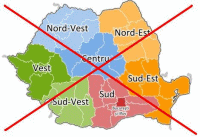
Rather than grant the minority’s legitimate request for autonomy, Romania further seeks to reduce the ability of Hungarians to effectively participate in public affairs, especially in matters affecting them, and to enjoy their culture by considering “redistricting” proposals. Redistricting, under the guise of economic efficiency, would actually Gerrymander and eliminate the Hungarian minority counties.
Foreign Minister, Teodor Basconschi, publicly stated that this is the internal affair of Romania, ignoring that such “redistricting” would violate Romania’s international commitment not to forcibly change the ethnic composition of regions. Human and minority rights are not internal matters.
Such redistricting is not done in countries that have adopted Western norms and respect basic human rights. Instead, as was done in Spain with the Catalans, the South-Tyrolean minority in Italy and 30 other regions in Europe, autonomy is granted to people, who do not wish to exercise external self-determination, but wish to retain their cultural identity. This planned Gerrymander is a threat to regional stability and acceptable inter-ethnic relations.
Intimidation. Pamphlets are being distributed on the state-run Romanian railway system urging the assassination of László Tőkés, Vice-President of the European Parliament, who earlier was bishop of the Calvinist Church in Transylvania. Bishop Tőkés, a recipient of the Truman-Reagan Medal of Freedom in 2009, is a staunch advocate of autonomy for the Hungarian minority in Romania. The police have yet to arrest any perpetrator of this hate crime and others calls to violence.
Romanian politicians from both the governing and opposition parties have publicly advocated that Bishop Tőkés should be deprived of his Romanian citizenship because he helped with the opening of an information office in Brussels of the three counties of Romania that have Hungarian majorities, even though large numbers of regional information offices are active in Brussels.
State Financed Hungarian University Denied. Romania has failed to restore the independent Hungarian state university in Cluj-Napoca/Kolozsvar. While the Babes-Bolyai University has a Hungarian section, it is a far cry from being the multicultural institution it is said to be. The administrators do not even tolerate Hungarian signs on the walls of the university. In fact, two professors were dismissed for placing Hungarian language signs next to Romanian language signs, such as “no smoking.”
Assault on Hungarian Culture and Language. Since 1902 the central square of Kolozsvár/Cluj-Napoca displayed the statue of Matthias Rex, the Renaissance King of Hungary. Recently it was renovated with funding from both the Romanian and Hungarian governments. After rededication, a plaque, without the permit that is required for monuments, was placed by unknown individuals in front of the statue with a historically questionable pronouncement and an anti-Hungarian message. Despite considerable public outcry, the illegal plaque is still there.
Romanian law requires that the names of towns with more than 20% minority population have multi-lingual signs with town names displayed at their entrance. The law does not forbid such signs in case the minority population is lower. Signs, at three entrances to Cluj-Napoca/Kolozsvár, beside the Romanian signs, were placed in several languages, including Hungarian, welcoming travelers to the city. Within two days the non-Romanian signs were removed by unknown perpetrators. The police have not arrested anyone, despite the presence of several recording cameras. Instead, the mayoral office dismissed complaints by remarkably stating that the city has only a Romanian name.
The press has reported that 15 monuments related to the Hungarian minority have been vandalized in Transylvania this year. Again, the perpetrators are at large and the government in Bucharest has not condemned the anti-minority incidents.
Recently several editorials have appeared in the Romanian press commenting on these incidents. In early June, for example, Evenimentul Zilei noted that besides playing the ethnic card by bringing up alleged chauvinistic Hungarian attitudes, the political parties are bereft of other ideas to mobilize their voters.
Romania should be publicly and privately encouraged to build a tolerant society by respecting the rights of its Hungarian and other minorities and the rule of law, thereby converting promises into deeds. The United States should engage Romania to ensure that the minorities in Transylvania are not threatened by the forced assimilation of their culture and identity. This would promote genuine democracy in Romania, defuse tensions caused by discrimination and intolerance and promote United States interests in a Europe that is whole and free.
______________________________
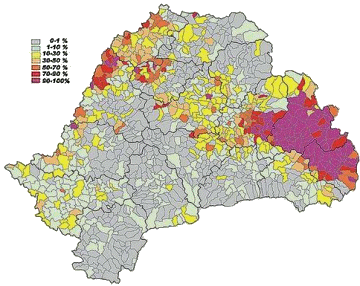
*The Hungarian minority of Romania is the largest ethnic minority in Romania, consisting of 1,431,807 people and making up 6.6% of the total population according to the 2002 census. In Transylvania, however, ethnic Hungarians represent 20% of the population, despite large migrations of Romanians into the area. Hungarians form a large majority in the counties of Harghita (84.61%) and Covasna (73.79%), and a large percentage in Mureş (39.30%), Satu Mare (35.19%), Bihor (25.96%), Sălaj (23.04%), Cluj (17.40%) and Arad (10.67%) counties.
Join online!
