


Otto Vob Habsburg Dies at Age 98
| |
|
||||||
| |
|
|
|
|
|
|
|
|
Otto Vob Habsburg Dies at Age 98 |
|||||||
As the head of one of Europe's oldest and most prominent royal families, Dr. Habsburg was exiled from his homeland after Austria became a republic following World War I. He used his influence in a vain struggle to keep Nazis from annexing Austria before World War II, then traveled to Washington to warn President Roosevelt about the dangers of Hitler's Nazism, and Stalin's communism. After the war he renounced his royal title and reentered politics in 1979 as a member of the European Parliament, for the conservative Bavarian Christian Social Union in southern Germany.
He was also credited with having helped about 15,000 Austrians, including many Jews, escape the Nazis. At the same time, he negotiated Austria's post-war fate with Roosevelt, Churchill, and de Gaulle. Dr. Habsburg lived in Washington during World War II; he moved to France after the war; and settled in Pocking in the 1950's. He married German Princess Regina of Saxe-Meiningen in 1951; they had seven children.
Contribute or join online!
|
How Hungary Broke Apart...
"In the name of the great principle so happily phrased by President Wilson, namely that no group of people, no population, may be transferred from one State to another without being consulted,- as though they were a herd of cattle with no will of their own,- in the name of this great principle, an axiom of good sense and public morals, we request, we demand a plebiscite on those parts of Hungary that are now on the point of being severed from us. I declare we are willing to bow to the decision of a plebiscite whatever it should be. Of course, we demand it should be held in conditions ensuring the freedom of the vote." [more on Count Apponyi] At the time President Wilson said: “The proposal to dismember Hungary is absurd” and later Sir Winston Churchill said: “Ancient poets and theologians could not imagine such suffering, which Trianon brought to the innocent.” We are sad to report that they were right. Previous AHF Statements:
Shortcuts to Trianon Resources Below:
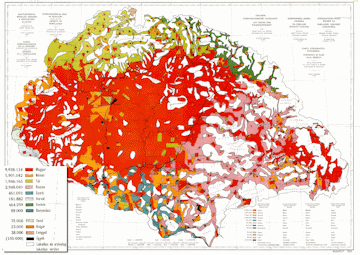
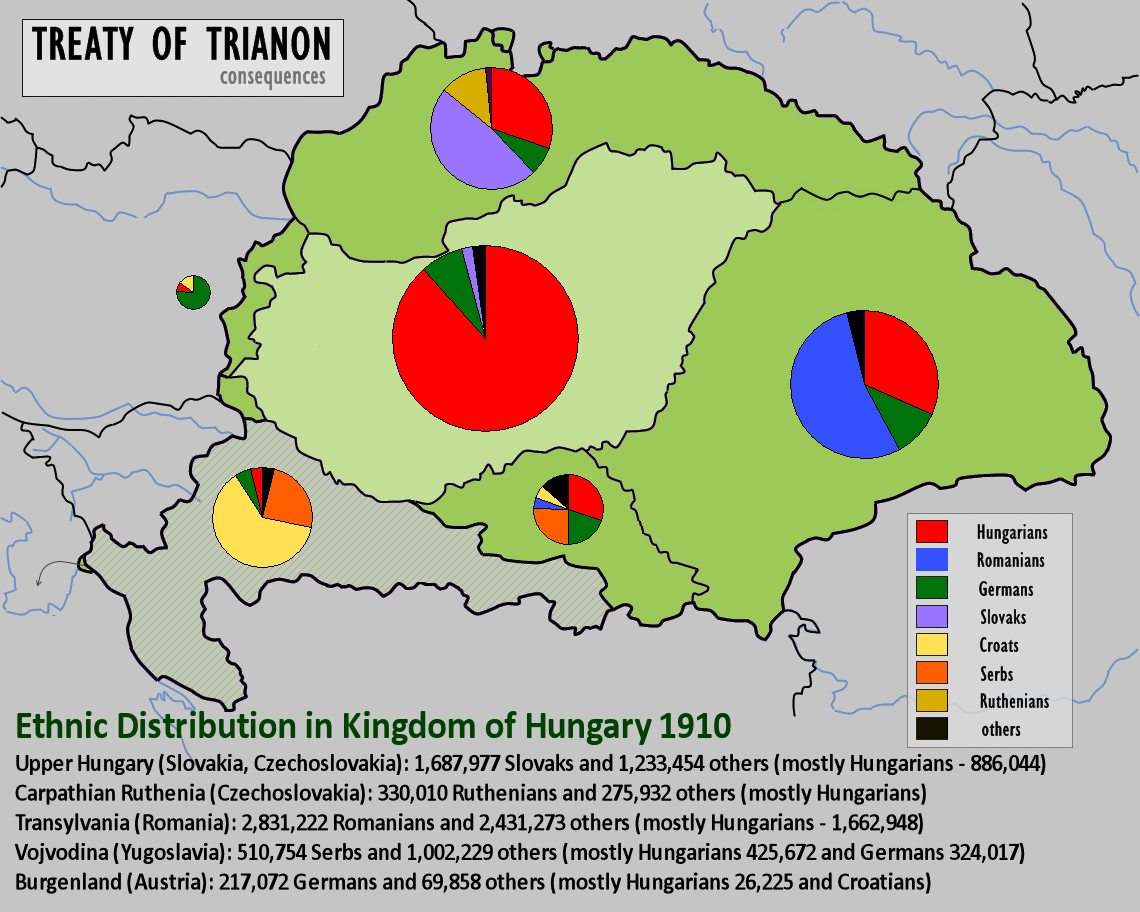
Ethnic Distribution in the Kingdom of Hungary in 1910 (Hungarians shown in red)
Hungarian populations declined significantly after forced removals such as the Benes Decrees and other pograms, the effects of WWI, and Trianon in 1920. With continued pressure and discriminative policies such as the 2009 Slovak Language Law, this trend continued over the past 90 years.
[Read more] about the Treaty of Trianon |
DISCLAIMER: The American Hungarian Federation does not necessarily
endorse the content or opinions expressed by its individual members
and member organizations.© American Hungarian
Federation®, All Rights Reserved
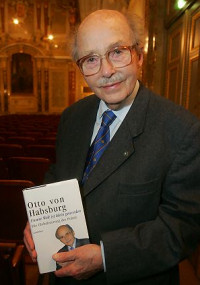 Otto von Habsburg (20 November 1912 – 4 July 2011), the oldest son of Austria-Hungary's last emperor, died July 4 at age 98, at his villa in Pocking, in southern Germany. He witnessed the
 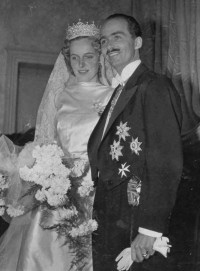 He served as president of the Pan-European League and was an outspoken campaigner for opening the Iron Curtain. In 1989 he played a key role when Hungary opened its border, allowing 600 East Germans to flee communism, months before the fall of the Berlin Wall.
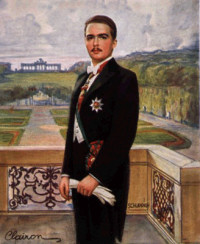 Funeral services were held in Vienna on July 16. He is buried in a Capuchin church in Vienna, however, according to press accounts, the urn containing his heart will be buried at the Benedictine archabbey of his beloved Pannonhalma, according to his instructions in his will. Memorial services in Budapest will be held July 17, at the Basilica of Saint Stephen. - Zoltan Bagdy

 Sign
up for the AHF mailing list. Your information is not shared!
Sign
up for the AHF mailing list. Your information is not shared!  Count Apponyi pleading to the Supreme Council of the Paris Peace Conference: